


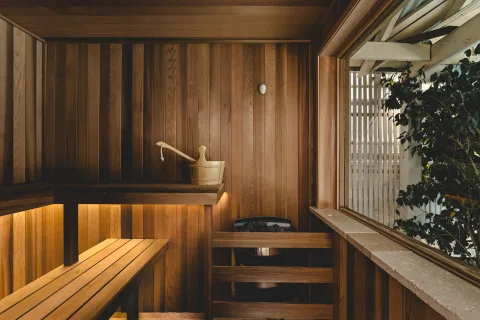
Commercial Saunas for Gyms, Hotels and Resorts in Thailand

The sauna in a private garden is used four or five times a week by the same two individuals, while the one in the hotel is used from seven in the morning until ten in the evening by guests who have never used a sauna, do not read the sign, and will pour a bucket of water over the stones simply because someone has told them that is what is meant.

They are a different product because the construction, heater, electrical supply, and conversation are different.

Most of the inquiries we receive from gyms, hotels, and resorts begin with a photo of a residential barrel sauna and a question about price. That is a reasonable starting point. However, the difference between a domestic sauna and a commercial one is not simply a larger-sized unit – it is the duty cycle, compliance and access, and it is these three factors which determine the specifications well before any timber is selected.

What a commercial buyer in Thailand actually has to go through is the following.

Start with the licence, not the sauna

Sort out the section that confuses people before you agree to anything.

There is no separate licence for saunas in Thailand. According to the Health Establishment Act B.E. 2559 (2016), sauna and steam services are included within spa businesses and are therefore regulated by the Department of Health Service Support of the Ministry of Public Health.

Two consequences are worth understanding early on.

A health massage licence does not include you; if a licence already exists for a massage service on the property, then that licence specifically excludes saunas, steam rooms and hydrotherapy. Adding a sauna to a massage business is not a minor extension of the existing permission; it requires a different licence.

The Spa Manager Licence includes a registration period, which all spa establishments must complete, and it usually begins once a year. If a resort doesn’t find out about this until the ninth month of its fit-out, it has a real scheduling problem, not just a paperwork one.

There is often another layer as well. In your particular district, a Health-Hazardous Business Licence from the local Public Health Office might also be required, one that covers sanitation, ventilation and waste. Since the requirements differ from municipality to municipality, the solution applicable to a property in Chonburi will not automatically apply to one in Phuket or Chiang Mai.

We aren’t lawyers and therefore can’t give you legal advice. What we can say is that we have gone through the process, and the ones who handle the situation well raise the matter with their lawyer or with DHSS during the first month of planning, rather than waiting until later. The fact that a supplier has never mentioned any of this to you indicates something about the number of commercial installations they have actually carried out.

Size the room by volume, not by headcount

When it comes to residential purchases, people want to know how many individuals the space can accommodate; commercial buyers, on the other hand, should be concerned about cubic metres since it is the cubic metres that determine the heater, and the heater in turn determines the electrical supply, and the electrical supply determines if the project is simple or costly.

Work out your internal volume in cubic metres, then match the heater:

3kW — 2 to 4 m³
4.5kW — 3 to 6 m³
6kW — 5 to 8 m³
9kW — 8 to 11 m³
10.5kW — 9 to 13 m³
12kW — 11 to 15 m³
15kW — 13 to 18 m³
18kW — 15 to 20 m³

Two points are important for commercial rooms.

Glass and uninsulated surfaces will require you to go up a size; a fully glazed front is a nice feature in a hotel’s wellness area, and it continuously loses heat. When sizing up the heater, do so for the room you are actually constructing, not for the solid-walled room of the same volume.

Recovery time is more important than the highest temperature. A domestic sauna is heated only once a day, while a commercial one is continually opened and closed, and every time a door is opened, heat is lost. The problem of undersizing doesn’t become apparent on the first day; it shows itself in the third month, when customers complain that the sauna is never properly hot at six in the evening.

If you don’t know where your room fits in the sizing, our guide on what size sauna heater you need looks at the sizing in more detail.

Power: this is where commercial projects get expensive

Heaters up to 9kW can be connected with a single-phase supply, but if they exceed that amount, you need three-phase.

For most commercial rooms, this is the highest variable cost apart from the cost of the sauna itself; if your plant room already has three-phase power available and the distance to the sauna is short, no special action is needed. But if that is not the case, you’ll need to carry out a supply upgrade, and you should discuss this with your electrician and the PEA before bringing it up with us.

Two things we would ask you to confirm early:

At the site, the supply that is available, not that which is at the building; the distance between these two is often the whole issue.

Who is carrying out the last connection? A qualified electrician must always make the final connection. We supply the complete electrical specification, covering voltage, current draw, wire and cable size, and breaker rating- as a document you can give directly to your contractor, so there’s no need for guessing.

Heaters and controls for a commercial duty cycle

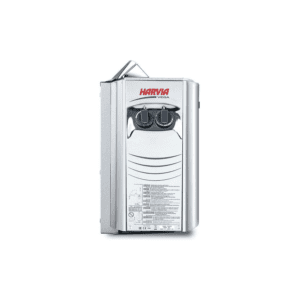
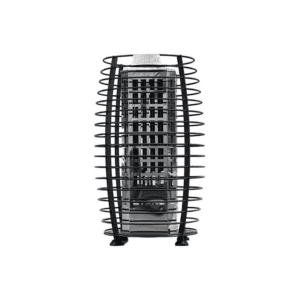
We offer traditional stone heaters made by Harvia and Diooist, both of which are genuine products and come with a genuine warranty; this is particularly important in a commercial environment rather than a domestic one since in a house a faulty heater is merely an inconvenience, whereas in a hotel it results in guests making complaints every day until the spare part reaches them.

The touchscreen controls are fitted to the walls by default, and a WiFi app for both iOS and Android is available as an extra feature. For commercial operators, the app is not just a gadget; it lets the duty manager confirm the sauna has reached the desired temperature before the first customer arrives, and switch it off from the front desk at closing time.

Timber: what survives a commercial duty cycle

All of the timber that we offer is suitable for use. Although it does not age the same way under constant use, the grade takes this into account.

Red Cedar is stable, having a pleasant aroma and a low thermal conductivity; it is the premium choice by default for commercial rooms.

Rusty Cedar — offers the same performance but with a warmer, more variegated appearance.

Japanese Hinoki — has a great smell and can be a real conversation starter in a high-end home.

Japanese Cedar — lighter and softer in character.

Thermo Hemlock — heat-treated for stability, clean, and pale.

Hemlock — sound and economical.

Thermo Pine — a value option that is still a proper sauna.

When it comes to a hotel spa or a resort’s well-being area, we would usually recommend Red Cedar or Hinoki; this isn’t because the other types don’t work, but because the room is an integral part of the guest experience and since both cedar and hinoki have an appearance and smell that match what a guest expects from a sauna.

For a gym in which the sauna is merely a utility rather than a feature, assigning the money to Thermo Hemlock or Thermo Pine makes sense.

We give a full breakdown of the best wood for saunas and ice baths in Thailand.

Site, ventilation and drainage

There are a few items we prefer to address now rather than wait until install day.

A solid and even foundation, such as a concrete pad, a structural deck, or a paved surface. When a commercial room is filled with people, the resulting load is considerable, and in the case of a roof or an upper floor where the structure has to be checked, it should not be assumed.

The outdoor rooms have flat roofs. All the outdoor saunas we offer have flat roofs because they handle Thai rain well, fit modern architectural styles, and avoid the maintenance problems associated with a pitched roof with a flue.

Ventilation should be included in the discussion when applying for the licence and not treated as a secondary issue; it applies to both the room and the space that the room is in. It is worthwhile having your consultant look at it at the same time as you submit the licence application rather than doing so afterwards.

This is the one which causes delays in the schedule. You need to check the lift dimensions, the width of the stairs, the angle of the corridors, and whether the truck can get within carrying distance. Send us photographs and the measurements as early as possible, and we’ll honestly let you know if it’s feasible.

The cold side

The commercial wellness installations that we provide quotations for are not limited to just saunas. There are separate commercial factors to take into account with regard to the ice bath aspect if you are setting up a hot-and-cold circuit.

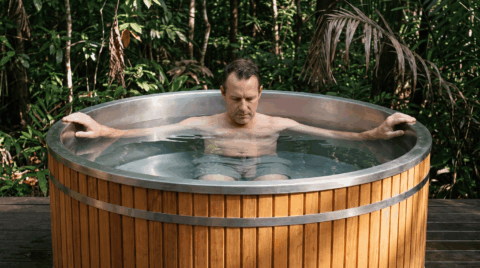
The baths have a stainless steel inner layer, either grade 304 or 316, and optionally feature Red Cedar or composite outer cladding. We do not construct solid timber that is in contact with water, and we never use teak; in a commercial situation where the water is used continuously and is also sanitised continuously, only stainless steel is reliable as an inner material, and for properties located by the sea, 316 should be specified.

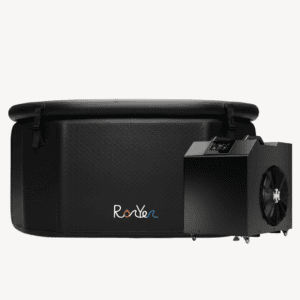
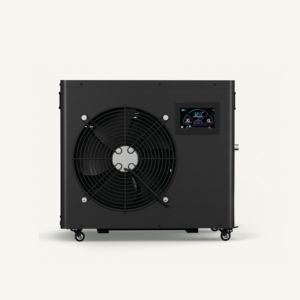
A chiller is essential for commercial use; ice alone is suitable for a private bath. A gym couldn’t operate using bags of ice, and once the water has been pumped into a chiller which maintains a precise temperature, the running cost is very low. If you need the actual running cost of a chiller in Thailand for budgeting purposes, we have prepared that information.

Lead time, delivery and installation

For a custom room, the time allowed is eight to ten weeks together with freight; we provide delivery throughout Thailand and internationally if required.

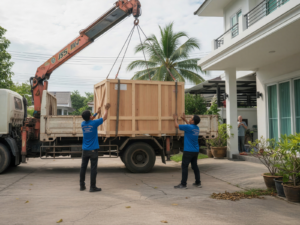
The saunas come flat packed and are shipped in a specially designed timber crate. In most cases, two or three people can assemble the room in one day using clear instructions, and many properties arrange for their own maintenance team to do it. If you prefer that it should be done for you, professional installation includes delivery to the site, full assembly, levelling, fitting in the heater and a handover walkthrough.

For commercial jobs, we generally advise the install service, for one rather dull reason: it makes it our responsibility for the final room rather than dividing it among three parties if any adjustments are needed.

What to send us for an accurate quote

We can quote properly from five things:

The internal dimensions of the room, or the area that you have available.

Including photos of the site, along with the access route.

The kind of electrical supply available at that location, whether it is single-phase or three-phase.

Whether it is indoors or outdoors.

The date on which you will open and whether the licensing procedure has begun.

As long as the space has not been finalised, you will be able to go through the various configurations and view the up-to-date pricing even while your architect is still adjusting the walls.


Frequently asked questions

Q: Is it necessary to have a licence in order to install a sauna in our hotel or gym in Thailand?
You almost certainly need a Health Spa Licence rather than a Health Massage Licence since sauna and steam are included in the spa section of the Health Establishment Act; a district-level Health-Hazardous Business Licence might also be required. It is important to check your particular case with DHSS or a Thai lawyer as early as possible in the planning process, since the window for registering for the Spa Manager Licence opens only once each year.

What is the difference between a commercial sauna and a private one?
A: The duty cycle involves constantly opening and closing the commercial rooms, operating them for twelve or more hours each day, and having them used by people who are not familiar with the equipment; as a result, a more powerful heater is needed for the same volume, leading to more robust specifications and control systems that a duty manager can handle.

Can a commercial sauna be operated using single-phase power?
Yes, for up to 12kW. If you go above that, then you’ll need three-phase. Since this is usually the highest variable cost for commercial rooms, it’s important to check what type of supply is available at the actual site before deciding on the size of the room.

Q: How long will a custom build take? Eight to ten weeks from the date of ordering, together with the cost of freight to your address. If you have a fixed opening date, start from that date and add a margin for the licensing process, since it follows its own timetable.

What do you think — can our maintenance team carry out the installation or do you need your crew?
A: Either works. Rooms arrive flat-packed and most assemble in a day with two or three people. For commercial projects, we generally recommend our installation service so responsibility for the finished room sits in one place.

Do you provide the electrical specifications to our contractor?
A: Yes. You receive a full specification covering voltage, current draw, wire and cable size and breaker rating, ready to hand to your licensed electrician. A licensed electrician must make the final connection.

Can you manage a rollout involving multiple sites?
A: Yes, when you discuss the entire programme rather than looking at each site individually, it makes a difference to our ability to schedule and price it.


Talk to us before the drawings are finished

The commercial projects that go smoothly are the ones where the sauna was part of the plan, not added to it. Bring us in while the space is still on paper, and we can tell you what the room wants to be, what it will draw, and what your contractor needs to leave you.

Book a free consultation — phone, video call, or in person.

087 250 2426 (Thai) · 06 2229 5157 (English)
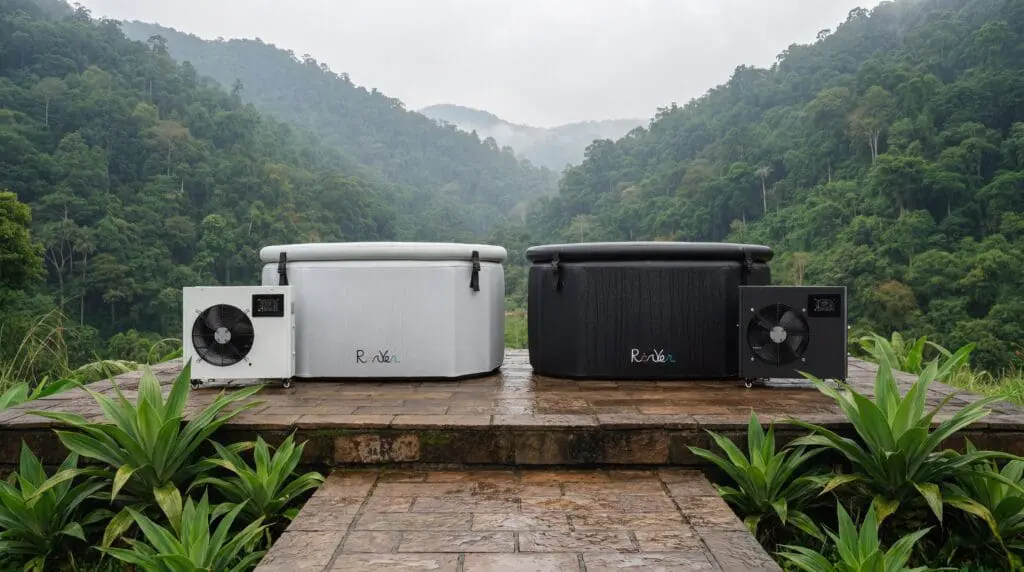
What kind of ice bath should be used in Thailand?

For several years, I’ve been taking cold water baths, and the first thing that no one ever tells you is that Thailand “cheats” [joke]. The tap water stays at about 28 to 30°C year-round; if you fill a bathtub and then walk away, you’ll have a lukewarm bath. So before discussing which ice bath is best, you should realise that in Thailand, the bathtub is only half the deal. The other half is how you get the water cold and keep it that way.

Taking that into account, I’ll now give an honest look at the four types that are actually available for sale here: inflatables, acrylic baths, all-in-one systems, and wooden and stainless steel baths. Although I sell two of these and therefore have a bias, I’ll also tell you exactly when the cheaper options are appropriate.

Are inflatable ice baths worth it?

Yes, if you’re looking to begin. An inflatable ice bath is a tub made from PVC or with a drop-stitch construction that fits into a bag, requires no plumbing and can be set up in ten minutes. We carry a two-person model at RonYen, and I always recommend it to people who want to see whether ice plunging is something they’ll genuinely adopt or just a temporary trend before investing any money.

The main disadvantages are that the insulation is thin, so in Thailand’s hot climate your ice will melt quickly, or your chiller will have to work hard. The material breaks down when exposed to UV radiation if it’s going to be used outdoors, so you should find a shaded location. Also, it has the appearance of camping equipment, which is acceptable when placed next to a gym mat but not so appropriate next to a villa pool.

Verdict: it is the best entry point, the best in terms of portability, and has the shortest lifespan.

What about acrylic ice baths?

The acrylic and fibreglass baths are the smooth white ovals that you find in gym recovery areas; they are lightweight, easy to clean and generally fall within the mid-price range.

In Thailand, there are two problems. The first of these is the sun; acrylic turns yellow and becomes brittle when exposed to the tropical ultraviolet radiation, and so an acrylic bath used outdoors ages rapidly if it is not sheltered by solid cover. The second problem is that it scratches, and when acrylic is scratched it holds on to biofilm, meaning that more chemical treatment is needed in order to keep the water safe in a climate in which warm water encourages the growth of organisms.

Verdict: Fine indoors with air conditioning. Not a good choice outside in Thailand.

Should all-in-one ice bath systems be worth the consideration?

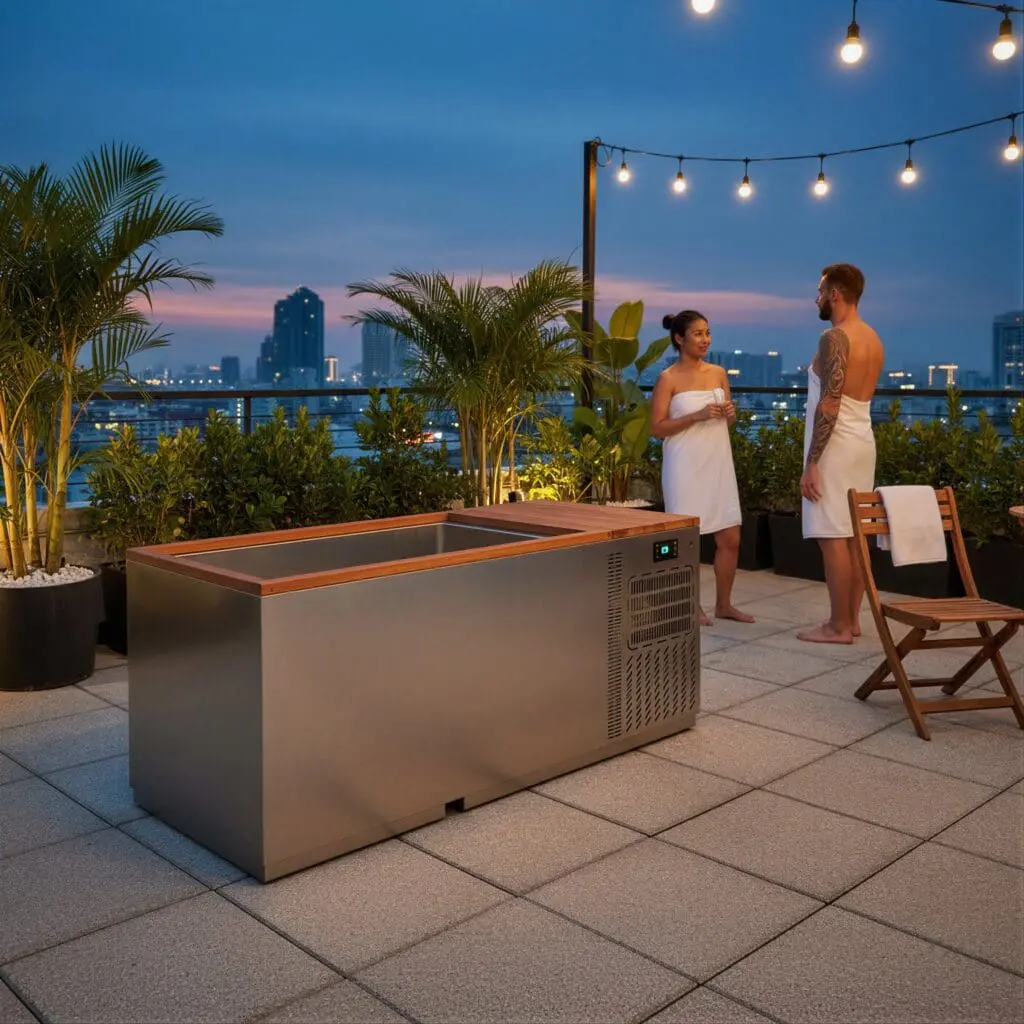
All-in-One-Bath-Chiller on roof top with couple talking

All-in-one ice baths combine the tub, chiller and filtration system into one unit. Just plug it in, use cold water, and that’s that. The convenience is genuine, and for a while it does seem like the sensible choice.

The problem appears after two or three years. The chiller is the hardest-working element in any ice bath arrangement, particularly in this case since it has to cope with 30°C ambient water and 35°C air. With an all-in-one unit, if the chiller fails, you end up having to service a sealed, proprietary unit rather than simply replacing a standard component. The sizes cannot be changed, and the tubs are generally made of plastic composite; if the brand’s support in Thailand is poor, then the entire system is only as good as its worst component.

The verdict is that it’s convenient until the compressor has a bad day.

Why are wood and stainless steel ice baths the best for use in Thailand?

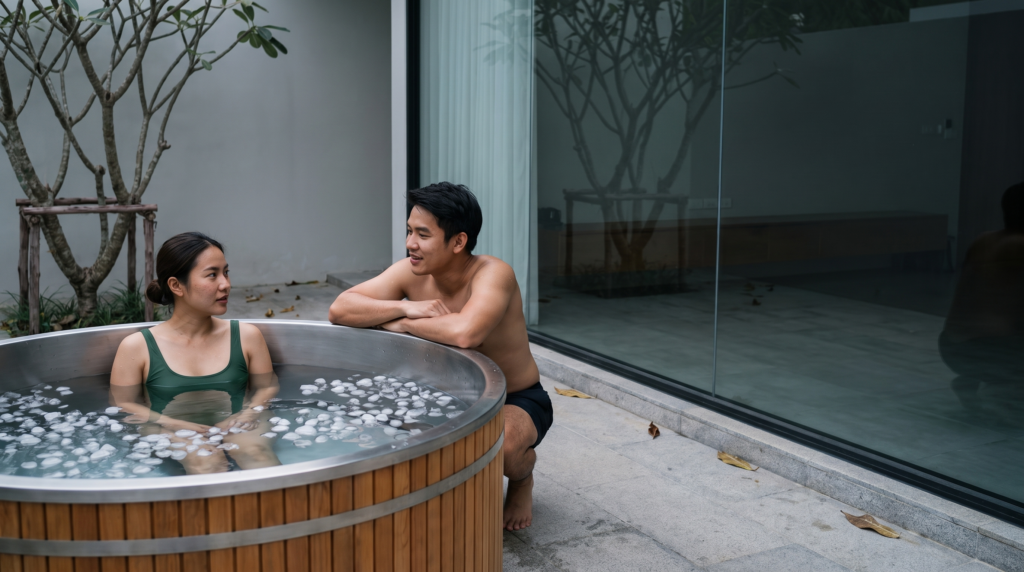
Asian woman in beautiful ice bath with man watching on

We are the ones who build this kind, so you can take the bias as given. There are solid reasons the combination of wood and stainless steel is the better choice in this climate, and they’re the same reasons that led us to make our selection.

The interior is made from 304 or 316 stainless steel; stainless steel doesn’t scratch into biofilm traps, doesn’t yellow and is unaffected by UV exposure, meaning it can be easily cleaned. In a hot climate, water hygiene is everything, and steel is the simplest surface to keep safe. When you are close to the coast, 316 provides additional corrosion resistance so as to cope with salt air.

The outside material is either timber, red cedar or thermo pine, and the wood does not come into contact with the water. It is applied as cladding to the steel structure, which allows you to enjoy the warmth of timber without having to endure the difficult maintenance that comes with wet wood. Since both types of timber cope well with the humidity found in Thailand, they are also used in our saunas.

The chiller is a separate component, and it is exactly this aspect that is often undervalued. A standalone chiller is a standard, satisfactory and replaceable unit, and when it finally requires servicing—which happens to every chiller in Thailand—you can have one part serviced or replaced while the bath continues to function for many decades.

It’s built to your measurements. Our custom ice baths are made to order, either circular or oval, and are sized according to the space you have rather than to a shipping container, with a starting price of ฿79,000 and free delivery all over Thailand. This is important for resorts and wellness studios that have a particular footprint, as well as for houses where the bath is on display rather than kept behind the shed.

The verdict is that it has the highest initial cost, the lowest annual cost, and is the only one that improves in appearance with age.

So, which one should you buy?

If you’re having a trial run with it, then buy the inflatable one and a couple of bags of ice as well; there’s no embarrassment in doing that, because that’s the way I would start again.

When the intention is to go indoors at a gym, and the budget is limited, acrylic will suffice.

If you want to have cold water every day for the next ten years outdoors in this climate, then you should get a stainless-steel interior, a timber exterior and a separate chiller; this setup takes Thailand’s heat, sun and humidity into account as design factors rather than treating them as unexpected problems.

FREQUENTLY ASKED QUESTIONS

Q: Do I have to use a chiller when preparing an ice bath in Thailand?
A: Yes, in practice. The tap water here is always between 28 and 30°C, which means that if you don’t have a chiller, you’ll have to buy a bag of ice for each session. The advantage of a chiller is that it keeps the water at your desired temperature continuously.

Q: What is better, 304 or 316 stainless steel, for use in an ice bath?
A: 304 is the standard grade and is well suited for use in inland Thailand; 316 has better corrosion resistance and is therefore the preferable option in coastal areas since salt air corrodes metal. We use both of them.

Q: Can a wooden ice bath rust in Thailand’s humidity?
A: Not like ours, since the timber is used only as external cladding over a sealed stainless steel container and so doesn’t end up in water; both red cedar and thermo pine tolerate tropical humidity very well.

Q: How long does an inflatable ice bath last?
A: Kept shaded and cleaned regularly, a few years. Left in direct Thai sun, considerably less. They are an entry point, not a long-term fixture.

Q: Are all-in-one ice baths a bad idea?
A: Not bad, just a trade. You gain plug-and-play convenience but lose serviceability. When the built-in chiller wears out, you are repairing a proprietary sealed system instead of swapping a standard chiller.

What is the way of designing a sauna so that it will fit into your space?

The majority of the enquiries come exactly as described. A person messages us to say that they would like a six-person sauna. We then request a photo of the spot where it is to be placed and receive a picture of the space beside the pool which, rather generously, is 2.4 metres wide.

That isn’t a criticism since no one thinks in cubic metres; people think in terms of numbers of people. The issue is that a sauna is determined by the size of the room rather than by the guest list, and the two coincide by chance.

I was a photographer for twenty years before I began building saunas, so over that time I had plenty of experience measuring rooms that appeared larger than they really were. It’s the same lesson, just applied to a different occupation. The discrepancy between how large a space seems and how big it actually is is the reason most projects fail, and this problem typically becomes apparent only later on—after the deposit has been paid and after the timber has been cut.

Therefore, we developed two tools to bridge that gap before anyone had paid any money. One of them asks you eleven questions; the other gives you the entire cabin and allows you to dismantle it. Both provide you with an actual price in baht, and in each case the price for the same sauna is the same.

What is the Basic Sauna Builder?

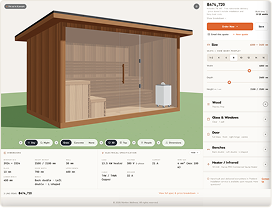
The Basic Sauna Builder is a step-by-step process consisting of eleven decisions, with each decision appearing on a separate screen in the order in which they actually depend on one another.

The type of heat, the position, the shape, the people, the size, the timber, the heater, the back wall, the door, the benches, and the installation.

On the right side, a panel keeps track of the progress, showing “Your build”, with each of your choices listed and an “Edit” link next to them so that you can go back three steps without losing the other selections. A counter at the top indicates your position: you have chosen 6 out of 11.

The estimate remains blank until you select a footprint, and then it updates each time you make a choice afterwards. There is nothing hidden behind the email form, and you can see the number change as you are deciding.

The reasoning is given on each screen, not merely the choices. In the shape stage, it explains that the shell determines how the glazing, door and benches can be arranged, rectangles being the most flexible, cubes being suitable for narrow courtyards, and barrels having their glass and door on only the flat ends. The heater stage displays the calculated cabin volume and the output we would specify for it, before marking the heater with a badge instead of asking you to guess.

The entire process takes about five minutes. Knowing the location of the sauna and having an idea of how many people use it at one time is all that’s necessary to work out a real price.

What is the Advanced Sauna Builder, and how is it different?

The Advanced Sauna Builder is the sauna that has been unlocked.

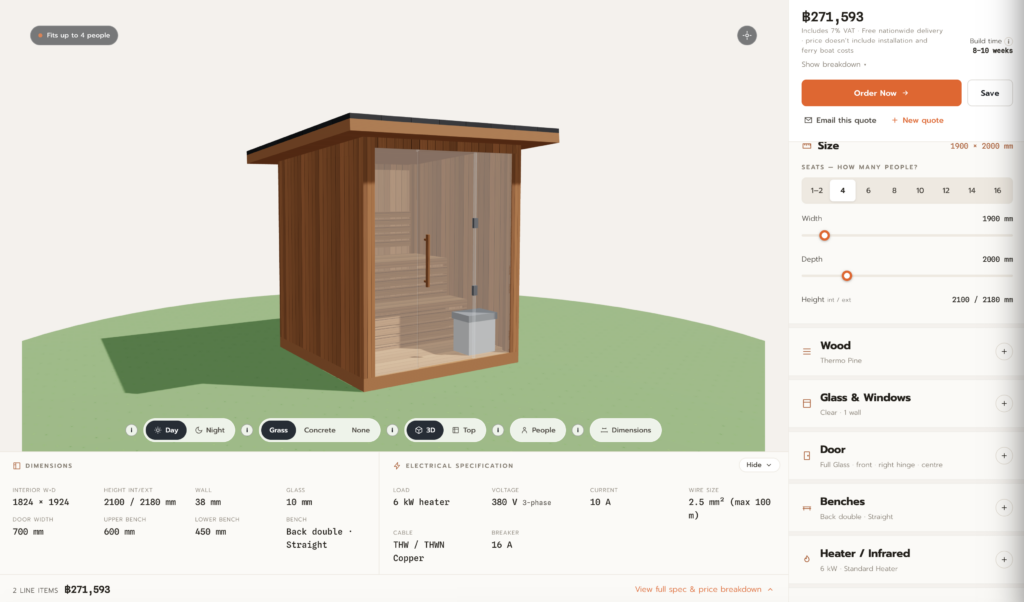
You’ll see a 3D cabin taking up most of the screen. You can rotate it, switch between day and night lighting, place it on grass, concrete, or nothing, and switch to a top-down view to check the bench arrangement. Also, turn on the people overlay to check whether four adults will actually fit or use the dimensions overlay to see the figures on the model itself.

The panel on the right stops being a checklist and becomes a set of controls:

  • The size is given in terms of width and depth for the sliders, not according to pre-set footprints. The interior and exterior heights are listed separately since the exterior height has to clear your eave and the interior height is the one that the heater needs to heat.
  • Regarding glass and windows, they can be clear or dark; the front wall may have full glass, only the upper half or none at all; there is the option of full glass or a picture window; and on the left, right and back walls the windows can be none, small, medium or large.
  • The benches have the back, left wall and right wall each adjustable to none, single or double. The width of the top bench can be 900, 750, or 600 millimetres, and that of the bottom bench 600, 450, or 350 millimetres. A fascia can be provided, or it can be omitted on the lower level.
  • Door. Position, hinge side, glazing.
  • Heater—its output, style, and the position on the wall.

Below the model, there are two strips that are updated in real time. One of them shows the dimensions set – that is, the interior width and depth, the inside and outside height, 38 mm walls, 10 mm glass, door width, and bench widths. The other displays the electrical specification: the load in kW, the voltage, the phase, the current, the cable type, the wire size, and the breaker rating.

The second one is the one that people tend to undervalue; it’s the difference between a sauna that looks acceptable and one that your electrician can give you a price quote for. You can take it to an electrician before having spent a single baht.

Which of the builders should I begin with?

Begin on a simple level; that should be the case for almost everyone.

The basic model isn’t a simplified version designed for people who aren’t sure what they want; it’s the same range of options but limited to those that actually affect the result, arranged in an order that prevents you from ending up in a difficult position. You should choose the footprint before deciding on the bench layout, because then the different bench options make sense; if you choose them in the opposite order you’ll spend twenty minutes on a layout that won’t fit.

Move to the advanced builder when you have a specific reason:

  • You have to see it—when a 3D cabin on the screen addresses the question of whether it will look right next to the house, a specification list never can.
  • There is a rather unnatural gap. Preset footprints consist of round figures, whereas sliders do not. If your space is exactly 2,650 mm and not a single millimetre over, the advanced builder is the option you should choose.
  • If you’d like an unusual kind of bench or glazing layout, a double bench at the back and a single return on the right, dark glass on the front, and a medium window on the left wall, this combination is found in the advanced builder and in no other place.
  • You would like to hand the complete electrical specifications to a contractor.

You aren’t committed in either direction. The toggle is located at the top of the screen, and you can switch it at any time you want.

Does each of the two builders give the same price?

Certainly, and it is important to be exact on this point since this is the question which attracts the most suspicion.

There is a single pricing engine; the basic builder does not maintain its own price list since when you make a selection with it that choice is included in the complete configuration and is priced using the same code that the advanced builder uses. Likewise, the heater recommendation is identical in both cases, and so are the timber multipliers and the size premium.

If you construct the sauna in the same way regardless of which way you do it, the amount in baht will be the same. Not approximately—the same.

The prices listed have 7% VAT and free delivery throughout the country included, but they do not cover the cost of installation, and they also do not include ferry fees when the sauna is being delivered to an island—those islands being Samui, Phangan, Tao and the others all require a boat voyage, and we prefer to state this on the screen rather than have to mention it in an awkward email later. The construction period lasts between 8 and 10 weeks.

What do I need before I open either builder?

Three measurements and one photograph.

  1. The space—its width, depth, and the height of anything above it, such as an eave, a pergola, or a balcony overhang—the height on the exterior as given by the builder is the figure that must clear all of these.
  2. As for the power supply, whatever type you have at the property—single-phase or three-phase—heaters up to 12 kW can operate on either type; but if they exceed that amount you’ll need a 380 V three-phase supply, and it’s unfortunate to have to discover that after you’ve already chosen a heater.
  3. The way to get there from the road. The saunas come flat-packed, so a narrow side gate is generally sufficient, but a spiral staircase is not.

The photograph is ours, not the builder’s. When you send us a quote by email, the quickest way for us to find out if anything in your building needs to be adjusted is to look at a photo of the space.

What will happen when I have finished?

Here are four things that you can do when you have a completed design.

Keep it, since you’ll receive a link that takes you back to the specific build, enabling you to pass it on to a partner, hold onto it for a week, or reopen it if you change your mind regarding the timber.

Send the quote via email, and it will appear in your inbox as a complete document including the full specifications and the price breakdown.

Go ahead and place the order since that is how the process should begin; we will put the final price in writing before accepting any deposit. Nothing that you do when using the builder will commit you.

Give it to us. The reason there’s a ‘book a consultation’ link across the top of the builder is that many people design a property, get about 80% of the way through it, and then want a human to check over the heater or the glazing. This service is free and is in fact the way that a great many builds are finally completed.

A standard sauna comes with all the items you would otherwise have to remember to purchase, such as a 4-litre wooden bucket and ladle, an aroma cup, a heater guard, sauna stones, a thermometer and hygrometer, a sand timer, a wooden clothes hanger, and LED lighting.

Is it necessary for me to construct it myself?

Not really, but you can, and a greater number of people do than you would think.

Saunas are supplied in flat-packed form together with instructions. Many purchasers put theirs together within a day using two or three people and standard tools. It is a large flat-pack, not a carpentry job; the panels are designed to fit one another, and the wood is cut and finished before the units leave the workshop.

In the last stage of the basic building process, you have the choice between carrying out the assembly yourself or having us do it for you. Professional sauna installation is an extra charge which is included in the quote should you decide to have it, and it is the appropriate option to choose when the site is difficult, the sauna is large, or simply because you would prefer not to spend a Saturday on the job.

The issue of the electrical connection is something else entirely; no matter which method of assembly you choose, the heater has to be connected by a licensed electrician.


FAQ

How long does the builder take to design a sauna?
A: In the basic builder, it takes about five minutes provided that you know your space and your estimated capacity; the advanced builder takes longer since there are more settings to alter, but there is no time limit, and you are allowed to save your build and return to it later.

Is the price given in the builder’s proposal the final price?
A: Yes, it is the actual, full price for that specification, comprising 7% VAT and covering delivery throughout the country. It does not include installation nor any ferry charge to an island. We will put the final price in writing before any deposit is accepted.

What type of timber might I select?
A: Outdoor, barrel and cube saunas are offered in Thermo Pine, Japanese Cedar and Red Cedar. Indoor saunas add Japanese Hinoki. Thermo Pine is heat-treated for stability in the Thai climate and is the included base; the others are priced up from there.

Q: Can I switch between the basic and advanced builder without losing my design?
A: Yes. The toggle sits at the top of the screen, and your build carries across. The basic builder writes a complete configuration behind the scenes, so opening it in the advanced builder shows you the same sauna with every control unlocked.

Q: Do I need three-phase power?
A: Only for heaters above 12 kW. Anything up to 12 kW runs on single-phase or three-phase. The builder shows the required supply, current, cable type, wire size and breaker rating for whatever you have configured, so you can check with an electrician before you order.

Barrel, Cube or Rectangle? Which Sauna Shape Actually Suits You

A six-person barrel is ฿110,252 cheaper than a six-person rectangle.

You get the same number of seats, the same heater, and the same timber. The only real difference is the shape, and that actually matters.

Most comparisons say it’s just about taste: choose a barrel if you like a rustic look, or a rectangle if you prefer something practical. But that’s not the most important part. The shape affects how quickly it heats up, how much timber you pay for, how much of the space you can actually use, and how much room it takes up in your garden.

Here’s what each one does and what each one costs.

What does each sauna shape cost?

The barrel is the cheapest at every size. Cube sits in the middle. Rectangle costs the most.

From prices, Thermo Pine, outdoor:

2 person
Barrel — ฿182,958
Cube — ฿203,750
Rectangle — ฿238,299

4 person
Barrel — ฿192,216
Cube — ฿218,265

6 person
Barrel — ฿232,348
Cube — ฿266,908
Rectangle — ฿342,600

8 person
Barrel — ฿271,088
Cube — ฿317,331

Free nationwide delivery on all of them. Installation is separate, and so is the ferry if you’re on an island.

Those price differences aren’t just a business decision. It comes down to geometry, which is also why a barrel heats up fast. A cylinder is the most efficient way to enclose space, and it always has been. With the same amount of space inside, a barrel has less surface area than a box. That means it uses less timber, which lowers the price and also keeps more heat inside, reducing heat escaping through the walls.

You’re not getting a lesser sauna for ฿110,000 less with six seats. You’re getting the same volume of air, heated by the same heater, wrapped in less material.

That’s the main reason barrels have been built this way for so long.

Why does a barrel heat faster?

There’s less unused air above your head, and the curved shape helps move the heat around.

In a rectangle, the air above the top bench is dead volume. Heat rises, hits a flat ceiling, and sits there doing nothing for you. You’re paying to heat a layer of air nobody is sitting in.

A barrel’s curve follows the heat. It rises, runs along the curve, and comes back down the far side. Natural circulation, no dead corners, less total volume for the same number of people.

In practice, a barrel sauna heats up faster and maintains a more even temperature than a rectangular sauna with the same number of seats.

So why would anyone buy a rectangle?

Because you can’t sit in a curve.

This is the trade-off, and it’s something most barrel sauna sellers don’t mention.

The shape of a barrel limits how you can arrange the benches. The floor is narrow since you’re at the bottom of a cylinder, and the walls curve away. Bench layouts that are easy in a box can be awkward or impossible in a barrel. You also lose the corners because there aren’t any.

Standing up can also be tricky. You only get full height in the very middle, so if you’re tall, you’ll quickly learn to stand in the centre.

A rectangle uses every millimetre. Straight walls take benches anywhere, at any height, in any arrangement.

For two people, the difference is hardly noticeable, and saving ฿55,000 is significant. For six or more, the rectangle is worth the extra ฿110,000 because everyone can sit comfortably without having to figure out where to sit.

What about a cube?

A cube is basically a rectangle that fully embraces its boxy shape.

It has the same advantages: you can use all the space inside, arrange benches however you like, and stand anywhere. The main difference is in its proportions and design. A cube is made to look intentional, and it works better with glass because the walls are flat and square.

It’s ฿20,000 to ฿35,000 more than a barrel at the same seat count and ฿35,000 to ฿75,000 less than a rectangle.

If your sauna will be somewhere you’ll see it often, like off a deck, beside a pool, or visible from the kitchen, the cube is a great choice. It looks more like a piece of architecture than a simple shed.

If your sauna is hidden down the side of the house, you’re paying for looks that no one will notice. In that case, go with the barrel.

Indoor or outdoor?

Indoor and outdoor saunas are different products, not just different locations.

An outdoor sauna is a building. It has a roof, weatherproofing, and an exterior that must withstand the Thai wet season. That’s a large part of what you’re paying for.

An indoor sauna is more like a renovation. Since you already have the roof and walls, we just build the sauna inside. There’s no need for weatherproofing, which makes it a more affordable option.

If you have a spare room, a corner in the garage, or a large enough bathroom, an indoor sauna is the best budget choice. It’s not a downgrade—it’s the same sauna, just without the extra building around it.

Which one should you get?

Two people and a tight garden: barrel. Six or more: rectangle. Somewhere visible: cube. Spare room: indoor.

Barrel — one to four people, tight on space, want it hot fast, don’t need clever benching, and you’d rather spend the ฿55,000 on timber than on corners.

Rectangle — six or more, want flexible benches, want to stand up wherever you like, want the most usable room per baht once there’s a crowd in it.

Cube — it’s going somewhere visible; you want glass, and you want it to look designed rather than delivered.

Indoor — you have the space already, and you’d rather spend the money on Red Cedar than on a roof.

No single shape is the best sauna. Each one is better suited to different needs.

What we’d tell you to do

First, decide how many people will use the sauna, and then choose the shape that fits. Don’t pick the shape first.

Two of you, small garden: barrel, ฿182,958, and it’ll be hot in half the time.

A family: a rectangular six-seater. The benching flexibility is worth more than the timber efficiency once there are four of you deciding where to sit.

A feature by the pool: a cube, with glass.

A spare room you never use: indoor, and put the difference into better timber.

We’re located in Ban Suan, just ten minutes from Central Chonburi. You can book an appointment to try out the saunas in person. It only takes thirty seconds to feel the difference between a barrel and a rectangle, but it can take a long time to read about it.

FAQ

What’s the difference between a barrel sauna and a rectangular sauna?

A barrel is a cylinder on its side; a rectangle is a box with straight walls. For the same internal volume, a barrel uses less timber, so it’s cheaper and heats faster. A rectangle gives you flexible benching and full standing height throughout.

Are barrel saunas cheaper?

Yes. A two-person barrel starts at ฿182,958, compared to ฿238,299 for a rectangle. At six seats it’s ฿232,348 against ฿342,600 — a saving of ฿110,252. A cylinder encloses the same volume with less surface area, so there’s less timber in it.

Do barrel saunas heat faster?

Yes. The curve leaves less dead air above your head and circulates heat naturally, so there’s less total volume to heat and no dead corners.

Are barrel saunas better than rectangular saunas?

Neither is better at being a sauna. A barrel suits one to four people in a tight space. A rectangle suits six or more, because you can’t put a bench in a curve the way you can in a corner, and standing height in a barrel exists only on the centre line.

What’s a cube sauna?

A rectangle designed to look deliberate. Same full use of internal space and flexible benching, but proportioned as architecture and better suited to large glass. A two-person cube is ฿203,750, sitting between the barrel and the rectangle.

Which sauna shape is best for a small garden?

A barrel. For the same internal volume, it has less surface area and a smaller footprint than any box, so it takes up less ground for the same seats — and costs less.

Is an indoor sauna cheaper than an outdoor one?

Yes. An outdoor sauna is a building — a roof, weatherproofing, an exterior that survives a wet season. An indoor sauna is a fit-out inside a room you already have.

How to Look After an Outdoor Sauna in the Thai Climate

People often ask me if a timber sauna will just rot in Thailand. With forty-degree afternoons, ninety per cent humidity, and monsoon rains that feel relentless, it’s easy to think a wooden sauna wouldn’t survive here.

But here’s the surprising truth: a sauna actually dries itself from the inside several times a week. Each session bakes moisture out of the wood. In this climate, the saunas that fail aren’t the ones used often—they’re the ones left closed and unused during the wet season. Using your sauna is the best maintenance. Everything else below just helps it last even longer.

What should you do after every session?

Just do three quick things in ninety seconds before you go relax.

Leave the door and vents open until the room dries out. The heater’s leftover warmth will help, and you’re just letting the moisture escape. Closing up a wet sauna is the main reason timber gets musty, but it’s easy to prevent.

Wipe down the benches. Sweat is mildly acidic and can stain or wear down the wood over time. A quick wipe with a damp cloth while the room is still warm keeps benches looking new. Always sitting on a towel makes this job even easier.

Rinse anything that needs it, like the ladle or bucket, and you’re done.

What does the weekly and monthly routine look like?

Each week, sweep or vacuum the floor and wipe the benches with the pH-neutral wood cleaner from your care kit. This is important because regular household cleaners are often too harsh and can damage the wood. Only use products made for bare timber inside your sauna.

Once a month, or whenever you notice, scrub the areas that get the most contact—like bench edges, backrests, and the door handle—with a soft-bristle brush. Check the drain and floor corners for any buildup. Outside, clear leaves off the roof, make sure nothing is growing against the walls, and check that the base is still directing water away from the timber. Plants holding moisture against the wood can cause more damage over time than any storm.

Should you oil or seal the timber?

You should oil or seal the outside, but not the inside. Sealing the interior is a common mistake that causes more problems than the weather ever does.

Keep the interior walls and ceiling bare. The wood needs to breathe so it can absorb and release moisture during heat cycles. Paint, varnish, or film-forming sealers trap moisture inside, and at high temperatures, some finishes can release fumes you don’t want to breathe. If you prefer, you can use a special paraffin-based sauna bench oil on the benches, but simply keeping them bare and wiped works just as well.

The exterior is different. Thailand’s strong sun is tough on unprotected wood, so use the timber treatment oil from your kit or another exterior-grade oil that matches your cladding. Reapply when the wood starts to look dry and grey, not on a strict schedule. Red Cedar and Thermo Pine will turn silver-grey if left untreated, which some people like. Oiling keeps the original colour, but isn’t necessary for the wood to last.

What about the heater and stones?

The stones work hard. Every time you pour water on them, they get shocked, and over a year or two, they can crack and shed grit. Once or twice a year, let everything cool down, unstack the stones, rinse off the dust, throw out any cracked or crumbling ones, and restack them loosely so air can flow between them. Don’t pack them too tightly—the heater needs good airflow to work well.

While the stones are out, vacuum any grit from the heater tray. Use your own thermometer and some patience to make sure the wall controller matches the temperature on the screen. And remember, any electrical work should always be done by a qualified electrician. We provide the heater manual and wiring specs, but that’s where our advice on electrical work stops.

As a finishing touch, add a few drops of eucalyptus löyly oil to your water bucket—never directly on the stones—as a reward for your efforts.

What are the signs something actually needs attention?

If you notice a musty smell that doesn’t go away after a hot session, the room isn’t drying out—check that the vents are clear and you’re leaving it open after use. Grey patches on the boards usually mean surface mould from trapped moisture, which you can fix early with wood cleaner and a brush. If the door suddenly won’t close properly, the base may have shifted, so check if the ground under one corner has settled, especially after heavy rain. If the heater isn’t reaching temperature, it’s usually because the stones are packed too tightly, the stones need replacing, or there’s a ventilation issue.

None of these issues is an emergency right away. But fixing them as soon as you notice is always easier and cheaper than waiting until later.

The short version

Use your sauna often, dry it out after each session, always use a towel on the benches, clean with products made for bare timber, oil the outside but not the inside, and refresh the stones twice a year. Follow these steps and your cedar or Thermo Pine sauna will easily last ten years in this climate—that’s exactly why we build them this way.

If you’re still deciding which sauna to get, our custom sauna page explains the different timbers, sizes, and what it’s like to own each one. Every sauna we deliver comes with a full care kit and instructions in the crate.

FAQ

Q: Can an outdoor sauna survive the Thai rainy season?
A: Yes. A used sauna dries itself from the inside with every session, and the flat roof and raised base are designed to shed water. The failure mode is a sauna left shut and unused through the wet, not one that gets used.

Q: How often should I clean my sauna?
A: Wipe benches and air the room after every session, clean the floor and benches weekly with a pH-neutral wood cleaner, and do a deeper scrub of high-contact spots monthly. The exterior wants a seasonal check and an oil when the timber starts looking grey and thirsty.

Q: Should I varnish or paint the inside of my sauna?
A: No. Interior timber must stay bare so it can absorb and release moisture through heat cycles. Film-forming finishes trap damp in the boards and some off-gas at sauna temperatures. Bench oil made for saunas is the only interior finish worth considering.

Q: How often do sauna stones need replacing?
A: Inspect them once or twice a year. Rinse the dust off, discard cracked or crumbling stones, and restack loosely so air flows between them. Most stone sets want topping up every one to two years with regular use.

Q: Why does my sauna smell musty?
A: Trapped moisture. Leave the door and vents open after every session until the room is dry, check nothing is blocking the vents, and clean early mould spots with a pH-neutral wood cleaner and a soft brush. A musty smell that persists through hot sessions means the room is not drying between uses.

How to Maintain Your Ice Bath and Chiller (Without It Becoming a Chore)

I take care of ice baths for a living, so I’ve made just about every maintenance mistake you can imagine. I’ve left the lid off overnight under a frangipani tree, run a chiller with the filter only halfway in and heard it make unhappy noises, and let the water sit a week too long in the April heat—trust me, you don’t want to know what that smells like.

The good news is that keeping your ice bath clean and your chiller running well is actually simple. It just takes about ten minutes a week and a few easy rules. This post covers everything in detail, but if you bought your bath from us, you’ll find a quick reference on our Bath & Chiller Instructions page—the same one your chiller’s QR sticker links to. Feel free to bookmark whichever version you prefer.

How often should you actually clean an ice bath?

It all comes down to one thing: whether you have a chiller running or not.

If you have a chiller, its filter and ozone system clean the water every time it runs, so you can go weeks between water changes with just a little weekly care. Without a chiller, the water isn’t moving or being cleaned, so it gets dirty much faster. Plain, untreated water should be changed daily. If you use a stabiliser and check with test strips, you can stretch it to a few days.

Here’s the rule I always share: trust the test strip, not the calendar. Cold, treated, and covered water stays cleaner than you might think. Testing takes just a minute each week and takes all the guesswork out of it.

What is the weekly routine?

Every bath we sell comes with a cleaning kit, and the routine is just using each item in order. There are six steps:

Skim. The net gets leaves, insects and the odd gecko-adjacent surprise out before they sink and break down.

Test. Dip a strip. It reads sanitiser level, pH and hardness in about a minute. This is the step that makes everything else honest.

Dose. Add more water stabiliser, which is a 6% hydrogen peroxide solution. It leaves no residue and is safe for stainless, acrylic, fibreglass, and inflatable PVC. For your first fill, use about 50 ml per 100 litres, and for weekly top-ups, about 15 ml per 100 litres. For our 320-litre barrel, that’s about 160 ml at the start (about a third of the bottle), then around 50 ml each week. After dosing, test with a strip and adjust if needed. The dosing table is a good starting point, but the strip gives you the exact answer.

Scrub. The silicone-bristle brush reaches the base and won’t scratch anything. Waterline first; that’s where the film forms.

Wipe. Microfibre cloths for the rim, the exterior and the chiller casing.

Check. The floating thermometer reads down to minus five and gives you a second opinion on the chiller’s display. This is helpful if the water feels warmer than the number on the screen.

Two safety reminders about the stabiliser: never mix it with chlorine pool products, and always store the bottle out of sunlight. Sunlight breaks down peroxide, which is another reason to keep the lid on your bath.

What about the chiller itself?

The chiller doesn’t need much, but what it does need is essential.

Rinse the filter every week. You’ll find it under the cap on top of the chiller. Turn the chiller off, close both water valves, open the cap, take out the paper filter, rinse it, put it back, hand-tighten the cap, open the valves, and turn the chiller back on. It takes about two minutes. Most of the time, when someone says their chiller isn’t cooling well, a clogged filter is the reason.

Never run it dry. The pump is water-cooled by the water it moves. Starve it, and it runs loud, hot and briefly. If you drain the bath, the chiller is off first, every time.

Keep an eye on the water level. The waterline should always be above the chiller’s inlet. If it drops below, the pump pulls in air, the flow drops, and you’ll hear gurgling. If this happens, open the drainer briefly to let the air out, and the flow will return to normal.

Make sure the chiller has space around it to release heat from its condenser. If it’s in a cupboard or pressed against a wall, it will recycle its own hot air and work harder. Leave space on all sides and add shade if possible. This helps the chiller cool the bath more quickly and efficiently.

When you change the water, drain the bath, clean the inside with stabiliser solution and the brush, rinse it out, refill, add stabiliser, and only then turn the chiller back on.

Does the lid really matter that much?

Yes, the lid really does matter. It’s the easiest way to keep maintenance simple. The lid keeps out debris, so you spend less time skimming. It blocks sunlight, helping your sanitiser last longer. It also keeps the cold in, so the chiller doesn’t have to work as hard between uses. Keeping the lid on uses about half a kilowatt-hour a day, which only costs a few baht. Our main rule: always put the lid on when you’re not using the bath.

What’s different about inflatable ice baths?

The water care routine is the same for inflatables. The difference is in caring for the shell, since PVC and drop-stitch fabric are less forgiving than stainless steel.

Use mild soapy water to clean the shell. Avoid solvents, alcohol wipes, and chlorine concentrates, as they can damage the material and seams. The diluted stabiliser is safe in the water, but if you’re cleaning the seams directly, dilute it first instead of using it straight.

Start by scrubbing the seams and creases, since mould often grows in the folds. The silicone brush is perfect for this. Rinse out the drain valve every time you change the water. Keep the bath shaded to prevent the fabric from fading and the water from warming up. If you deflate it for storage, make sure it’s completely dry before folding it up. If you put it away damp, it will come out with spots, and you’ll only need to learn that lesson once.

What does ice do to the maintenance routine?

It’s easy to forget that melting ice adds new water to your bath. Even a few bags can make a difference and dilute the stabiliser you’ve added. After adding a lot of ice, test the water with a strip and top up the stabiliser if needed. That’s all you need to do, but skipping this step is how a clean bath can slowly get out of balance.

The short version

Each week: skim, test, dose, scrub, wipe, check, and rinse the chiller’s filter. Always keep the lid on, never let the chiller run dry, keep the waterline above the inlet, and make sure there’s air around the condenser. Change the water when the test strip tells you, not by the calendar. You can find all these steps in quick-reference form at ronyen.com/bath-chiller-instructions. When you need more stabiliser or test strips, the Ice Bath Cleaning Kit costs ฿1,490 and works for all types of baths, from stainless to inflatable.

FAQ

Q: How often should I change the water in my ice bath?
A: With a chiller running filtration and ozone, a fill lasts weeks with weekly upkeep. Without a chiller, plain water needs changing daily, and stabilised, tested water lasts a few days. Let the test strip decide rather than the calendar.

Q: What chemicals are safe to use in an ice bath?
A: We use a 6% hydrogen peroxide water stabiliser. It is residue-free and safe for stainless, acrylic, fibreglass and inflatable PVC baths. Never mix it with chlorine pool products, and store it out of sunlight.

Q: How do I clean my chiller’s filter?
A: Weekly. Power the chiller off, close both water valves, open the cap on top of the chiller, rinse the paper filter element, reseat it, hand-tighten, reopen the valves and power back on. It takes about two minutes.

Q: Why is my chiller not cooling properly?
A: The usual suspects in order: a clogged filter (rinse it), blocked airflow around the condenser (give it clear space on all sides), or trapped air when the flow reading drops (open the drainer briefly to bleed it). If the bath’s waterline sits below the chiller’s inlet, raise the water level.

Q: Can I leave my chiller running all the time?
A: Yes. With the lid on, holding temperature costs roughly half a kilowatt-hour a day. Many owners schedule it through the app instead, for example on at 5 am and off after the evening session, which is a noise preference more than a cost one.

What Does a Sauna Cost in Thailand? Real Numbers, Not a Quote Form

Most companies in this industry won’t tell you the price up front.

You’ll usually see a nice photo, some words about wellness, and a button asking you to contact them for a quote. In other words, they want to know your budget before sharing the price.

So here are the real numbers for three sizes and two types of timber, plus the two costs people often leave out until you’ve made your decision.

How much does a sauna cost in Thailand?

Between ฿238,299 and ฿886,577 for an outdoor cabin, depending on size and timber.

Here’s the real grid. These are outdoor saunas that include a traditional stone heater.

1–2 person · 1600 × 1600mm · 4.5 kW heater
Thermo Pine — ฿238,299
Red Cedar — ฿372,806

6 person · 3000 × 2000mm · 9 kW heater
Thermo Pine — ฿342,600
Red Cedar — ฿542,646

12 person · 5000 × 2600mm · 16.5 kW heater
Thermo Pine — ฿549,167
Red Cedar — ฿886,577

Delivery is free anywhere in Thailand. Installation costs extra, and if you live on an island, ferry charges are separate too.

You can use our sauna builder to customise any of these options and see the price change as you go. There’s no hidden price or lead form—what you see is what you pay.

What moves the number most?

Size matters most, followed by the type of timber. Other factors have a much smaller impact on the price.

Size. A 1–2-person cabin and a 12-person room are completely different products. The larger one needs more timber, a bigger heater, and a much higher electrical capacity.

Timber. Many people underestimate how much this affects the price. Thermo Pine comes standard in all the prices above. Japanese Cedar and Red Cedar are upgrades, and Red Cedar especially adds a lot—it’s ฿134,507 more for the small cabin and over ฿337,000 extra for the twelve-seater. The cost increases with size because you need more wood.

Indoor or outdoor. An outdoor sauna is a full building with a roof and weatherproofing. An indoor sauna is just a room. The prices listed above are for outdoor saunas.

BarrBarrel or cube. You can choose either of these shapes instead of the standard cabin. Barrel saunas use less timber for the same space inside and heat up faster, so it’s not just about looks—it’s more efficient. Glass, benching, black exterior. Real, but they move the number by thousands, not hundreds of thousands.

Is Red Cedar worth ฿134,000 more?

Sometimes. It really depends on whether you’ll be looking at your sauna often.

Red Cedar is the best timber in the range. It smells extraordinary when it’s hot; it ages beautifully; it’s naturally durable, and it’s the thing people picture when they picture a sauna.

For a small cabin, Red Cedar adds more than half the price of the sauna itself.

The honest split, as we see it:

Red Cedar is a good choice if your sauna will be a main feature in your garden, if you’ll see it every day from your house, or if you want that special scent. It’s a thoughtful purchase, and it shows.

Thermo Pine is a smart choice if you see your sauna as a tool. It’s not a lesser material—it’s thermally treated, stable, and built to last. When you’re relaxing in an 85°C Thermo Pine cabin, you won’t be wishing for cedar.

Japanese Cedar sits between them and costs a fraction of the Red Cedar jump.

If you’re on a budget, spend more on size rather than timber. A larger Thermo Pine sauna is always better than a smaller cedar one, especially if you want to use it with friends or family. Included?

Yes. A traditional stone heater comes with each sauna. The heater included with each sauna is matched to the room size—4.5 kW for the small cabin, 9 kW for the six-seater, and 16.5 kW for the twelve-person model. The room size determines the heater, not the other way around. Don’t pick the heater; the room picks it.

You can upgrade within the range, and the builder shows what that costs. You can also switch the whole thing to infrared rather than traditional.

Controls are included as well. Every sauna comes with a wall-mounted touchscreen, and you can add WiFi app control for iOS and Android if you want. This is especially useful if your sauna is outdoors and you want it hot when you arrive home.

What does installation cost?

Between ฿10,000 and ฿45,000, depending on where you are.

The installation cost depends on your location, not the sauna itself. Installing one nearby is much easier than delivering to an island, where ferry costs are extra.

Delivery is free throughout Thailand. Installation is optional and costs extra—the sauna arrives flat-packed and is designed for easy assembly. Many customers put theirs together over a weekend.

So installation is a genuine choice: a Saturday, or ฿10,000 to ฿45,000. Both are fine answers.

What are the two costs nobody mentions?

The base and the electrician. Neither is ours, and neither is optional.

This is where quotes often fall short, which is why the sauna price is never the full amount you’ll pay.

The base. Your sauna needs a flat, strong surface like a concrete slab, a sturdy deck, or paving on a solid foundation. We don’t build the base—your builder handles that. The cost depends on what you already have. If there’s an existing slab, it’s free. If it’s just a patch of soft garden, it will take more work.

The electrician. A licensed electrician will need to install a properly rated circuit for the heater, with its own breaker. We don’t handle electrical work. Every sauna in our builder shows the exact electrical requirements—load, voltage, current, wire size, and breaker—so you can give these details to your electrician and get an accurate quote before you order.

No one can give you a price for the base or electrical work without seeing your site, and that includes us. If someone tells you the sauna price is the total cost, they’re not being honest.

Get quotes for both the base and the electrical work before you order. That way, you’ll have a clear budget instead of an unexpected bill.

What does it cost to run?

It costs about ฿30 per session to run a mid-sized cabin. This is probably the least important number in the whole guide.

Rough arithmetic at around ฿5 per kWh: a 9 kW heater, 45 minutes to heat plus an hour’s use, is roughly 6 kWh once the thermostat starts cycling the element off. Call it ฿30.

Four times a week is about ฿520 a month. Thai residential electricity is subject to a progressive tariff, so your rate depends on your total consumption. Check the bill if it matters.

No one has ever skipped buying a sauna because of ฿520 in monthly running costs.

What’s the cheapest way to get a sauna in Thailand?

The cheapest option is a small Thermo Pine cabin that you assemble yourself on a base you already have. That’s ฿238,299 and a day’s work.

If price is the binding constraint, that’s the answer, and it’s a proper sauna — not a compromise, not a tent, not a heated cupboard. Thermo Pine is a real timber. A compact cabin heats faster and costs less to run. An existing slab or deck is free.

We don’t recommend choosing a sauna that’s too small for your needs. A 1–2 person cabin really fits one person, or two people who are comfortable together. If you want to use the sauna with your family, the six-seater at ฿342,600 is the minimum size we suggest.

How long until you have it?

Six to nine weeks to build, then a day to install.

Every sauna is made to order and built by hand, so the timeline starts when you place your order. Those weeks are just right for getting your base poured and cured and having the electrical circuit installed. That’s why we mention both from the start.

Every sauna comes with a two-year structural warranty, and your deposit is refundable up to 14 days.

What we’d tell you to do

Use our sauna builder to design your sauna, then take the electrical specifications to an electrician before you place your order.

The builder provides the exact load, voltage, current, wire size, and breaker for your chosen setup. It only takes a five-minute chat with an electrician to find out if the sauna you’ve designed will work in your home.

Then get your base quoted. Then order.

If you follow this order, your price will stay accurate. If you do it the other way around, you might end up with a sauna you can’t power or install.

We’re in Ban Suan, ten minutes from Central Chonburi, and you can come and see the saunas by appointment before you spend anything.

FAQ

How much does a sauna cost in Thailand?

An outdoor RönYen sauna runs from ฿238,299 for a 1–2-person Thermo Pine cabin to ฿886,577 for a twelve-person room in Red Cedar. A six-person cabin is ฿342,600 in Thermo Pine or ฿542,646 in Red Cedar. Delivery is free nationwide.

Is the heater included in the sauna price?

Yes. A traditional stone heater sized for the cabin is included, along with a wall-mounted touchscreen controller. WiFi app control is an add-on, and you can upgrade the heater or switch to infrared.

How much more does Red Cedar cost than Thermo Pine?

It scales with the build. Red Cedar adds about ฿134,500 to a 1–2-person cabin, ฿200,000 to a six-person cabin, and over ฿337,000 to a twelve-person. Thermo Pine is included in the base price.

Is delivery free for saunas in Thailand?

Yes, delivery is free nationwide. Installation is charged separately, ranging from ฿10,000 to ฿45,000 depending on location, and ferry costs apply to islands. Installation is optional — the sauna is flat-packed and can be self-assembled.

What extra costs are there beyond the sauna price?

The base and the electrical. RönYen doesn’t do groundwork or electrical work, so a builder prepares the base and a licensed electrician runs the circuit. The sauna builder gives you the exact electrical spec to hand to your sparky.

What’s the cheapest sauna?

A 1–2-person Thermo Pine cabin at ฿238,299, self-assembled on a base you already have. Thermo Pine is real timber, not a compromise. If you want to sauna with family, the six-person sauna at ฿342,600 is the honest floor.

Installing a Sauna in Thailand: What You Need Ready Before We Arrive

The install is the easy part. It’s the two weeks before it that catch people out.

We show up, build the sauna, and finish up in a day for most cabins. Whether that day goes smoothly depends on what’s ready when we arrive. In my experience, every delayed install has come down to three things people didn’t prepare for.

So here’s the honest version of what happens, what we do and don’t do, and what you need to have ready.

What does RönYen actually do?

We install the sauna. We don’t do the groundwork or the electrical.

That’s how the work is divided, and it’s important to be clear about this from the start because it is where unexpected issues often arise.

What we do: deliver the sauna flat-packed, assemble it on your prepared base, fit the heater and controls, and hand it over working.

What we don’t do: pour concrete, lay decking, build a deck, run cable, install a breaker, or connect to your board. We’re sauna builders, not a construction company or an electrical contractor.

Some suppliers suggest they’ll take care of everything, but then hire others for the parts they don’t handle. We prefer to be upfront, so you can arrange a builder and an electrician before the truck shows up, not after.

What does a sauna installation cost?

Between ฿10,000 and ฿45,000, depending on where you are.

The price range depends on your location, not the sauna itself. For example, Ban Suan and Phuket are very different. A cabin close to us and one on an island involve different travel, planning, and costs.

Delivery itself is free anywhere in Thailand. It’s the install that carries a fee, and we’ll quote it exactly once we know where you are and what we’re building.

Installation is an add-on, not compulsory. See the self-assembly section below.

What do you need to have ready?

You’ll need a level base that can support the weight and the power available right where the sauna will go, proper drainage, and a clear path to bring in the flat-pack.

That’s everything you need. Each one is important, and all are your responsibility.

A level, sturdy base is essential. Saunas are heavy, with timber, benches, a heater full of stones, and people inside. It needs to rest on something flat and strong that won’t shift. Concrete slabs, well-built decks, or paving on compacted ground are all good options. Soft ground, uneven surfaces, or a deck meant for just a few chairs won’t work.

We don’t measure or build the base for you. That’s your builder’s job, and they’ll need to know the sauna’s footprint and approximate weight. Just ask us, and we’ll provide those details.

Power must be available exactly where the sauna will be, not just nearby. A licensed electrician should run a properly rated circuit to the heater’s location, with its own breaker.

Most homes in Thailand use single-phase power, which supports heaters up to 12 kW. If you need more, you’ll need three-phase. This detail has changed more sauna plans than anything else here, so check your power supply before choosing a size.

Drainage away from it. Water gets used, and water gets spilled. The ground around the sauna should shed water rather than hold it. Timber sitting in a puddle has a shortened life.

Access is important. The sauna comes flat-packed, so the panels can fit through gates and around corners, unlike a pre-built cabin. However, they still need to reach the installation spot. If the only way in is a narrow gate with a sharp turn, let us know before delivery day.

What about clearances?

The heater has minimums, and they’re not negotiable. They come with the unit.

Every heater has manufacturer-specified minimum distances to benches, walls and anything combustible. Those aren’t suggestions, and they aren’t ours to change. They ship with the heater, and whoever installs it works for them.

That’s true whether we install it or you do. If you’re building it yourself, read them before you place a bench, not after.

Ventilation is also important, and it’s something many home-built saunas get wrong. A traditional sauna needs air to flow through it, with an inlet low near the heater and an outlet high on the opposite side. Without this, heat builds up unevenly, the air becomes stale, and the sauna doesn’t work well even if the thermometer looks fine.

Can you install it yourself?

Yes. It’s flat-packed and designed to go together.

This isn’t a second-best option. A RönYen sauna comes as panels and fittings with clear instructions, and many customers assemble theirs over a weekend. If you’re handy and have a friend and a drill, you can definitely do it yourself.

You can’t do the electrical work yourself. Only a licensed electrician should handle it, regardless of who assembles the sauna. Don’t try to improvise—sauna heaters use a lot of power and operate in a wet, hot environment.

So the real question isn’t about your ability. It’s whether you want to spend a Saturday building it yourself or pay ฿10,000 to ฿45,000 to have us do it. Either choice is perfectly reasonable.

Can you put a sauna on a balcony or a rooftop?

Not one of ours, no. And be careful of anyone who says yes.

A sauna puts a lot of weight in a small area, while balconies are built for people and furniture, not a timber room with a heavy heater and several adults. Residential balconies aren’t designed for this kind of load, and if they fail, there’s usually no warning.

We don’t install permanent saunas or steel ice baths on balconies. That’s a firm rule, not a case-by-case thing.

Rooftop installations depend on structural engineering, not just sauna requirements. If you own the building and have an engineer’s approval for the load, we can discuss it. If you’re in a condo, it’s almost always not allowed, and your building management will likely say no before we even get involved.

If you’re in an apartment and you want cold, an inflatable ice bath is the honest answer. It goes anywhere, it holds a fraction of the weight, and it’s the one product in the range that genuinely doesn’t care where you put it.

How long does the whole thing take?

Eight to nine weeks to build, then a day to install.

Every sauna is made to order and hand-built, so the clock starts when you order, not when you decide. Eight to nine weeks is the build. Delivery and installation follow.

Make use of that time. It’s just right for pouring and curing a slab and getting the electrical circuit installed. That’s why we share the four requirements at the start, not at the last minute.

Problems usually happen when the base construction only begins the same week the truck is scheduled to arrive.

What we’d tell you to do first

Call an electrician before you call us.

It’s not that we don’t want your order. The reason is that knowing your power supply and what your electrical board can handle determines which sauna you can get. It’s a quick question that can save you from having to change your plans later.

Once you know that, everything else follows: the supply determines the heater, the heater determines the cabin size, and the cabin size determines the base.

Work in that order, and the install is a good day.

FAQ

Do you do the groundwork and electrical work for a sauna installation?

No. RönYen installs the sauna itself. The base and the electrical supply are yours to arrange — your builder prepares the base and a licensed electrician runs the circuit. The space needs to be ready before we arrive.

How much does sauna installation cost in Thailand?

Between ฿10,000 and ฿45,000 depending on your location. Delivery is free anywhere in Thailand; installation is a separate add-on, and we quote it once we know your location.

Can you install a sauna yourself?

Yes. RönYen saunas are delivered flat-packed and designed for assembly, and many customers build their own. The electrical connection must be done by a licensed electrician regardless.

What kind of base does a sauna need?

A level, load-bearing surface that stays flat and sheds water — a concrete slab, a properly built deck, or paving on a compacted base. Ask us for the footprint and weight, and give both to your builder.

Can you put a sauna on a balcony?

No. A sauna is a heavy, concentrated load and residential balconies aren’t designed for it. RönYen doesn’t install permanent saunas or steel ice baths on balconies. An inflatable ice bath is the sensible option for an apartment.

How long does a sauna take to arrive and be installed?

Eight to nine weeks to hand-build, then roughly a day to install. Use the build time to get your base and electrical sorted.

Your First Hot and Cold Session: What Actually Happens

Almost everyone has the same first question, but few say it out loud.

People ask about the temperature, how long to stay in, or what to bring. But what they really want to know is if they’ll embarrass themselves.

You won’t. No one is watching. That’s the main thing, and the rest of this page explains the details.

What is a hot and cold session?

You get hot, you get cold, you rest. Then you do it again.

That’s the whole practice. People in Finland have done this for two thousand years, and every version since follows the same three steps.

At the Garden, each session lasts three hours, and you can use that time however you like. Most people do three or four rounds. Some do two and spend the rest of the time relaxing under a tree, which is a perfectly good way to enjoy the wellness garden.

There’s no set schedule. No one will signal you to move on.

How long do you stay in the sauna?

Ten to fifteen minutes for most people. Less on your first go.

The sauna is kept at 80 to 90°C. If it’s your first time, start with eight to ten minutes and see how you feel. There’s no need to push yourself.

The best time to leave is when you stop enjoying it. Don’t worry about the timer or what others are doing. Everyone’s heat tolerance is different, and it can change from week to week based on your sleep and what you’ve had to drink.

Two things worth knowing on your first visit.

Sit on a lower bench at first. The top bench can be up to fifteen degrees hotter than the bottom one. Start low, and move up if you want more heat.

The steam makes a big difference. When water is poured on the stones, the air doesn’t actually get hotter, but it feels like it does right away. If it’s your first time, it might surprise you, and that’s normal.

How long do you stay in the ice bath?

One to three minutes. Two is plenty.

The water is very cold. It’s not just bracing or refreshing—it’s truly cold. The first fifteen seconds can feel uncomfortable, and your body will quickly let you know it’s a shock.

After that, the discomfort fades. Around thirty seconds in, your breathing settles, and you might start to feel calm. That’s the feeling many people return for.

Get in slowly. Sit down fully instead of hovering. Breathe out slowly and for a long time. The gasp reflex is real, and the best way to handle it is to breathe out longer than you breathe in.

Leave the ice bath when you choose to, not just when your body starts to panic. Learning to tell the difference is a big part of the experience.

Do you have to do the ice bath?

No. Plenty of people don’t, and nobody comments.

You can spend the whole three hours in the sauna and skip the cold bath entirely. That’s a perfectly good session, and plenty of first-timers choose to do just that.

The cold bath isn’t a test—it’s just an option.

What do you do in between?

Nothing. This is the part most people skip, but it’s actually important.

The rest between rounds isn’t wasted time. This is when your body recovers—your heart rate settles, blood returns to your skin, and you get that relaxed, loose feeling that’s the real goal of the session.

Rest for at least five to ten minutes. Sit down, drink some water, and maybe look at a plant. Don’t jump back in just because you feel fine—feeling fine is the result of resting.

The garden has shade and somewhere to sit. Use it.

What should you bring?

Swimmers, a towel, and water. That’s it.

Swimmers or shorts. Something you’re happy to be wet in.

A towel. Two if you like — one to sit on, one to dry off.

Bring water—more than you expect. You’ll sweat much more than you realise, since it evaporates before you notice.

Sandals or thongs if you want them. The ground is warm.

Don’t come after a big meal, with a hangover, or with a strict plan. Any of these can make the experience less enjoyable.

Is it actually good for you?

There’s good evidence for the benefits of heat, but less for cold. Be cautious of anyone who claims to be certain about either.

The most-cited work is Finnish. A cohort study followed 2,315 middle-aged men for around twenty years and found that men using a sauna four to seven times a week had lower rates of fatal cardiovascular events than men going once a week. [1] Frequency tracked with the outcome.

This study is observational, so it can’t prove that the sauna caused the results—the authors mention this themselves. Still, it’s a large study over many years and suggests a possible link.

There’s much less clear evidence for cold water immersion. Some studies support its use for recovery, but many confident claims go beyond what the data shows.

Here’s what we know: regular heat exposure seems to be good for you; cold feels amazing; but research is still ongoing, and people in many countries have combined both for generations without waiting for studies to confirm it.

If you have a heart condition, are pregnant, or take medication that affects blood pressure, talk to your doctor before trying either. This is real advice, not just a disclaimer.

Where can you do this near Bangkok?

RönYen Wellness Garden is in Ban Suan, Chonburi. About ten minutes from Central Chonburi and roughly ninety minutes from Bangkok.

We’re open from Thursday to Sunday. Each session lasts three hours and costs ฿450. You need to book in advance, as we don’t accept walk-ins. This helps keep the garden peaceful, which is what we aim for.

The last session starts at 5 pm and the doors close at 8 pm.

We’re located in a gated community. When you book, you’ll receive directions, and we’ll open the gate for you. Please don’t rely only on the map pin.

RönYen means hot and cold. ร้อนเย็น. It’s not just a clever name—it’s a simple description.

Founding Members

We open on 30 July. Until 3 September, you can become a Founding Member and pay ฿315 a session instead of ฿450. That’s 30% off, and it’s for life.

After 3 September, the window closes, and the price is ฿450. Founding Members keep ฿315 permanently.

That’s the whole offer. There are no tiers, no upsells, and no membership cards.

FAQ

How long should you stay in a sauna as a beginner?

Eight to ten minutes on your first visit. Sit on the lower bench, where it’s cooler, and get out when you stop enjoying it rather than when a timer says so.

How long should you stay in an ice bath?

One to three minutes. Two is plenty for most people. Get in slowly, sit down properly, and breathe out longer than you breathe in.

Do you have to do the cold plunge?

No. You can use the sauna for the entire session without getting into the cold water. Around a third of first-timers do exactly that.

What do you need to bring to a sauna session?

Swimmers, a towel and water. Sandals if you want them. Avoid a large meal beforehand.

Where can you try a sauna and an ice bath near Bangkok?

RönYen Wellness Garden is in Ban Suan, Chonburi, about ten minutes from Central Chonburi and ninety minutes from Bangkok. Open Thursday to Sunday, three-hour sessions from ฿450, advance booking only.

Infrared or Traditional Sauna? An Honest Comparison for Thailand

Most articles on this topic are written by people who only sell one type of sauna.

Infrared sauna companies often claim that traditional saunas are outdated and uncomfortable. Traditional sauna companies, on the other hand, say infrared is just a fancy heat lamp. Both sides are selling their products and not telling the whole story.

Here’s a comparison without any sales pitch. Some points favour infrared saunas, while others do not.

What is the difference between an infrared and a traditional sauna?

A traditional sauna heats the air. An infrared sauna heats you.

In a traditional sauna, an element heats a mass of stones, the stones heat the air, and the hot air heats your skin. You sit in a room at 80-90°C. Throw water on the stones, and you get a wave of steam that makes it feel hotter again.

In an infrared sauna, emitters send infrared radiation to your body. The air stays around 45 to 60°C. Your skin absorbs the energy directly, and you heat from the surface inward, without the room being especially hot.

Both types aim for the same result, but they use very different methods.

This main difference affects everything else, including power consumption, heating time, maintenance, and the overall experience.

Which one gets hotter?

Traditional saunas get much hotter than infrared ones.

A traditional sauna is set to 80-90°C. An infrared cabin typically runs 45 to 60°C. You could hold a conversation in an infrared cabin without raising your voice.

But hotter and more intense aren’t the same thing. People who move from traditional to infrared often expect it to feel like nothing, and find they sweat about as much, just more slowly and at a much lower air temperature.

To put it simply, traditional saunas offer a shorter and more intense experience, while infrared saunas are longer and gentler. Neither is more difficult to use.

Which one is better for Thailand?

Traditional, in most cases. And this is a Thailand-specific answer that most comparisons miss entirely.

Thailand is already hot. A Chonburi afternoon runs 33 to 35°C with humidity in the seventies. An infrared cabin at 50°C is a fifteen-degree step up from a day you were already sweating through. In Melbourne in July, that same cabin is a forty-degree step up and feels like an event.

The main purpose of a sauna is to create a strong contrast with the outside temperature. Since Thailand is already hot, you need a sauna that provides even more contrast.

Traditional at 85°C is unmistakably a sauna, in any climate, on any day of the year.

There is another important reason, especially for those who have used a sauna before.

What is löyly, and why does it decide this?

It’s the steam off the stones, and you cannot have it in an infrared cabin.

Löyly is the Finnish word for the wave of heat and steam that comes off the rocks when you ladle water on. There’s no English equivalent, which tells you something about who took the practice seriously.

Infrared cabins do not have stones, so there is nothing to pour water onto. If you bring a bucket inside, it will just sit there unused.

If you have never experienced proper löyly, you may not notice its absence. For those who have, this feature often decides which sauna to choose.

Which uses less power?

Infrared saunas use less power, which is their main advantage in Thailand.

An infrared cabin typically draws 1.5 to 3 kW. A traditional sauna for the same number of people requires 6-9 kW.

Three reasons that the gap matters more here than elsewhere:

Single-phase electrical systems can handle up to 12 kW, and most Thai homes use single-phase. Infrared cabins stay well within this limit. Large traditional saunas may require a three-phase upgrade, which can be costly and requires an electrician’s help.

Condos and apartments. If you’re in a building with a body corporate and a shared supply, an infrared request is the one that gets approved.

Heat-up time is another factor. Infrared saunas are ready in 10 to 15 minutes, while traditional saunas take 30 to 45 minutes. If you want a quick session before work, this difference can be important.

If limited power is your main concern, infrared is the best choice. The rest of the information will not change that.

What does each cost to run?

Roughly ฿10 a session for infrared, roughly ฿30 for traditional. It’s not the deciding factor.

Rough arithmetic at about ฿5 per kWh:

A 2 kW infrared cabin runs for an hour. That’s 2 kWh, about ฿10.

A 6 kW traditional sauna: 45 minutes to heat plus an hour’s use. Call it 6 kWh once the thermostat starts cycling the element off, so about ฿30.

Traditional saunas cost about three times more per session, but the difference is still only around twenty baht.

If you use the sauna 4 times a week, you will spend about ฿160 per month on infrared and ฿520 per month on traditional. Over the course of a year, this adds up to a few thousand baht. While this is a real cost, it should not be the main factor in such a large purchase. Choose the sauna you will actually use.

Thai residential electricity is subject to a progressive tariff, so your actual rate depends on your total monthly consumption. ฿5 per kWh is a reasonable middle figure. Check your own bill if the number matters to you.

Which one needs more looking after?

They fail in different places. Traditional fails predictably. Infrared fails electronically.

Traditional saunas use stones and timber, which need occasional replacement. Stones can crack from repeated heating and should be replaced every year or two, though many people delay this. The wood needs to be ventilated and dried between uses. Other than that, traditional saunas are simple, and most problems are easy to spot and fix.

Infrared cabins have emitters and a control board. There are no parts that need to be replaced regularly, but if something breaks, it is usually an electronic component. This means you will need a technician and a replacement part, rather than simply replacing stones.

Neither type requires much maintenance. Traditional saunas need about ten minutes of care each year. Infrared saunas need almost no maintenance unless a repair is needed. Which one is better for you?

There is no strong evidence that one type of sauna is better than the other. Be cautious of anyone who claims otherwise.

The research on sauna bathing is genuinely interesting. A Finnish cohort study followed 2,315 middle-aged men for around twenty years and found that men who used a sauna four to seven times a week had lower rates of fatal cardiovascular events than men who went once a week. [1] Frequency tracked with the outcome.

Two things about that study that the marketing never mentions.

It’s observational. It cannot prove the sauna caused the difference, and the authors say so themselves. Men who sauna seven times a week may well differ from men who sauna once a week in other ways.

And it’s a traditional sauna. All of it. That’s Finland; that’s what they have. The infrared research base is far smaller and far newer, and it does not support the same claims.

In summary, there is reasonable evidence that regular sauna use is good for your health, but no proof that one type is better than the other. Claims that infrared saunas detoxify at a cellular level are not supported by evidence.

The most important advice is to choose the sauna you will use regularly. Your habits matter more than the technology itself.

So which should you buy?

Choose a traditional sauna if you want the classic sauna experience. Choose infrared if you prefer the heat but want a simpler option.

Buy traditional if you’ve used one and liked it; you have the power; you want löyly; and you want an object with almost nothing in it that can break.

Buy infrared if you’re power-limited, you’re in a condo, you want it usable in fifteen minutes, or you’ve tried traditional and found 85°C more than you want to negotiate with.

Do not buy a sauna just because you heard it is healthy if you do not enjoy being hot. Otherwise, it may go unused and become a costly reminder.

What we build

Traditional, hand-built, made to order, ready in 8-9 weeks.

Canadian Red Cedar, Japanese Hinoki, Japanese Cedar or Thermo Pine. Traditional TÜV safety-certified stone heaters from 3 kW to 18 kW, sized for the cabin. Wall-mounted touchscreen as standard, WiFi app control for iOS and Android as an add-on. Two-year structural warranty. Delivered anywhere in Thailand, flat-packed, with professional installation available as an add-on.

The best way to settle this is to sit down. We’re in Ban Suan, ten minutes from Central Chonburi. Come and see them by appointment, or book a session at the Wellness Garden and use one properly for three hours before you spend anything at all.

FAQ

What is the difference between an infrared and a traditional sauna?

A traditional sauna heats the air to 80-90°C using an element and a mass of stones. An infrared sauna uses emitters to heat your body directly while the air stays at 45 to 60°C.

Is infrared or traditional better in a hot climate like Thailand?

Traditional, usually. Thailand’s ambient temperature is already 33 to 35°C, so an infrared cabin at 50°C is a much smaller contrast than it would be in a cold climate. Traditional at 85°C reads as a sauna anywhere.

Which sauna uses less electricity?

Infrared. A cabin typically draws 1.5 to 3 kW, compared with 6 to 9 kW for an equivalent traditional sauna. At roughly ฿5 per kWh, that works out to around ฿10 a session versus ฿30.

Can you use an infrared sauna in a condo?

Usually yes. Infrared operates at low kW on single-phase, which suits apartment supplies. A large traditional sauna may need a three-phase power supply. Check with your building before ordering either.

Is infrared as good for you as a traditional sauna?

There is no good evidence that one is better than the other. The strongest long-term data comes from Finnish traditional sauna research. The infrared evidence base is much smaller. How often you use it matters more than which type you own.

Common questions

Everything you want to know about saunas & heaters

Outdoor and indoor cabins, barrels, cylinders, cube and modern designs, plus sauna-and-shower combos — from a compact one-person unit up to fourteen-person commercial rooms. Every model is made to order and customisable to your space. Browse saunas.

Red Cedar and Finnish Thermo Pine both handle heat and humidity beautifully — cedar for its aroma and natural rot resistance, thermo pine for its stability in wet conditions. Japanese Hinoki is our premium pick. Canadian Hemlock is excellent value for indoor cabins. We’ll match the timber to your budget, look and location.

Outdoor saunas are fully weather-sealed for gardens, rooftops and pool decks. Indoor models are built for bathrooms, gyms and spare rooms. Both use the same indoor-rated electric stone heaters — the difference is the exterior cladding and weatherproofing.

It depends on the internal volume of the cabin. As a guide: 4.5kW for 3–6 m³, 6kW for 5–8 m³, 9kW for 8–11 m³, 12kW for 11–15 m³, 15kW for 13–18 m³ and 18kW for 15–20 m³. Above 20 m³ takes two heaters. Up to and including 9kW runs on single phase; above that is three phase only, which in practice means anything from a six-person cabin upwards. We confirm the exact requirement in your quote so your electrician knows precisely what to install.

See all questions

Both are food-grade and corrosion-resistant. 316 adds extra protection for coastal air and chlorinated water, so it’s the safer choice near the sea or beside a pool. 304 is excellent value everywhere else. We’ll recommend the right grade for your site. See ice baths.

Ice works to get started, but it melts fast in Thailand and gets expensive. A chiller holds a precise temperature day after day with no effort — it’s the easiest way to make cold therapy a daily habit rather than an occasional event.

Our chillers run from 0°C to 42°C, so the same unit chills in the hot season and heats in the cool one. Most people plunge between 3°C and 10°C. Beginners usually start around 12–15°C and work down over a few weeks.

Our chillers include filtration and ozone sanitation that keep the water fresh for weeks between changes: run the ozone for 30–60 minutes after each session with the lid on, and the hydrogen peroxide in the cleaning kit keeps the water clean in between (about 160 ml on a fresh 320 L fill, then ~50 ml a week, checked with a test strip). Both are safe on stainless, acrylic and PVC baths. We walk you through it at handover — it’s far less work than a pool.

See all questions

Yes. Our brochures are on the site as downloads and we can email them to you. Because every sauna is made to order, the catalogue shows configurations and starting prices rather than a fixed range. Download the brochures.

The room dimensions, whether it is indoor or outdoor, how many people, and roughly where you are. If you have a floor plan, send that. From those four things we can quote accurately.

Yes, three ways. Come to the wellness garden and showroom in Ban Suan, Chonburi, ten minutes from Central Chonburi — there is a working sauna and ice baths you can use, by appointment. We hold finished samples of all four timbers. Or we will bring the samples to you: we travel anywhere in Thailand for a fee, and that fee comes off the price of your order when you buy. Book a consultation.

Yes. RonYen Wellness Co., Ltd is VAT registered and can issue full tax invoices. Ask us for the registration document if your accounts department needs it for approval.

See all questions

Yes. We deliver to Koh Samui, Koh Phangan, Koh Tao, Koh Kood and Phuket regularly. Island delivery carries a supplement over mainland freight, quoted per job, and adds a few days. Tell us the island and we will price it with the quote rather than after.

We service Thailand and Laos. We are not set up for shipping further afield at the moment.

Mainland delivery is included in the price. Islands and remote provinces carry a supplement, quoted with your order.

Yes — we deliver right across Thailand by freight. Wherever you are, we’ll get it to you. Delivery details.

See all questions

Occasionally, depending on the unit and where it is. Send us photographs of the heater, the control gear and the cabin and we will tell you honestly whether it is worth us coming or whether a local electrician can sort it for less.

Heater elements, stones, control panels and thermostats for the heaters we supply, held in Thailand. If you have another brand, tell us the model and we will say whether we can help.

Not currently.

Yes, for saunas in commercial operation. A room running twelve hours a day carries four to six times the load of a home installation, and scheduled servicing is what keeps it performing and keeps the warranty intact. Commercial servicing.

See all questions

Yes — every sauna arrives in a sealed timber crate with the wall sections already built, and most assemble in a day with two or three people and the supplied instructions. No specialist tools needed. Prefer it done for you? Our team can handle the full install. Installation service.

Delivery to the spot, full assembly, levelling, fitting the heater, and a handover walkthrough so it’s ready to use the same day. It’s the easy option if you’d rather not build it yourself.

A firm, level base — a concrete pad, deck or paved area — plus a power point within reach for the heater. We send a simple prep checklist before delivery so everything’s ready when your sauna arrives.

The final hard-wire connection of the heater should be made by a licensed electrician — that part isn’t included, for safety and compliance. We supply the full heater specification and can recommend trusted local contractors.

See all questions

Reserve online in a couple of minutes — pick a plan, a date and a time slot, and choose to pay online or on arrival. You’ll get a confirmation by email and text.

The Garden runs on advance bookings so every session has the space to itself — so book ahead if you can. That said, if you're passing and spot us, scan the sign at the gate or give us a call, and if there's room in the current session we'll happily wave you in.

Saunas, ice baths, a swimming pool and shaded lounge areas — everything you need for the full hot-and-cold circuit, in a quiet private garden. A towel, flip-flops, a locker and your first drink come free with every visit. Explore the garden.

It’s in Chonburi, easily reached from Bangkok and Pattaya. We’re in a private gated community — when you arrive, look for the RonYen sign at the gate and we’ll open it for you. We text a reminder before your session so we’re ready and waiting.

See all questions

Still deciding? Talk to a specialist.

Get a straight answer on what suits your space, budget and the Thai climate — free and with no pressure.

Book a free consultation

Latest Help & Advice

View all
Commercial Saunas for Gyms, Hotels and Resorts in Thailand All Articles

Commercial Saunas for Gyms, Hotels and Resorts in Thailand

The sauna in a private garden is used four or five times a week by the same two…

27 Aug 2026 Read more
What kind of ice bath should be used in Thailand? All Articles

What kind of ice bath should be used in Thailand?

For several years, I’ve been taking cold water baths, and the first thing that no one ever tells…

15 Aug 2026 Read more
What is the way of designing a sauna so that it will fit into your space? All Articles

What is the way of designing a sauna so that it will fit into your space?

The majority of the enquiries come exactly as described. A person messages us to say that they would…

8 Aug 2026 Read more

Talk to us before
you buy.

A sauna or ice bath is a long-term addition to your home or commercial space. Tell us about your project, your goals and your timeline — we’ll give you a straight answer, including what the right options are.

Free consultation. Phone call, video call, or visit our showroom in Ban Suan, Chonburi — Rön Yen Shop & Wellness Garden — by appointment. Tell us your space and budget, and we’ll talk through the options with no pressure to buy.

Ban Suan, Chonburi — 10 minutes from Central Chonburi

Secret Link