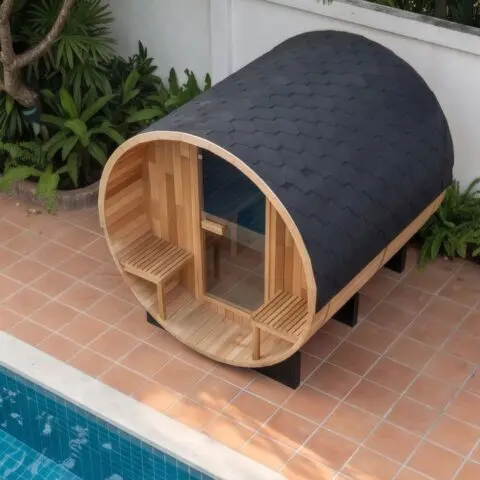


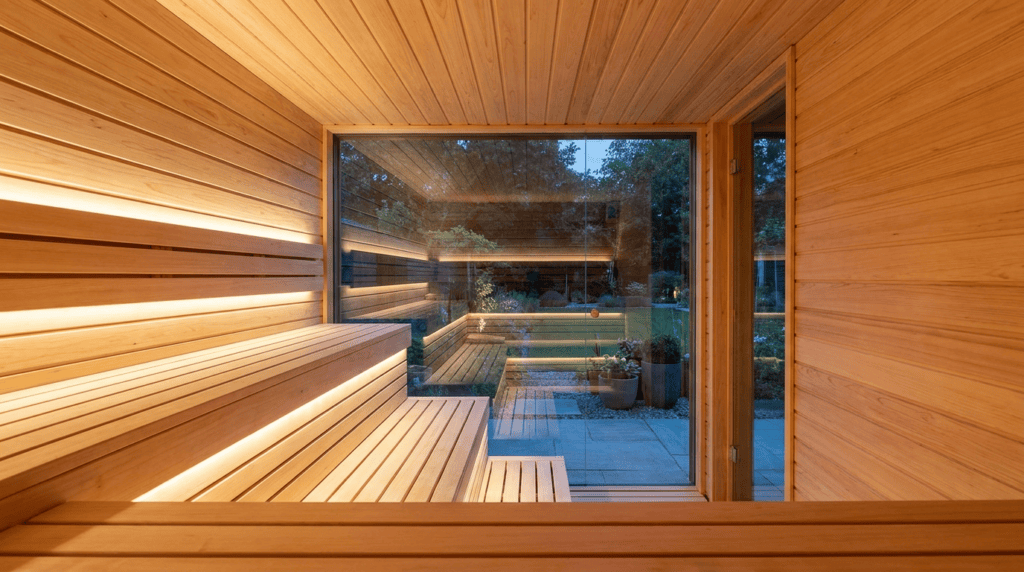
The sauna in a private garden is used four or five times a week by the same two individuals, while the one in the hotel is used from seven in the morning until ten in the evening by guests who have never used a sauna, do not read the sign, and will pour a bucket of water over the stones simply because someone has told them that is what is meant.
They are a different product because the construction, heater, electrical supply, and conversation are different.
Most of the inquiries we receive from gyms, hotels, and resorts begin with a photo of a residential barrel sauna and a question about price. That is a reasonable starting point. However, the difference between a domestic sauna and a commercial one is not simply a larger-sized unit – it is the duty cycle, compliance and access, and it is these three factors which determine the specifications well before any timber is selected.
What a commercial buyer in Thailand actually has to go through is the following.
Start with the licence, not the sauna
Sort out the section that confuses people before you agree to anything.
There is no separate licence for saunas in Thailand. According to the Health Establishment Act B.E. 2559 (2016), sauna and steam services are included within spa businesses and are therefore regulated by the Department of Health Service Support of the Ministry of Public Health.
Two consequences are worth understanding early on.
A health massage licence does not include you; if a licence already exists for a massage service on the property, then that licence specifically excludes saunas, steam rooms and hydrotherapy. Adding a sauna to a massage business is not a minor extension of the existing permission; it requires a different licence.
The Spa Manager Licence includes a registration period, which all spa establishments must complete, and it usually begins once a year. If a resort doesn’t find out about this until the ninth month of its fit-out, it has a real scheduling problem, not just a paperwork one.
There is often another layer as well. In your particular district, a Health-Hazardous Business Licence from the local Public Health Office might also be required, one that covers sanitation, ventilation and waste. Since the requirements differ from municipality to municipality, the solution applicable to a property in Chonburi will not automatically apply to one in Phuket or Chiang Mai.
We aren’t lawyers and therefore can’t give you legal advice. What we can say is that we have gone through the process, and the ones who handle the situation well raise the matter with their lawyer or with DHSS during the first month of planning, rather than waiting until later. The fact that a supplier has never mentioned any of this to you indicates something about the number of commercial installations they have actually carried out.
Size the room by volume, not by headcount
When it comes to residential purchases, people want to know how many individuals the space can accommodate; commercial buyers, on the other hand, should be concerned about cubic metres since it is the cubic metres that determine the heater, and the heater in turn determines the electrical supply, and the electrical supply determines if the project is simple or costly.
Work out your internal volume in cubic metres, then match the heater:
3kW — 2 to 4 m³
4.5kW — 3 to 6 m³
6kW — 5 to 8 m³
9kW — 8 to 11 m³
10.5kW — 9 to 13 m³
12kW — 11 to 15 m³
15kW — 13 to 18 m³
18kW — 15 to 20 m³
Two points are important for commercial rooms.
Glass and uninsulated surfaces will require you to go up a size; a fully glazed front is a nice feature in a hotel’s wellness area, and it continuously loses heat. When sizing up the heater, do so for the room you are actually constructing, not for the solid-walled room of the same volume.
Recovery time is more important than the highest temperature. A domestic sauna is heated only once a day, while a commercial one is continually opened and closed, and every time a door is opened, heat is lost. The problem of undersizing doesn’t become apparent on the first day; it shows itself in the third month, when customers complain that the sauna is never properly hot at six in the evening.
If you don’t know where your room fits in the sizing, our guide on what size sauna heater you need looks at the sizing in more detail.
Power: this is where commercial projects get expensive
Heaters up to 9kW can be connected with a single-phase supply, but if they exceed that amount, you need three-phase.
For most commercial rooms, this is the highest variable cost apart from the cost of the sauna itself; if your plant room already has three-phase power available and the distance to the sauna is short, no special action is needed. But if that is not the case, you’ll need to carry out a supply upgrade, and you should discuss this with your electrician and the PEA before bringing it up with us.
Two things we would ask you to confirm early:
At the site, the supply that is available, not that which is at the building; the distance between these two is often the whole issue.
Who is carrying out the last connection? A qualified electrician must always make the final connection. We supply the complete electrical specification, covering voltage, current draw, wire and cable size, and breaker rating- as a document you can give directly to your contractor, so there’s no need for guessing.
Heaters and controls for a commercial duty cycle
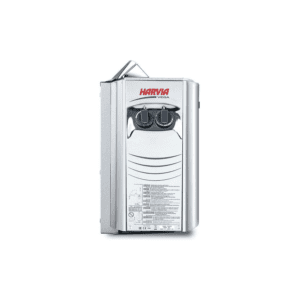
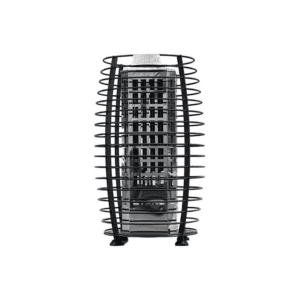
We offer traditional stone heaters made by Harvia and Diooist, both of which are genuine products and come with a genuine warranty; this is particularly important in a commercial environment rather than a domestic one since in a house a faulty heater is merely an inconvenience, whereas in a hotel it results in guests making complaints every day until the spare part reaches them.
The touchscreen controls are fitted to the walls by default, and a WiFi app for both iOS and Android is available as an extra feature. For commercial operators, the app is not just a gadget; it lets the duty manager confirm the sauna has reached the desired temperature before the first customer arrives, and switch it off from the front desk at closing time.
Timber: what survives a commercial duty cycle
All of the timber that we offer is suitable for use. Although it does not age the same way under constant use, the grade takes this into account.
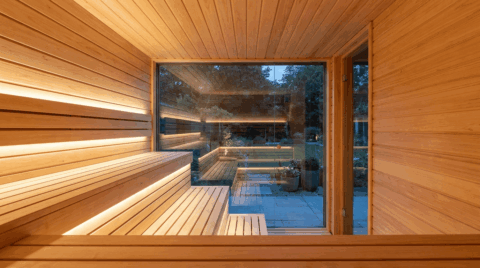
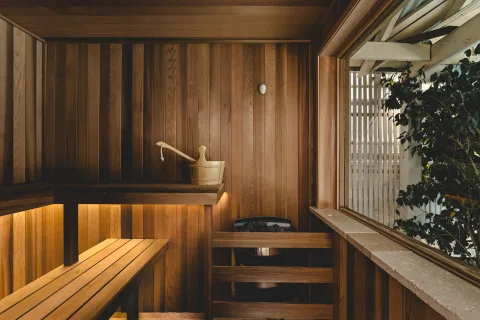
Red Cedar is stable, having a pleasant aroma and a low thermal conductivity; it is the premium choice by default for commercial rooms.
Rusty Cedar — offers the same performance but with a warmer, more variegated appearance.
Japanese Hinoki — has a great smell and can be a real conversation starter in a high-end home.
Japanese Cedar — lighter and softer in character.
Thermo Hemlock — heat-treated for stability, clean, and pale.
Hemlock — sound and economical.
Thermo Pine — a value option that is still a proper sauna.
When it comes to a hotel spa or a resort’s well-being area, we would usually recommend Red Cedar or Hinoki; this isn’t because the other types don’t work, but because the room is an integral part of the guest experience and since both cedar and hinoki have an appearance and smell that match what a guest expects from a sauna.
For a gym in which the sauna is merely a utility rather than a feature, assigning the money to Thermo Hemlock or Thermo Pine makes sense.
We give a full breakdown of the best wood for saunas and ice baths in Thailand.
Site, ventilation and drainage
There are a few items we prefer to address now rather than wait until install day.
A solid and even foundation, such as a concrete pad, a structural deck, or a paved surface. When a commercial room is filled with people, the resulting load is considerable, and in the case of a roof or an upper floor where the structure has to be checked, it should not be assumed.
The outdoor rooms have flat roofs. All the outdoor saunas we offer have flat roofs because they handle Thai rain well, fit modern architectural styles, and avoid the maintenance problems associated with a pitched roof with a flue.
Ventilation should be included in the discussion when applying for the licence and not treated as a secondary issue; it applies to both the room and the space that the room is in. It is worthwhile having your consultant look at it at the same time as you submit the licence application rather than doing so afterwards.
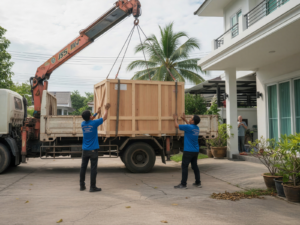
This is the one which causes delays in the schedule. You need to check the lift dimensions, the width of the stairs, the angle of the corridors, and whether the truck can get within carrying distance. Send us photographs and the measurements as early as possible, and we’ll honestly let you know if it’s feasible.
The cold side
The commercial wellness installations that we provide quotations for are not limited to just saunas. There are separate commercial factors to take into account with regard to the ice bath aspect if you are setting up a hot-and-cold circuit.
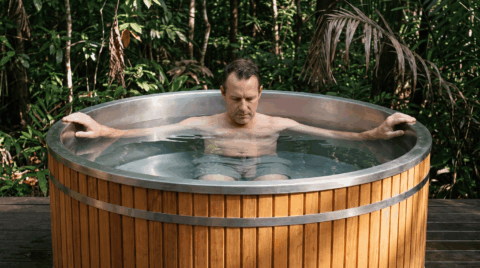
The baths have a stainless steel inner layer, either grade 304 or 316, and optionally feature Red Cedar or composite outer cladding. We do not construct solid timber that is in contact with water, and we never use teak; in a commercial situation where the water is used continuously and is also sanitised continuously, only stainless steel is reliable as an inner material, and for properties located by the sea, 316 should be specified.
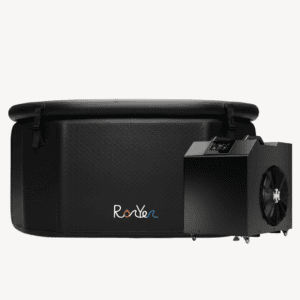
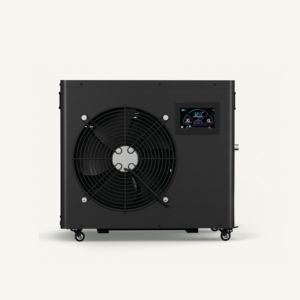
A chiller is essential for commercial use; ice alone is suitable for a private bath. A gym couldn’t operate using bags of ice, and once the water has been pumped into a chiller which maintains a precise temperature, the running cost is very low. If you need the actual running cost of a chiller in Thailand for budgeting purposes, we have prepared that information.
Lead time, delivery and installation
For a custom room, the time allowed is eight to ten weeks together with freight; we provide delivery throughout Thailand and internationally if required.
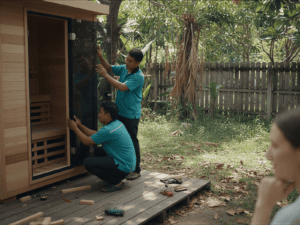
The saunas come flat packed and are shipped in a specially designed timber crate. In most cases, two or three people can assemble the room in one day using clear instructions, and many properties arrange for their own maintenance team to do it. If you prefer that it should be done for you, professional installation includes delivery to the site, full assembly, levelling, fitting in the heater and a handover walkthrough.
For commercial jobs, we generally advise the install service, for one rather dull reason: it makes it our responsibility for the final room rather than dividing it among three parties if any adjustments are needed.
What to send us for an accurate quote
We can quote properly from five things:
The internal dimensions of the room, or the area that you have available.
Including photos of the site, along with the access route.
The kind of electrical supply available at that location, whether it is single-phase or three-phase.
Whether it is indoors or outdoors.
The date on which you will open and whether the licensing procedure has begun.
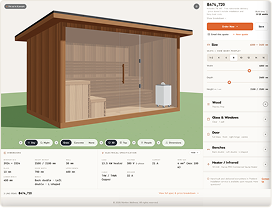
As long as the space has not been finalised, you will be able to go through the various configurations and view the up-to-date pricing even while your architect is still adjusting the walls.
Frequently asked questions
Q: Is it necessary to have a licence in order to install a sauna in our hotel or gym in Thailand?
You almost certainly need a Health Spa Licence rather than a Health Massage Licence since sauna and steam are included in the spa section of the Health Establishment Act; a district-level Health-Hazardous Business Licence might also be required. It is important to check your particular case with DHSS or a Thai lawyer as early as possible in the planning process, since the window for registering for the Spa Manager Licence opens only once each year.
What is the difference between a commercial sauna and a private one?
A: The duty cycle involves constantly opening and closing the commercial rooms, operating them for twelve or more hours each day, and having them used by people who are not familiar with the equipment; as a result, a more powerful heater is needed for the same volume, leading to more robust specifications and control systems that a duty manager can handle.
Can a commercial sauna be operated using single-phase power?
Yes, for up to 12kW. If you go above that, then you’ll need three-phase. Since this is usually the highest variable cost for commercial rooms, it’s important to check what type of supply is available at the actual site before deciding on the size of the room.
Q: How long will a custom build take? Eight to ten weeks from the date of ordering, together with the cost of freight to your address. If you have a fixed opening date, start from that date and add a margin for the licensing process, since it follows its own timetable.
What do you think — can our maintenance team carry out the installation or do you need your crew?
A: Either works. Rooms arrive flat-packed and most assemble in a day with two or three people. For commercial projects, we generally recommend our installation service so responsibility for the finished room sits in one place.
Do you provide the electrical specifications to our contractor?
A: Yes. You receive a full specification covering voltage, current draw, wire and cable size and breaker rating, ready to hand to your licensed electrician. A licensed electrician must make the final connection.
Can you manage a rollout involving multiple sites?
A: Yes, when you discuss the entire programme rather than looking at each site individually, it makes a difference to our ability to schedule and price it.
Talk to us before the drawings are finished
The commercial projects that go smoothly are the ones where the sauna was part of the plan, not added to it. Bring us in while the space is still on paper, and we can tell you what the room wants to be, what it will draw, and what your contractor needs to leave you.
Book a free consultation — phone, video call, or in person.
087 250 2426 (Thai) · 06 2229 5157 (English)