





I’ll be honest about my first real ice bath. It wasn’t a cold shower or a chilly pool, but an actual cold plunge at about 10°C. I only lasted forty seconds before I got out. I told myself it was a smart move, but really, I just wasn’t ready.
The second session was better. The third was surprisingly manageable. By the end of the first month, I was doing three sessions a week and looking forward to them in a way that I still find faintly baffling when I think about it.
Cold-water immersion is often seen as something only triathletes or Scandinavians do, but that’s not true. Anyone can work up to it. There’s a good way to start, and there’s a way that might make you never want to try again. Here’s how to do it right.
If you’d rather watch than read first, this is a solid beginner walkthrough that covers entry, breathing and how long to stay in:
What temperature should an ice bath be for beginners?
Start with water at 15-18°C. That’s cold enough to trigger your body’s response, like vasoconstriction, norepinephrine release, and the cold shock reflex, but not so cold that it overwhelms you if you’re new to it. After a few weeks, most people get comfortable with regular sessions at 10 to 15°C.
Don’t focus on making the water as cold as possible, especially when you’re starting out. Colder isn’t always better. Doing a steady 12°C session twice a week is more helpful than forcing yourself through a tough 7°C session that makes you not want to try again.
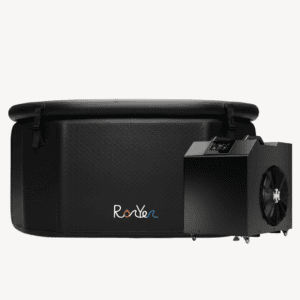
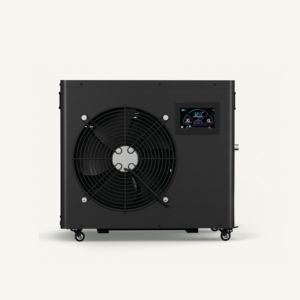
Using a chiller-controlled ice bath helps by keeping the temperature steady throughout your session. If you use just ice, the water starts out cold but gets warmer as the ice melts, so it’s harder to know what your body is really getting used to.
You can use ice with our inflatable plunge pools or a chiller.
How long should you stay in an ice bath the first time?
One to two minutes. That’s not a partial session — that’s a complete first session.
Dr Andrew Huberman from Stanford recommends aiming for 11 minutes of cold exposure per week, spread over 2 to 4 sessions. That means about 2 to 3 minutes each time as you’re getting started. Begin with the shorter sessions.
Source: Huberman Lab — Using Deliberate Cold Exposure for Health and Performance
https://hubermanlab.com/using-deliberate-cold-exposure-for-health-and-performance/
You don’t need to stay in until your hands go numb to get the benefits. What really matters is showing up regularly, not pushing yourself to extremes.
How do you get used to cold water immersion?
This is where many people make mistakes. They try to get it over with quickly, like ripping off a bandage. But getting used to cold water is a skill you develop over a few weeks. Here’s the right way to do it.
Step 1 — Cold showers first (Week 1)
Before you get in a bath, get used to cold water in the shower. Finish your normal shower with 30–60 seconds of cold. It’s not a substitute for immersion, but it teaches your nervous system what’s coming. It also sorts out your breathing, which matters more than most people realise.
Step 2 — Controlled entry (Week 2+)
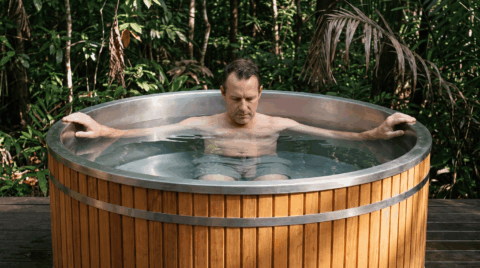
When you’re ready for the ice bath, don’t jump in. Go in slowly, starting with your feet, then sit down for over 20 to 30 seconds. If you rush, the cold shock feels stronger, and everything gets harder. The slower you enter, the easier it is for your body to adjust.
Step 3 — Control your breathing
The first 30–60 seconds will trigger an involuntary gasping response and fast, shallow breathing. This is normal, it’s the cold-shock reflex, and it’s involuntary. Your job is to bring it back under control.
Focus on slowing the exhale. Slow, nasal inhale, longer exhale. Box breathing works well once you’re in (4 counts in, 4 hold, 4 out, 4 hold). Once the breath settles, the discomfort drops significantly. Most people find that after 60–90 seconds, it becomes almost meditative. The hard part is genuinely just the entry.
One important note: the Wim Hof breathing technique involves hyperventilation, which lowers CO2 in your blood and can cause blackouts. Never use it while you’re in the water. Fine to do beforehand to calm the nervous system, not in the bath.
If you want to see what controlled breathing through that first shock actually looks like, this clip follows a complete first-timer being coached through their first ever ice bath — you can watch the gasp reflex hit and then settle as the breathing comes under control:
(Same caveat applies — the breathing method shown is Wim Hof’s own. Use it before you get in, not while you’re submerged.)
Source: Wim Hof Method — Breathing Technique
https://www.wimhofmethod.com/breathing-exercises
Step 4 — Stay still
Movement increases heat loss, which increases the cold sensation. Once you’re in, stay still. Hold the sides if you need to. Fix your eyes on something. The less you fidget, the more manageable it becomes.
Step 5 — Don’t rush to warm up afterwards
Resist the urge to jump straight into a hot shower. Let your body naturally warm up for at least 5–10 minutes first. This isn’t about suffering — there’s a legitimate physiological reason for it.
Dr Susanna Søberg’s research on brown adipose tissue (BAT) found that the post-cold-shiver period — when your body generates heat to restore core temperature — is part of what drives the metabolic benefit. Cutting it short by jumping into a hot shower means you’re skipping the part where the adaptation actually happens.
Source: Søberg et al., Cell Reports Medicine, 2021
https://www.cell.com/cell-reports-medicine/fulltext/S2666-3791(21)00266-0
What are the benefits of regular ice baths?
The research is solid in several areas. I’ll be clear about what’s well-established and what’s still being studied.
Norepinephrine and mood: This is the most consistent and immediate effect. One cold immersion session can boost norepinephrine by 200 to 300% and cause a big dopamine spike, both of which improve mood and focus for hours. Most regular users say this is the main reason they keep coming back. The mental shift after a session is clear.
Source: Shevchuk, Medical Hypotheses, 2008 — Adapted Cold Shower as a Potential Treatment for Depression
https://www.sciencedirect.com/science/article/abs/pii/S0306987707005579
Metabolic activation: Cold exposure activates brown adipose tissue, which creates heat by burning energy. Doing this regularly can increase BAT over time, which may help with metabolic health and insulin sensitivity. Research is ongoing, and while results look good, they aren’t conclusive for everyone yet.
Muscle recovery: Cold water immersion helps reduce delayed-onset muscle soreness (DOMS) by lowering inflammation and swelling after exercise. This is well proven. However, if you’re training for muscle growth, avoid cold immersion within an hour after lifting weights. Research (Roberts et al., Journal of Physiology, 2015) shows it can reduce the signals that help build muscle. Use cold after cardio, skill sessions, or on rest days.e: Bleakley et al., British Journal of Sports Medicine
https://bjsm.bmj.com/content/46/4/233
Stress resilience: Regular cold exposure helps your nervous system learn to stay calm under stress. Over time, most people notice they handle other stressful situations better, too. The skills you gain from managing the cold-shock response carry over.
Sleep: In Thailand’s heat, this one matters. Cold exposure in the late afternoon or early evening supports deeper sleep onset. Your body uses a drop in core temperature as a biological signal to sleep, and getting that signal in a 35°C ambient environment isn’t easy any other way.
Inflammation: Cold immersion reduces circulating inflammatory markers. Useful for chronic low-grade inflammation and post-exercise recovery. The effect is real, but the magnitude depends on temperature and duration.
What should you not do before an ice bath?
Don’t eat a large meal within an hour before your session. Cold immersion pulls blood away from your digestive system and can make you feel nauseous.
Don’t do intense cardio immediately before. Your core temperature will be elevated, and you’ll lose heat faster, making the cold-shock response stronger.
Don’t use Wim Hof breathing while in the water. Keep it for before the session, not during.
Don’t judge the whole experience by the toughest moments. The first 60 seconds are the hardest. If you get through the first minute, you’ll usually be able to finish your session as planned.
Is it safe to use an ice bath every day?
For most healthy adults, doing 3 to 5 sessions per week at 10 to 15°C for 2 to 5 minutes each is manageable. Doing daily sessions at very cold temperatures or for long periods can put extra stress on your immune and heart systems.
One important warning: If you’re training for strength or muscle growth, don’t do cold immersion within an hour after lifting weights. Cold can reduce muscle protein synthesis during recovery. It’s fine to use cold after cardio or on rest days.
If you have heart conditions, Raynaud’s syndrome, or cold urticaria, talk to your doctor before starting. The cold shock response can temporarily raise your blood pressure, so it’s important to be aware of this if you have any related health issues.
Example weekly routines
These routines are just starting points. Change them to fit your schedule, your goals, and how your body feels.
Beginner — Weeks 1–2
Monday: Cold shower finish — 60 seconds
Wednesday: Cold shower finish — 60 seconds
Friday: Ice bath — 2 minutes at 16–18°C
Total cold exposure: roughly 4 minutes per week. The goal is nervous system familiarisation, not performance.
Building Phase — Weeks 3–6
Tuesday: Ice bath — 3 minutes at 14°C
Thursday: Ice bath — 3 minutes at 12°C
Saturday: Ice bath — 4 minutes at 12°C
Total: roughly 10 minutes per week. Approaching the Huberman minimum effective dose of 11 minutes.
Established Routine — Month 2 onwards
Monday: Ice bath — 4 minutes at 10°C (wait at least 4 hours after any strength training)
Wednesday: Ice bath — 3 minutes at 10°C
Friday: Ice bath — 4 minutes at 10°C
Sunday: Optional — 2 minutes at 12°C
Total: 11–13 minutes per week. Consistent with the research protocols.
A note for anyone in Thailand: Because it’s so hot here, your body temperature is higher, and the cold shock can feel stronger than in cooler places. Starting at 16°C is a good idea, even if you’re active and fit. Using a chiller keeps the temperature steady during your session, which helps you track your progress better than using just ice, where the temperature can fluctuate widely.
FAQ
Q: How cold does an ice bath need to be to get benefits?
A: Meaningful physiological response starts at around 15°C. Most regular users work at 10–15°C. Colder is not automatically better — consistency and frequency matter more than chasing lower temperatures, particularly when you’re starting out.
Q: Can I use an ice bath in Thailand’s heat?
A: Yes — and the contrast effect is actually amplified. A 10°C plunge in a 33°C environment creates a significant thermal delta that intensifies both the metabolic and mood response. The main practical requirement is a chiller capable of maintaining a stable temperature regardless of outdoor conditions.
Q: Do I need to submerge my head?
A: No. Neck-depth immersion covers all major muscle groups and fully triggers the cold-shock response. Head submersion increases risk with no established benefit for most people.
Q: How long until the cold starts feeling manageable?
A: Most people notice genuine adaptation within 2–3 weeks of consistent sessions. Breath control becomes faster to establish, entry becomes less dramatic, and you’ll likely find yourself extending sessions naturally without trying.
Q: Should I do a sauna before or after the ice bath?
A: Sauna then cold — always. The heat-to-cold contrast is a well-established protocol,, and the order matters: heat relaxes blood vessels and opens them, while cold triggers a sharp vasoconstriction response. Ending on cold keeps cortisol elevated, which is good for focus but not for sleep onset. If you’re doing a contrast session in the evening, consider finishing with a short warm-up round rather than a cold one.
Q: Can I use an ice bath if I have high blood pressure?
A: Cold water entry causes a temporary spike in blood pressure. If you have hypertension, consult your doctor before starting. A gradual cold shower protocol first is a lower-risk entry point and gives you a sense of how your body responds before committing to full immersion.