

Whenever someone asks about a chiller, the first thing they want to know is the running cost. People ask this before anything else—before talking about temperature range, compatibility, or even size. The main question is always: what will this cost me each month?
That’s a fair question. A chiller is a big investment, and nobody wants a surprise on their electricity bill. I’ll share the real numbers and show my calculations, so you can decide with confidence.
In short, it costs less than most people think. If you want the details and reasons, keep reading below.
How Much Electricity Does an Ice Bath Chiller Actually Use?
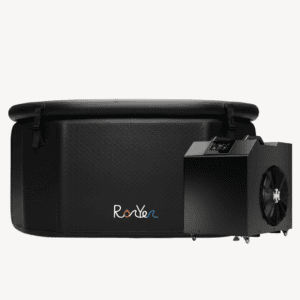
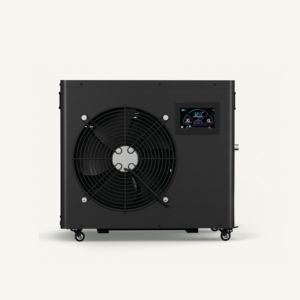
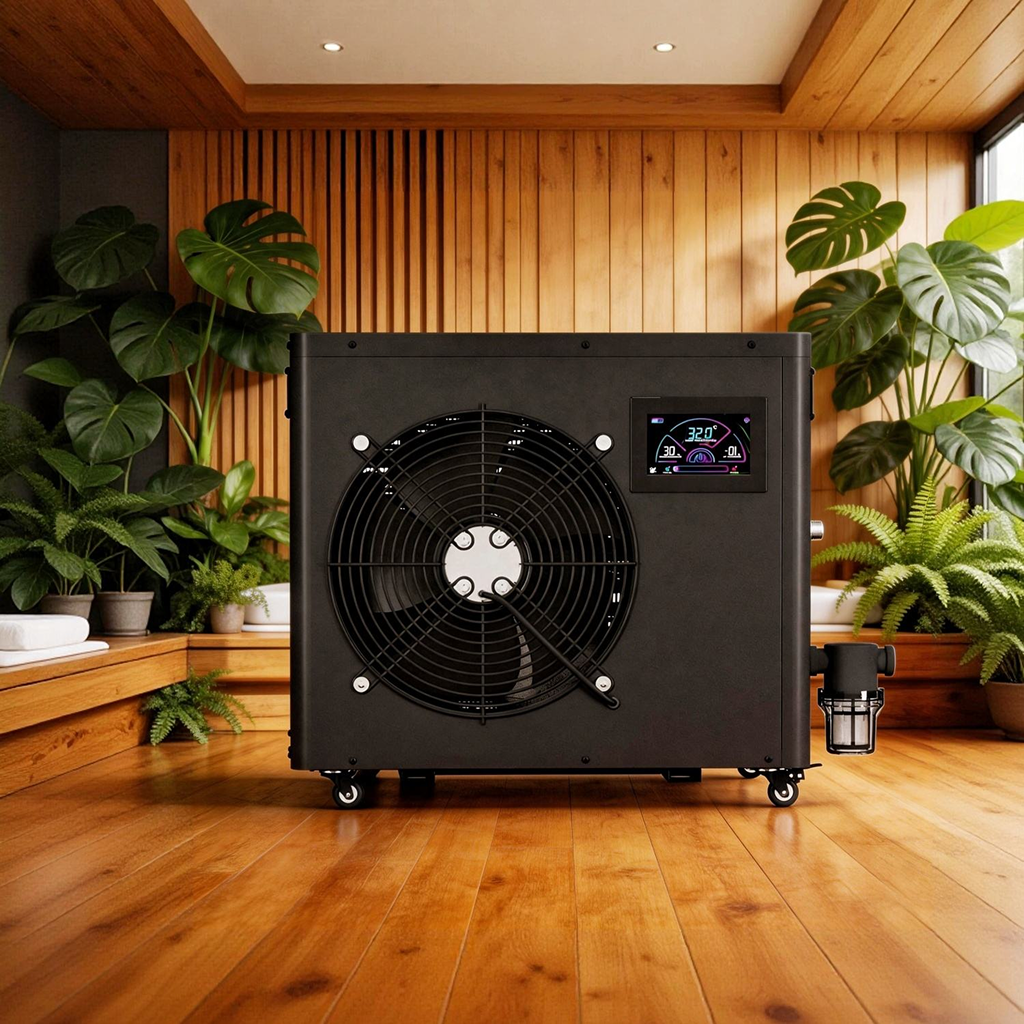
A chiller operates on the same principle as a reverse-cycle air conditioner: a compressor, a refrigerant loop, and a circulating pump combine to extract heat from the water and release it into the surrounding air. The key number is the rated input power, the number of watts it draws from the wall when the compressor is running. For a 1.5HP unit, that’s typically in the range of 1,100–1,500W. For a 2.0HP unit, expect 1,500–2,000W. Your spec sheet will give you the exact figure for your model.
But those numbers don’t show the duty cycle, which is the percentage of time the compressor runs compared to when it’s idle. This is where you can really save money.
The chiller’s thermostat works in cycles. It cools the water to your chosen temperature, then turns off. It only starts again when the water warms up. If you have an insulated tub with a cover in a cool room, the compressor might hardly run during maintenance mode. But if your tub is uncovered and in direct Thai sun, the compressor will have to work much harder.
This difference can mean paying a reasonable monthly bill or ending up with a much higher one.
What Does That Work Out to Per Month in Thailand?
Thai residential electricity (MEA and PEA) is currently around ฿3.95 per kWh for 2026. Using that as a baseline:
Initial cool-down (getting the water from ambient, say 28°C, down to 12°C in a 400-litre bath) typically takes two to three hours on a 1.5HP unit. Running at full load for two hours: 1.3kW × 2h = 2.6kWh ≈ ฿10 per cool-down session.
Maintenance mode, which means keeping the temperature steady between sessions with the cover on, is where costs stay low. In a shaded spot, a well-insulated tub with a good cover might only need the compressor running 10–20% of the time. That’s much less than the cost of cooling down from scratch.
Putting it together for different use patterns:
Casual use (3–4 sessions per week, covered between):
฿300–500 per month
Regular daily use (one session per day, covered overnight):
฿500–750 per month
Heavy use (multiple sessions daily, outdoor placement):
฿800–1,500 per month
If your chiller sits outside in direct sun and is left uncovered between uses during a Bangkok summer, expect to pay at the higher end of the range. If you keep it in a shaded, ventilated area with an insulating cover, your costs will be lower. The conditions around your chiller are just as important as its rated wattage.
Is a Chiller Cheaper Than Buying Bags of Ice?
This is often the real question people want answered.
A 25kg bag of ice in Thailand costs around ฿25–35, depending on where you’re buying it. To get a 400-litre tub from ambient (around 28–30°C) down to a session-ready 12–15°C, and keep it there for the duration of your plunge, you’ll typically need 40–60kg of ice — and that gets you one session. Once that ice melts, the water warms up, and you’re back to ambient.
At ฿60–80 per session in ice:
3 sessions per week: ฿720–960 per month
Daily sessions: ฿1,800–2,400 per month
Compared to the chiller’s running cost of ฿500–750 per month for regular use, the chiller is the better choice for anyone plunging daily. The savings become even greater if you use it more often.
If you only use it occasionally, like two or three times a week, the running costs are similar, so the chiller’s upfront price matters more. But the ice method doesn’t include the hassle of getting ice delivered, timing your sessions before the ice melts, or not having exact control over the temperature. If you’re committed to regular plunges, these inconveniences can outweigh the cost difference.
There’s a calculator on our inflatable bath page that lets you plug in your session frequency and tub size to see the comparison for your specific situation.
Does Running a Chiller in Thailand Cost More Than in Cooler Climates?
Yes, running a chiller in Thailand does cost a bit more, but the difference isn’t huge.
The main issue isn’t voltage or infrastructure. Thai power is 220–240V single-phase, just like in other countries in the region. The real challenge is the ambient temperature. In Thailand, the average daily temperature is about 28–35°C, depending on the season and location. A chiller keeping water at 12°C has to work against a 16–23°C difference. In a place where the air is 15°C, the chiller only has to handle a 3°C difference, so the compressor runs less, and costs are lower.
In practical terms, where you place your chiller and whether you keep it covered make a big difference in Thailand. A covered tub in a shaded room costs much less to run than an uncovered tub on a sunny balcony.
This shouldn’t make you rethink buying a chiller. Instead, it’s a reminder to choose a good spot for your unit and to use a cover.
What Can I Do to Reduce My Chiller’s Running Costs?
There are five practical steps that make a real difference in Thailand’s climate:
Always use the cover. This is the most effective way to save energy. An uncovered bath continues to absorb heat from the air, while a covered bath with a good lid hardly does. The cover isn’t just an accessory; it’s an essential part of the system.
Position the unit with airflow. Chillers exhaust heat through the sides and back. They need at least 30cm of clear space on all sides. A unit crammed into a tight space has to work harder to reject heat, which raises both running time and long-term wear.
Set your target temperature to 12–15°C instead of 6°C. Most research on cold water immersion shows benefits around 10–15°C, not at extremely low temperatures. Going below 10°C makes the compressor work much harder and run longer. Unless you have a special reason to go colder, 12–14°C is ideal for both your body and your electricity bill.
Pre-cool during cooler hours. The compressor runs more efficiently when ambient temperatures are lower. If your setup allows it, running the initial cool-down in the early morning or at night rather than during peak afternoon heat reduces the load.
Keep the bath water clean. Dirty water has a higher thermal mass, which makes the chiller work harder. Changing the water regularly and using the filter properly isn’t just about hygiene; it also helps the chiller run more efficiently.
FAQ
Q: How much does an ice bath chiller cost to run per day in Thailand?
A: For most homes, expect to spend ฿15–30 per day, depending on how often you use the bath and how well it’s insulated. If you plunge daily with a covered, shaded bath, you’ll pay less. If you have multiple sessions in an outdoor, uncovered bath, costs will be higher.
Q: Is a chiller cheaper than buying ice if I plunge every day?
A: Yes, by a lot. Using ice every day costs ฿1,800–2,400 per month for a typical 400-litre bath. Running a chiller daily costs only ฿500–750 per month. That’s a savings of ฿1,000–1,700 per month, even before you consider the added convenience.
Q: Does putting a cover on the tub make a real difference?
A: Yes, it makes the biggest difference. An insulated cover can cut the chiller’s running time in half during maintenance mode because it helps the water keep its temperature. In Thailand’s heat, a cover isn’t optional—it’s the key to keeping your costs reasonable.
Q: Can I run a RönYen chiller on a standard Thai household socket?
A: Our 1.5HP and 2.0HP models work with a standard 220–240V single-phase supply. You don’t need an electrician or special wiring—they are plug-and-play. If you can, use a dedicated socket to avoid tripping a shared circuit.
Q: How long does it take to cool an ice bath with a chiller?
A: For a 400-litre bath starting at about 28–30°C, it usually takes two to three hours to reach 12°C with a 1.5HP unit. A 2.0HP unit is a bit faster. If the bath is covered and has only warmed up a little, the next cool-down is quicker—often just 30–60 minutes.