




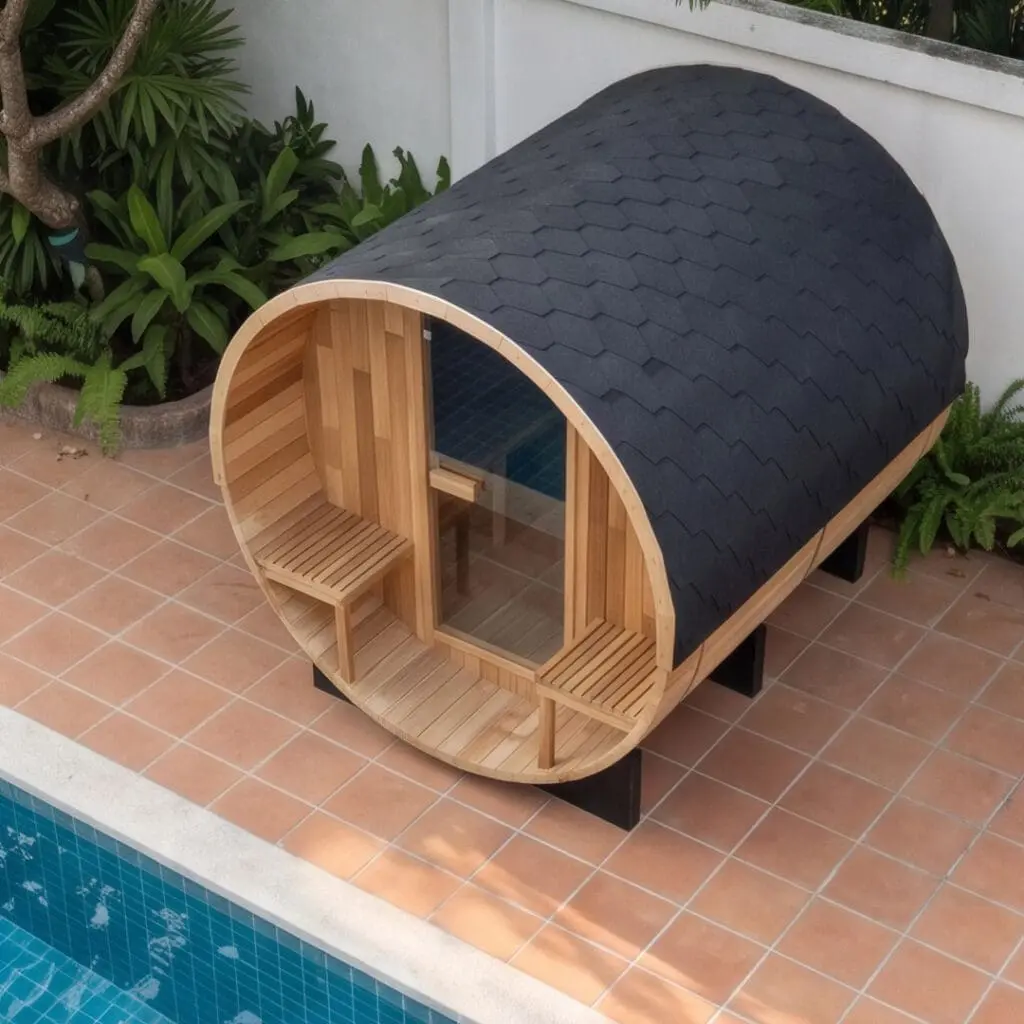
A six-person barrel is ฿110,252 cheaper than a six-person rectangle.
You get the same number of seats, the same heater, and the same timber. The only real difference is the shape, and that actually matters.
Most comparisons say it’s just about taste: choose a barrel if you like a rustic look, or a rectangle if you prefer something practical. But that’s not the most important part. The shape affects how quickly it heats up, how much timber you pay for, how much of the space you can actually use, and how much room it takes up in your garden.
Here’s what each one does and what each one costs.
What does each sauna shape cost?
The barrel is the cheapest at every size. Cube sits in the middle. Rectangle costs the most.
From prices, Thermo Pine, outdoor:
2 person
Barrel — ฿182,958
Cube — ฿203,750
Rectangle — ฿238,299
4 person
Barrel — ฿192,216
Cube — ฿218,265
6 person
Barrel — ฿232,348
Cube — ฿266,908
Rectangle — ฿342,600
8 person
Barrel — ฿271,088
Cube — ฿317,331
Free nationwide delivery on all of them. Installation is separate, and so is the ferry if you’re on an island.
Those price differences aren’t just a business decision. It comes down to geometry, which is also why a barrel heats up fast. A cylinder is the most efficient way to enclose space, and it always has been. With the same amount of space inside, a barrel has less surface area than a box. That means it uses less timber, which lowers the price and also keeps more heat inside, reducing heat escaping through the walls.
You’re not getting a lesser sauna for ฿110,000 less with six seats. You’re getting the same volume of air, heated by the same heater, wrapped in less material.
That’s the main reason barrels have been built this way for so long.
Why does a barrel heat faster?
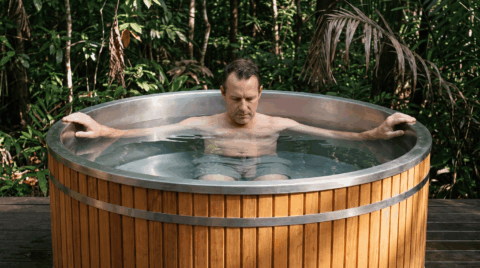
There’s less unused air above your head, and the curved shape helps move the heat around.
In a rectangle, the air above the top bench is dead volume. Heat rises, hits a flat ceiling, and sits there doing nothing for you. You’re paying to heat a layer of air nobody is sitting in.
A barrel’s curve follows the heat. It rises, runs along the curve, and comes back down the far side. Natural circulation, no dead corners, less total volume for the same number of people.
In practice, a barrel sauna heats up faster and maintains a more even temperature than a rectangular sauna with the same number of seats.
So why would anyone buy a rectangle?
Because you can’t sit in a curve.
This is the trade-off, and it’s something most barrel sauna sellers don’t mention.
The shape of a barrel limits how you can arrange the benches. The floor is narrow since you’re at the bottom of a cylinder, and the walls curve away. Bench layouts that are easy in a box can be awkward or impossible in a barrel. You also lose the corners because there aren’t any.
Standing up can also be tricky. You only get full height in the very middle, so if you’re tall, you’ll quickly learn to stand in the centre.
A rectangle uses every millimetre. Straight walls take benches anywhere, at any height, in any arrangement.
For two people, the difference is hardly noticeable, and saving ฿55,000 is significant. For six or more, the rectangle is worth the extra ฿110,000 because everyone can sit comfortably without having to figure out where to sit.
What about a cube?
A cube is basically a rectangle that fully embraces its boxy shape.
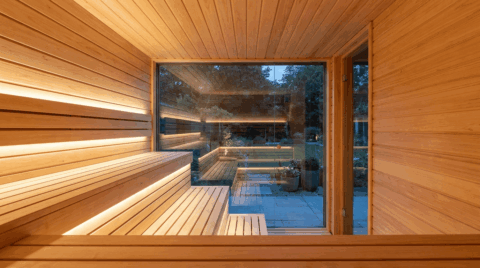
It has the same advantages: you can use all the space inside, arrange benches however you like, and stand anywhere. The main difference is in its proportions and design. A cube is made to look intentional, and it works better with glass because the walls are flat and square.
It’s ฿20,000 to ฿35,000 more than a barrel at the same seat count and ฿35,000 to ฿75,000 less than a rectangle.
If your sauna will be somewhere you’ll see it often, like off a deck, beside a pool, or visible from the kitchen, the cube is a great choice. It looks more like a piece of architecture than a simple shed.
If your sauna is hidden down the side of the house, you’re paying for looks that no one will notice. In that case, go with the barrel.
Indoor or outdoor?
Indoor and outdoor saunas are different products, not just different locations.
An outdoor sauna is a building. It has a roof, weatherproofing, and an exterior that must withstand the Thai wet season. That’s a large part of what you’re paying for.
An indoor sauna is more like a renovation. Since you already have the roof and walls, we just build the sauna inside. There’s no need for weatherproofing, which makes it a more affordable option.
If you have a spare room, a corner in the garage, or a large enough bathroom, an indoor sauna is the best budget choice. It’s not a downgrade—it’s the same sauna, just without the extra building around it.
Which one should you get?
Two people and a tight garden: barrel. Six or more: rectangle. Somewhere visible: cube. Spare room: indoor.
Barrel — one to four people, tight on space, want it hot fast, don’t need clever benching, and you’d rather spend the ฿55,000 on timber than on corners.
Rectangle — six or more, want flexible benches, want to stand up wherever you like, want the most usable room per baht once there’s a crowd in it.
Cube — it’s going somewhere visible; you want glass, and you want it to look designed rather than delivered.
Indoor — you have the space already, and you’d rather spend the money on Red Cedar than on a roof.
No single shape is the best sauna. Each one is better suited to different needs.
What we’d tell you to do
First, decide how many people will use the sauna, and then choose the shape that fits. Don’t pick the shape first.
Two of you, small garden: barrel, ฿182,958, and it’ll be hot in half the time.
A family: a rectangular six-seater. The benching flexibility is worth more than the timber efficiency once there are four of you deciding where to sit.
A feature by the pool: a cube, with glass.
A spare room you never use: indoor, and put the difference into better timber.
We’re located in Ban Suan, just ten minutes from Central Chonburi. You can book an appointment to try out the saunas in person. It only takes thirty seconds to feel the difference between a barrel and a rectangle, but it can take a long time to read about it.
FAQ
What’s the difference between a barrel sauna and a rectangular sauna?
A barrel is a cylinder on its side; a rectangle is a box with straight walls. For the same internal volume, a barrel uses less timber, so it’s cheaper and heats faster. A rectangle gives you flexible benching and full standing height throughout.
Are barrel saunas cheaper?
Yes. A two-person barrel starts at ฿182,958, compared to ฿238,299 for a rectangle. At six seats it’s ฿232,348 against ฿342,600 — a saving of ฿110,252. A cylinder encloses the same volume with less surface area, so there’s less timber in it.
Do barrel saunas heat faster?
Yes. The curve leaves less dead air above your head and circulates heat naturally, so there’s less total volume to heat and no dead corners.
Are barrel saunas better than rectangular saunas?
Neither is better at being a sauna. A barrel suits one to four people in a tight space. A rectangle suits six or more, because you can’t put a bench in a curve the way you can in a corner, and standing height in a barrel exists only on the centre line.
What’s a cube sauna?
A rectangle designed to look deliberate. Same full use of internal space and flexible benching, but proportioned as architecture and better suited to large glass. A two-person cube is ฿203,750, sitting between the barrel and the rectangle.
Which sauna shape is best for a small garden?
A barrel. For the same internal volume, it has less surface area and a smaller footprint than any box, so it takes up less ground for the same seats — and costs less.
Is an indoor sauna cheaper than an outdoor one?
Yes. An outdoor sauna is a building — a roof, weatherproofing, an exterior that survives a wet season. An indoor sauna is a fit-out inside a room you already have.