



Most articles on this topic are written by people who only sell one type of sauna.
Infrared sauna companies often claim that traditional saunas are outdated and uncomfortable. Traditional sauna companies, on the other hand, say infrared is just a fancy heat lamp. Both sides are selling their products and not telling the whole story.
Here’s a comparison without any sales pitch. Some points favour infrared saunas, while others do not.
What is the difference between an infrared and a traditional sauna?
A traditional sauna heats the air. An infrared sauna heats you.
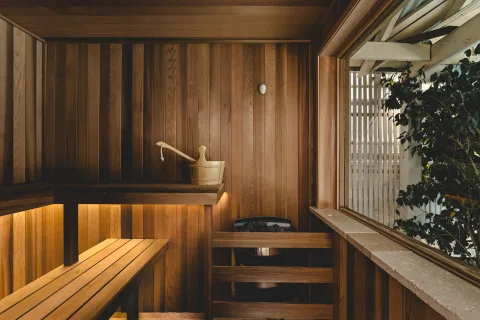
In a traditional sauna, an element heats a mass of stones, the stones heat the air, and the hot air heats your skin. You sit in a room at 80-90°C. Throw water on the stones, and you get a wave of steam that makes it feel hotter again.
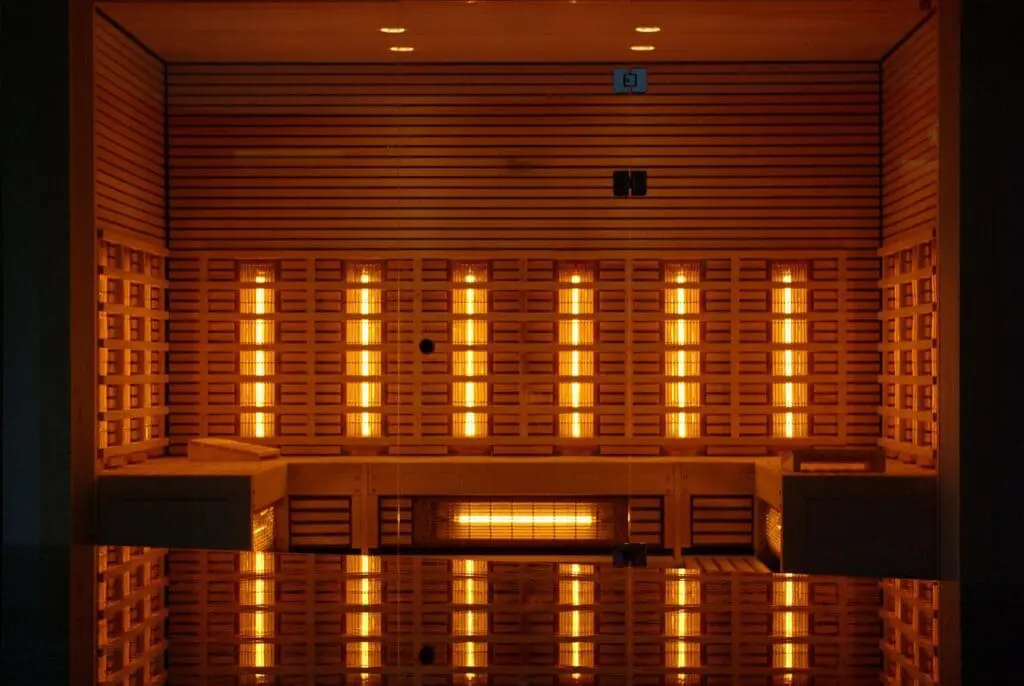
In an infrared sauna, emitters send infrared radiation to your body. The air stays around 45 to 60°C. Your skin absorbs the energy directly, and you heat from the surface inward, without the room being especially hot.
Both types aim for the same result, but they use very different methods.
This main difference affects everything else, including power consumption, heating time, maintenance, and the overall experience.
Which one gets hotter?
Traditional saunas get much hotter than infrared ones.
A traditional sauna is set to 80-90°C. An infrared cabin typically runs 45 to 60°C. You could hold a conversation in an infrared cabin without raising your voice.
But hotter and more intense aren’t the same thing. People who move from traditional to infrared often expect it to feel like nothing, and find they sweat about as much, just more slowly and at a much lower air temperature.
To put it simply, traditional saunas offer a shorter and more intense experience, while infrared saunas are longer and gentler. Neither is more difficult to use.
Which one is better for Thailand?
Traditional, in most cases. And this is a Thailand-specific answer that most comparisons miss entirely.
Thailand is already hot. A Chonburi afternoon runs 33 to 35°C with humidity in the seventies. An infrared cabin at 50°C is a fifteen-degree step up from a day you were already sweating through. In Melbourne in July, that same cabin is a forty-degree step up and feels like an event.
The main purpose of a sauna is to create a strong contrast with the outside temperature. Since Thailand is already hot, you need a sauna that provides even more contrast.
Traditional at 85°C is unmistakably a sauna, in any climate, on any day of the year.
There is another important reason, especially for those who have used a sauna before.
What is löyly, and why does it decide this?
It’s the steam off the stones, and you cannot have it in an infrared cabin.
Löyly is the Finnish word for the wave of heat and steam that comes off the rocks when you ladle water on. There’s no English equivalent, which tells you something about who took the practice seriously.
Infrared cabins do not have stones, so there is nothing to pour water onto. If you bring a bucket inside, it will just sit there unused.
If you have never experienced proper löyly, you may not notice its absence. For those who have, this feature often decides which sauna to choose.
Which uses less power?
Infrared saunas use less power, which is their main advantage in Thailand.
An infrared cabin typically draws 1.5 to 3 kW. A traditional sauna for the same number of people requires 6-9 kW.
Three reasons that the gap matters more here than elsewhere:
Single-phase electrical systems can handle up to 12 kW, and most Thai homes use single-phase. Infrared cabins stay well within this limit. Large traditional saunas may require a three-phase upgrade, which can be costly and requires an electrician’s help.
Condos and apartments. If you’re in a building with a body corporate and a shared supply, an infrared request is the one that gets approved.
Heat-up time is another factor. Infrared saunas are ready in 10 to 15 minutes, while traditional saunas take 30 to 45 minutes. If you want a quick session before work, this difference can be important.
If limited power is your main concern, infrared is the best choice. The rest of the information will not change that.
What does each cost to run?
Roughly ฿10 a session for infrared, roughly ฿30 for traditional. It’s not the deciding factor.
Rough arithmetic at about ฿5 per kWh:
A 2 kW infrared cabin runs for an hour. That’s 2 kWh, about ฿10.
A 6 kW traditional sauna: 45 minutes to heat plus an hour’s use. Call it 6 kWh once the thermostat starts cycling the element off, so about ฿30.
Traditional saunas cost about three times more per session, but the difference is still only around twenty baht.
If you use the sauna 4 times a week, you will spend about ฿160 per month on infrared and ฿520 per month on traditional. Over the course of a year, this adds up to a few thousand baht. While this is a real cost, it should not be the main factor in such a large purchase. Choose the sauna you will actually use.
Thai residential electricity is subject to a progressive tariff, so your actual rate depends on your total monthly consumption. ฿5 per kWh is a reasonable middle figure. Check your own bill if the number matters to you.
Which one needs more looking after?
They fail in different places. Traditional fails predictably. Infrared fails electronically.
Traditional saunas use stones and timber, which need occasional replacement. Stones can crack from repeated heating and should be replaced every year or two, though many people delay this. The wood needs to be ventilated and dried between uses. Other than that, traditional saunas are simple, and most problems are easy to spot and fix.
Infrared cabins have emitters and a control board. There are no parts that need to be replaced regularly, but if something breaks, it is usually an electronic component. This means you will need a technician and a replacement part, rather than simply replacing stones.
Neither type requires much maintenance. Traditional saunas need about ten minutes of care each year. Infrared saunas need almost no maintenance unless a repair is needed. Which one is better for you?
There is no strong evidence that one type of sauna is better than the other. Be cautious of anyone who claims otherwise.
The research on sauna bathing is genuinely interesting. A Finnish cohort study followed 2,315 middle-aged men for around twenty years and found that men who used a sauna four to seven times a week had lower rates of fatal cardiovascular events than men who went once a week. [1] Frequency tracked with the outcome.
Two things about that study that the marketing never mentions.
It’s observational. It cannot prove the sauna caused the difference, and the authors say so themselves. Men who sauna seven times a week may well differ from men who sauna once a week in other ways.
And it’s a traditional sauna. All of it. That’s Finland; that’s what they have. The infrared research base is far smaller and far newer, and it does not support the same claims.
In summary, there is reasonable evidence that regular sauna use is good for your health, but no proof that one type is better than the other. Claims that infrared saunas detoxify at a cellular level are not supported by evidence.
The most important advice is to choose the sauna you will use regularly. Your habits matter more than the technology itself.
So which should you buy?
Choose a traditional sauna if you want the classic sauna experience. Choose infrared if you prefer the heat but want a simpler option.
Buy traditional if you’ve used one and liked it; you have the power; you want löyly; and you want an object with almost nothing in it that can break.
Buy infrared if you’re power-limited, you’re in a condo, you want it usable in fifteen minutes, or you’ve tried traditional and found 85°C more than you want to negotiate with.
Do not buy a sauna just because you heard it is healthy if you do not enjoy being hot. Otherwise, it may go unused and become a costly reminder.
What we build
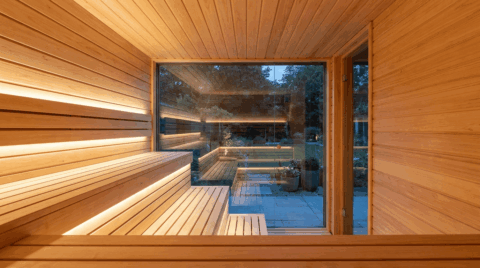
Traditional, hand-built, made to order, ready in 8-9 weeks.
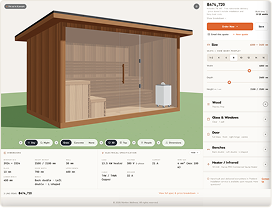
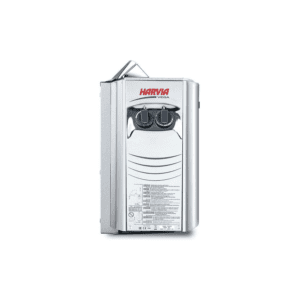
Canadian Red Cedar, Japanese Hinoki, Japanese Cedar or Thermo Pine. Traditional TÜV safety-certified stone heaters from 3 kW to 18 kW, sized for the cabin. Wall-mounted touchscreen as standard, WiFi app control for iOS and Android as an add-on. Two-year structural warranty. Delivered anywhere in Thailand, flat-packed, with professional installation available as an add-on.
The best way to settle this is to sit down. We’re in Ban Suan, ten minutes from Central Chonburi. Come and see them by appointment, or book a session at the Wellness Garden and use one properly for three hours before you spend anything at all.
FAQ
What is the difference between an infrared and a traditional sauna?
A traditional sauna heats the air to 80-90°C using an element and a mass of stones. An infrared sauna uses emitters to heat your body directly while the air stays at 45 to 60°C.
Is infrared or traditional better in a hot climate like Thailand?
Traditional, usually. Thailand’s ambient temperature is already 33 to 35°C, so an infrared cabin at 50°C is a much smaller contrast than it would be in a cold climate. Traditional at 85°C reads as a sauna anywhere.
Which sauna uses less electricity?
Infrared. A cabin typically draws 1.5 to 3 kW, compared with 6 to 9 kW for an equivalent traditional sauna. At roughly ฿5 per kWh, that works out to around ฿10 a session versus ฿30.
Can you use an infrared sauna in a condo?
Usually yes. Infrared operates at low kW on single-phase, which suits apartment supplies. A large traditional sauna may need a three-phase power supply. Check with your building before ordering either.
Is infrared as good for you as a traditional sauna?
There is no good evidence that one is better than the other. The strongest long-term data comes from Finnish traditional sauna research. The infrared evidence base is much smaller. How often you use it matters more than which type you own.