





Today, people call many things a “sauna.” Steam rooms, portable tents, and heated pods all get that label. In the end, they’re all just places where you sit and sweat.
But if you’ve tried a real Finnish sauna, you know it feels different. A regular heated box just doesn’t compare.
I used saunas for 25 years and thought I knew all about them. Only when I started noticing the details—the heat, the steam, the wood, the airflow—did I realise what I’d been missing. Once you notice the difference, you can’t go back.
This article explains what makes a Finnish sauna unique, why it matters, and how to know if you’re getting the real thing.
What Actually Defines a Finnish Sauna?
A Finnish sauna has a few key features that have stayed the same for centuries.
It uses dry heat, but you can add steam if you want. The air is usually 80-100°C (175-210°F), with low humidity around 10-20%. This makes the heat strong but still easy to breathe. Pouring water on the hot stones creates a burst of steam called löyly (pronounced “loy-lu”). That quick, humid rush is what makes a Finnish sauna different from just sitting in a hot room.
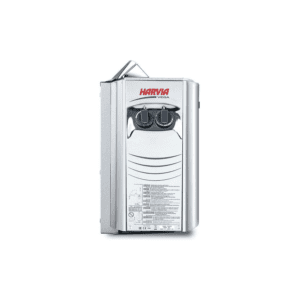
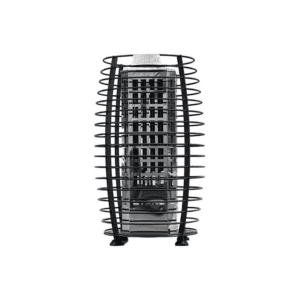
A real Finnish sauna uses a heater called a kiuas, filled with special stones that can handle sudden temperature changes without cracking. These stones store heat and release it slowly, keeping the temperature steady. When you pour water on them, they turn it into steam right away.
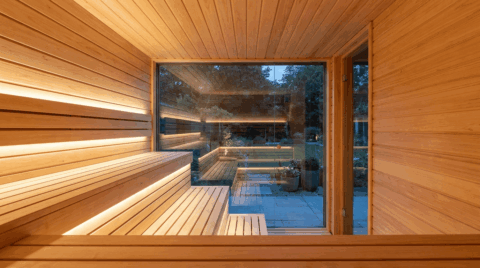
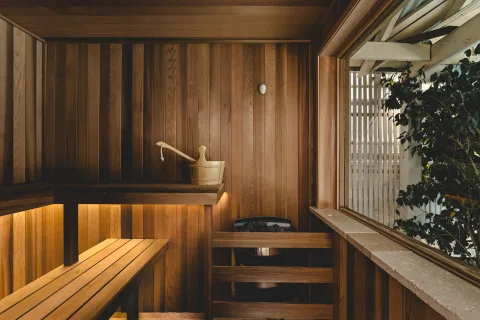
The inside is lined with softwoods like spruce, pine, aspen, or cedar. These woods absorb moisture, smell nice, and stay comfortable to touch even when it’s hot. Hardwoods would get too hot to sit on.
Good ventilation is important. Fresh air enters low near the heater, rises as it warms, and exits high on the opposite wall. This keeps the air fresh and prevents the sauna from feeling stuffy or hard to breathe in.
Finnish saunas also have benches at different heights. Heat rises, so sitting higher means hotter. Being able to choose your level lets you pick the heat that suits you. According to research by J. Leppäluoto, sauna sessions typically last 5 to 20 minutes and are followed by breaks at room temperature, which shows how straightforward and accessible the practice really is.
Finns have built saunas this way for over a thousand years. It’s surprising how many modern “saunas” skip these basics.
How Is a Finnish Sauna Different from Steam Rooms?
Steam rooms operate at lower temperatures (40-50°C) but with extremely high humidity, close to 100%. You can barely see across the room through the thick steam. The sensation is wet and heavy, very different from the dry heat of a Finnish sauna.
Steam rooms are usually tiled, not wood-lined, because constant moisture would damage wood. It’s a good experience on its own, but it’s not a sauna.
A Finnish sauna keeps its dry heat, with bursts of löyly when you pour water on the stones. You control the humidity. Between pours, the air stays dry enough to breathe deeply and comfortably, even at 90°C.
What about Russian banya?
Here’s where it gets interesting: banya is actually a lot like the Finnish sauna. Both are old Nordic heat-bathing traditions. Banya usually runs cooler (60-80°C) but with much higher humidity and constant steam, not just the occasional löyly. Banya also includes the venik ritual, where people are gently beaten with birch or oak branches to boost circulation and exfoliate the skin.
According to Saunologia.fi, traditional Finnish electric stoves once held 15 to 30kg of stones, but newer models now hold hundreds of kilograms, allowing far more flexibility in heater design and performance.
Both traditions value heat and see heat bathing as more than just a way to get clean. It’s social, meditative, and healthy, and it’s been practised for centuries.
To truly understand the Finnish sauna, you need to see its role in Finnish culture. Finland has about 5.5 million people and around 3.3 million saunas—almost one for every two people. A sauna isn’t a luxury; it’s as basic as a bathroom. In the past, it was the cleanest room in the house. Babies were born there, the sick were cared for there, and bodies were washed before burial. It was a sacred, equal space where everyone left their social status outside.
That deep cultural history is why Finns care so much about doing saunas the right way. The standards aren’t just fussiness—they’re knowledge passed down through generations about what really works.
What Does the Research Say About Finnish Sauna?
The health benefits aren’t just old stories. There’s solid research behind them, much of it from Finland.
A landmark study published in JAMA Internal Medicine in 2015 followed 2,315 middle-aged Finnish men for over 20 years. The findings were striking: men who used a sauna 4-7 times per week had a 63% lower risk of sudden cardiac death compared to those who used it only once weekly. They also showed significantly reduced risk of fatal coronary heart disease and all-cause mortality.
Source: Association Between Sauna Bathing and Fatal Cardiovascular and All-Cause Mortality Events, JAMA Internal Medicine, 2015 (jamanetwork.com)
A comprehensive review published in Mayo Clinic Proceedings in 2018 examined the accumulated evidence and concluded that regular Finnish sauna bathing is associated with reduced risk of cardiovascular disease, stroke, hypertension and even dementia. The researchers noted that sauna bathing produces cardiovascular effects similar to moderate exercise.
Source: Cardiovascular and Other Health Benefits of Sauna Bathing: A Review of the Evidence, Mayo Clinic Proceedings, 2018 (mayoclinicproceedings.org)
Harvard Health summarised the Finnish research, noting that frequent sauna use was associated with a 23% reduction in all-cause mortality among those attending 2-3 times weekly, with greater benefits for more frequent users.
Source: Sauna use linked to longer life, fewer fatal heart problems, Harvard Health, 2015 (health.harvard.edu)
It’s important to note that this research focused on traditional Finnish saunas—wood-lined rooms heated to 80-100°C with low humidity and the option for löyly. The researchers made it clear that their results might not apply to other types of heat therapy.
What Temperature Should a Finnish Sauna Be?
The short answer: 80-100°C (175-210°F), depending on your preference.
But temperature is only part of it. Humidity, ventilation, and good löyly are just as important.
Most Finns sit at about 80-90°C, sometimes going higher. A well-built sauna at 80°C with good löyly can feel more intense than a poorly ventilated box at 95°C.
The bench you choose also matters. In a good sauna, the temperature from floor to ceiling can differ by 30-40°C. Sitting higher means more heat, and the top bench is the hottest spot.
If you’re new, start at 70-80°C and increase slowly. Your body will adjust, and what feels too hot at first will feel fine after a few sessions.
What Is Löyly and Why Does It Matter?
Löyly is the Finnish word for the steam that rises when you pour water on hot sauna stones. But it means more than just “steam”—it describes the whole feeling of that moment.
When water hits properly heated stones (ideally 300-400°C at the surface), it instantly turns to steam. That burst briefly raises humidity, making the heat feel much more intense. Your skin tingles. You might need to duck down or cover your ears. Then it passes, and the dry heat comes back.
That cycle—dry heat, then löyly, then dry heat again—is at the heart of the Finnish sauna experience. It’s what makes real saunominen different from just sitting in a hot room.
Good löyly depends on a few things:
Stone quality and quantity. You need enough mass to store heat and release it properly. Cheap heaters with minimal stones produce weak, watery steam. Proper stones (olivine, peridotite or volcanic rock) handle thermal shock without cracking.
Stone temperature. If the stones aren’t hot enough, water sizzles and evaporates slowly rather than flashing to steam. The result is disappointing, löyly without that characteristic rush.
Pouring water is a bit of an art. Experienced users learn how much to use and where to pour it. Too much cools the stones, too little does nothing. The ladle (kiulu) and bucket are traditional tools because they allow you to control the process.
Heater design matters. The best traditional heaters have open stone compartments so water can reach deep into the stones. Some modern heaters cover the elements, which can limit löyly quality.
The first time someone showed me how to pour water properly, the difference clicked. Once you’ve felt the gap between average steam and real löyly, there’s no going back.
Can You Get an Authentic Finnish Sauna in Thailand?
Yes, but you need to know what to look for. The main challenges here are environmental. Our humidity, heat, termites, and UV exposure mean you need different materials than in Scandinavia. Timber that works well in Finland might not last long here.
What makes for a genuine Finnish sauna in Thailand:
Proper timber selection. Red cedar, thermo pine or quality spruce that’s been kiln-dried and, ideally, suited to tropical conditions. Teak works exceptionally well for outdoor saunas here. Avoid cheap, untreated softwoods that will warp, crack or attract termites.
A quality heater with adequate stone mass. This is where many Thai installations fall short. Undersized heaters with minimal stones might reach temperature, but they won’t produce proper löyly. Look for reputable brands with appropriate kW ratings for your space.
Good ventilation. Fresh air is near the heater, out high on the opposite wall. This matters even more in Thailand’s humidity, where poor airflow invites mould and makes the sauna feel stuffy.
Proper insulation and construction. The walls need to retain heat while allowing the timber to breathe. Vapour barriers, insulation quality and assembly all matter.
A good sauna isn’t just about the materials—it’s about knowing how to put them together the right way. Someone who understands saunas builds very differently from someone just putting together a hot box.
What Should I Look for When Buying a Finnish Sauna?
If you want the authentic experience, here’s the checklist:
Heater quality and size. The heater is the heart of any sauna. Choose well-known brands with safety certifications (TÜV, CE). Size it for your space, roughly 1kW per cubic metre, and a bit more for outdoor saunas, glass panels or Thailand’s climate.
Stone capacity. More stone mass means better heat retention and better löyly. Budget heaters often skimp here. Look for at least 20kg capacity for small saunas, 40kg or more for larger ones.
Timber species and treatment. Ask specifically what wood is used and whether it’s kiln-dried. For Thailand, prioritise species with natural moisture resistance or ones that can be thermally treated.
Ventilation design. If the seller can’t explain how fresh air enters and exits the sauna, that’s a red flag.
Construction quality. Tongue-and-groove joinery, proper insulation, quality hardware. Inspect samples if you can.
Warranty and support. Especially important in Thailand, where servicing options are limited. Does the seller offer ongoing support? Can they source replacement parts?
And honestly, talk to the seller about sauna culture. Someone who really knows their stuff will be happy to discuss löyly, ventilation, and how to use the sauna properly. If they only talk about price and features, they might just be selling boxes.
What RönYen Offers
This is the part of the business I care about most.
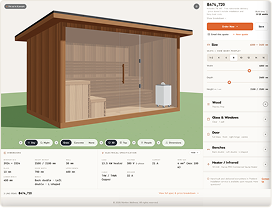
RönYen offers traditional stone-heater saunas built to handle Thailand’s climate. We have sizes from compact two-person rooms to larger models for gyms, spas, and wellness spaces. You can customise any of them—timber, size, glass panels, bench layout, and heater are all up to you.
We use timbers like red cedar, thermopine, spruce, and teak, chosen to fit whether your sauna is indoors or outdoors and your budget. We deliver nationwide with professional installation and ship internationally.
If you want to see a sauna in person before deciding, you’re welcome to visit the Rön Yen Garden in Bang Saen by appointment. I’m happy to discuss what will work for your space—no pressure, just honest advice.
Should You Buy a Finnish Sauna?
If you value tradition, the ritual of heating up, the rush of löyly, and the calm of sitting in dry heat, then a Finnish sauna is worth it.
The health research is strong. The cultural tradition runs deep. There’s real satisfaction in owning a well-built sauna that lasts for decades, instead of a cheap one that falls apart in Thailand’s climate.
For what it’s worth, I tried different heat therapies for years before I sat in a well-built sauna. I thought I knew what a sauna was, but I didn’t. The traditional experience isn’t just hotter—it feels more complete.
That’s not just marketing. It’s what happens when something has been refined over a thousand years of daily use by a whole culture. The Finns figured out what works, and the rest of us are still learning.
Frequently Asked Questions
What’s the main difference between a Finnish sauna and a steam room?
Finnish saunas use dry heat (80-100°C) with low humidity and optional steam bursts from throwing water on hot stones. Steam rooms use lower temperatures (40-50°C) and near-100 % humidity, with constant, thick steam. Finnish saunas are lined with wood; steam rooms are typically tiled to withstand moisture.
How hot should a Finnish sauna be?
Traditional Finnish saunas run between 80-100°C (175-210°F), with most users preferring 80-90°C. Temperature varies by bench level, so sitting higher means more heat. Beginners should start at around 70-80°C and gradually increase as their bodies adapt over several sessions.
What does löyly mean?
Löyly is the Finnish word for the steam created when water is thrown on hot sauna stones. It also describes the full sensory experience of that moment: the rush of humid heat, the prickling skin, the intensified sensation. Good löyly is considered essential to authentic Finnish sauna bathing.
Can I get a Finnish sauna in Thailand?
Yes. RönYen supplies traditional stone-heater saunas suited to Thailand’s climate, in sizes from home rooms through to commercial installations, and any of them can be customised to your space. Nationwide delivery and professional installation are available, with viewing by appointment in Bang Saen.
Is a Finnish sauna good for your health?
Research published in JAMA Internal Medicine found that Finnish men who used a sauna 4-7 times weekly had a 63% lower risk of sudden cardiac death compared to once-weekly users. Regular sauna bathing has been associated with reduced cardiovascular disease risk, lower blood pressure and decreased all-cause mortality.