

Inflatable vs Permanent Ice Bath: Which Should You Actually Buy in Thailand?

I started cold plunging in an inflatable. Most people do.

Mine was a black drop-stitch tub on the concrete out the back, filled with tap water and bags of ice I drove to the shop to buy. It worked. I got in, I hated the first forty seconds, and I got the recovery I was after. For the first few months, it did everything I needed it to do.

Then the questions began. Customers kept asking: “Should I just get the cheap inflatable one, or spend more on a proper steel tub?” My honest answer was always longer than they expected. The truth is, there’s no single right choice for everyone. It depends on where you live, how you’ll use it, how long you want it to last, and how much sun it will get in Thailand.

So here’s the full story, with no sales pitch. I sell both types, and I’ll explain when each one makes sense, what the trade-offs are, and which one I’d recommend to my own family.

What’s the actual difference between an inflatable and a permanent ice bath?

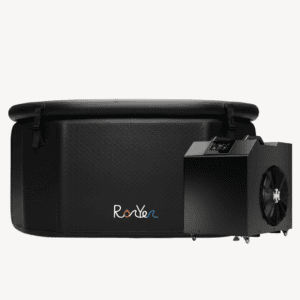
An inflatable ice bath is a soft-sided tub made from thick, multi-layer PVC with a drop-stitch core, just like stand-up paddleboards and rescue boats. You use a pump to inflate it, fill it with water, and you’re ready to plunge in about fifteen minutes. When you’re finished, you can deflate it and pack it away.

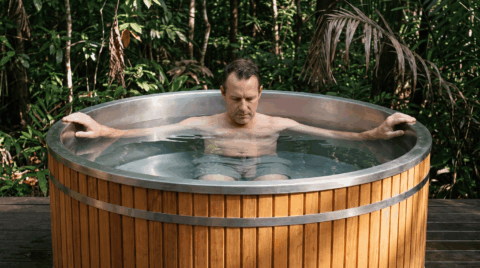
A permanent ice bath is a hard tub that stays in one spot. Ours are made from 304 or 316 stainless steel, and some models have Red Cedar on the outside. It doesn’t fold or pack away. It’s a fixed part of your home, like a bathtub or a small pool.

Both serve the same main purpose: holding cold water for you to get in. The differences are in everything else—how long they last, how well they keep the water cold, running costs, appearance, and how easy they are to live with every day.

Here’s the simplest way to look at it. An inflatable is like heavy-duty camping gear—light, portable, and quick to set up or take down. A permanent tub is more like furniture: solid, fixed, and built to last for years.

How long does an inflatable ice bath last in Thailand?

This is the main reason I tell most serious cold plungers to think twice before choosing an inflatable as a long-term solution.

A good inflatable ice bath, looked after well, lasts a few years. The cold plunge industry generally puts inflatable and PVC tubs at around two to five years of life with proper care (PolarMonkeys, “Inflatable vs Hard Shell Cold Plunge,” 2026). Hard-shell tubs are commonly rated at ten to twenty years (TubWars, “Inflatable vs Hard-Shell Hot Tubs,” 2025). That’s a real gap, and in Thailand it gets wider.

Here’s why. The real problem for PVC isn’t cold water—it’s the sun and heat. Ultraviolet light breaks down PVC over time, making it brittle and likely to crack. Standard PVC can start to show visible damage within six to twelve months of direct sun, with serious brittleness developing in the years after (BASTONE, “Is PVC UV Resistant?”, 2026).

The tropical sun is much harsher. Industry tests show that PVC ages 30 to 50 percent faster in tropical regions than in cooler ones. High surface temperatures make this worse—the oxidation rate of PVC roughly quadruples for every 10°C increase (pvctarpaulin.com, “How Long Does PVC Tarpaulin Last in Sunlight?”, 2025). Inflatable boat makers see the same issue: a PVC boat that lasts five to ten years in a cool climate may only last about two years in the tropics if left uncovered (Perun Outdoors, “How Long Do PVC Inflatable Boats Last?”). A black tub in a Thai courtyard faces exactly this problem.

None of this means an inflatable is useless. It just means you need to take care of it in Thailand: keep it shaded, use the cover, and don’t leave it in the sun all day. Even with good care, you’ll get a few years out of it, not a decade. A stainless steel tub doesn’t have these issues. Steel isn’t affected by UV, resists corrosion and impact, and a good one is truly a buy-it-once item (Soundhon, “Stainless Steel vs Inflatable Cold Plunge,” 2025).

Does an inflatable ice bath stay cold in the Thai heat?

Not as well, and this is where you end up spending more money than you might expect.

Inflatable tubs have thinner walls and less insulation than solid tubs. In a cool climate, this isn’t a big deal. But in Thailand, where the air is often above 30°C, it makes a big difference. The water in an inflatable warms up faster, so you either use more ice to reach your target temperature or, if you have a chiller, the chiller has to work harder to keep it cold.

That second point is the hidden cost. A chiller with a poorly insulated inflatable can work two to three times harder to keep the same temperature as it would with an insulated tub (Soundhon, 2025). Over a month, this means a higher electricity bill, more noise from a compressor that runs more often, and more wear on the chiller, which can shorten its life. A permanent tub with thicker, insulated walls keeps the cold longer and lets the chiller turn off more often, making it quieter, cheaper to run, and easier on the equipment (PolarMonkeys, 2026).

If you use bagged ice and don’t have a chiller, the lack of insulation means your water stays cold for a shorter time and you’ll make more trips to buy ice. Either way, the lower upfront price of an inflatable comes with higher running costs in a hot climate. It’s better to know this before you buy.

Is a permanent ice bath more comfortable?

Mostly, yes, but it’s not a clear win for the permanent tub. The inflatable has its own advantages too.

A permanent stainless tub has a solid, planted feel. You climb in and out against a rigid edge, the shape holds, and the better models have ergonomic interiors and proper seating. Reviewers consistently rate hard tubs higher for the secure, sturdy in-and-out experience (Cold Plunge Reviews, “Inflatable vs Hard Shell Cold Tubs,” 2024).

But the inflatable has a real comfort advantage: the walls are soft. The air-filled sides give your neck and back something gentle to lean against, which is easier than resting your head on cold steel for three minutes. For some people, especially those using cold therapy for rehab or injury recovery, that soft surface is a real benefit and makes getting in and out easier (Huale, “Inflatable Ice Bath vs Framed Ice Tub,” 2025).

So, permanent tubs are better for solidity and seating, while inflatables are better for softness. It depends on what feels best for your body.

Is a permanent ice bath more hygienic?

Yes, and this is especially important in a humid country like Thailand.

Stainless steel is used in medical facilities for a reason—it’s non-porous, easy to clean, and resists the build-up that softer materials can collect (Soundhon, 2025). A hard tub is also easier to drain, wipe down, and use with proper filtration. Inflatables can be kept clean, but their seams, folds, and softer surfaces need more attention. In Thailand’s humidity, anything that traps moisture needs extra care. If you want low-maintenance hygiene, a permanent tub is the easier choice (Cold Plunge Reviews, 2024).

What about portability and space?

This is where the inflatable really shines, and it’s the clear winner.

If you rent, live in a condo, don’t have a permanent spot, or want to pack it away when guests come over, the inflatable is the obvious choice. It weighs about 20 to 25kg with accessories, deflates to the size of a large suitcase, and fits in your car if you move (RecoveryGuru, “Best Ice Baths for Home Use,” 2026). A permanent stainless tub can’t do any of that. Once it’s installed, it stays put.

There’s also the “test the waters” argument, which makes sense. If you’re not sure cold plunging will become a habit, an inflatable is a low-commitment way to try it. Many people in the industry suggest this approach: prove the habit to yourself first, and if you’re plunging five mornings a week after two months, you’ll know if it’s time to upgrade (Eternal Ice Bath, “Inflatable or Hard Cold Plunge for Daily Use,” 2026).

So which one should you buy?

Here’s how I actually talk people through it.

Buy an inflatable if:

  • You rent or live in a condo with no permanent space.
  • You want to test whether cold plunging is for you before spending more.
  • You need to move it, store it, or take it with you.
  • Your budget right now is the deciding factor.
  • You’ll keep it shaded and covered, not baking in the sun.

Buy a permanent ice bath if:

  • You’ve got a fixed spot for it, and you’re committed to the habit.
  • You want it to last ten years or more, not a few.
  • You’re running a chiller and want lower running costs and less compressor wear.
  • Hygiene and easy maintenance matter to you
  • You want it to look like a proper part of your home, not gear.

The honest summary: an inflatable is the gateway. It’s how most people start, it’s how I started, and there’s no shame in it. But if you already know cold therapy is part of your life, a permanent tub costs more up front and saves you money and hassle over the years, it’ll keep going. The cheapest tub isn’t the one with the lowest price — it’s the one you’re still using in five years.

What does each one cost at RönYen?

Prices shown so you can do the maths yourself.

Inflatable range (bath only):

  • Inflatable Barrel Ice Bath, 1 person — from ฿19,999
  • Inflatable Tub Ice Bath, 1-2 person — from ฿22,999
  • Inflatable 4 Person Ice Bath — from ฿31,999

Add the matched chiller to any inflatable: +฿74,000 (barrel and tub) or +฿99,000 (4-person). With the chiller included, the inflatable Barrel is ฿93,999, the Tub is ฿96,999, and the 4-person is ฿130,999.

Permanent range (built to order, 4-6 weeks):

  • Black Plunge Ice Bath, 304 stainless steel, 1 person — ฿86,450
  • Stainless Steel Ice Bath Tub, 304 stainless, 1 person — ฿94,050
  • 3-4 Person Red Cedar & Stainless Steel Ice Bath, 316 stainless — ฿94,050
  • Oval Ice Bath, Red Cedar & 304 stainless, 1 person — ฿100,700
  • Circular Wood & Stainless Steel Ice Bath, 304 stainless, 1-2 person — ฿108,999
  • Wood Plunge Ice Bath with Railing Stairs, Red Cedar & 304 stainless — ฿109,250
  • All-in-one Ice Bath, white seamless acrylic with built-in chiller — ฿166,250
  • All-in-one Ice Bath & Chiller, Red Cedar & 304 stainless — from ฿173,453

Here’s a number that surprises many people: once you add a chiller to an inflatable, the total is ฿93,999, which is about the same as where permanent stainless tubs start. So if you know you want a chiller, the permanent tub is often the smarter buy from the beginning. It lasts longer, costs less to run, and you’re not spending inflated prices for a steel-tub result.

Every tub comes with free delivery Thailand-wide. The permanent tubs are built to order with a 4-6 week build time.

So, what’s better? Inflatable vs Permanent Ice Bath

If you’re trying cold therapy, renting, or short on space, start with an inflatable. Prices begin at ฿19,999, and it will do the job. If you know this is part of your lifestyle, have the space, and especially if you want a chiller, choose a permanent tub. In Thailand’s sun and heat, steel lasts much longer than PVC, costs less to run, and stays cleaner.

Either way, try plunging first and decide later. Both options offer the same benefits. The only difference is how long the tub will keep providing them.

If you need help choosing the right tub size or matching a chiller, that’s what our free consultation is for. We’ll recommend what fits your space and honestly tell you which option suits your needs.


FAQ

Q: How long does an inflatable ice bath last in Thailand?
A: With good care, expect a few years — the industry generally rates inflatable PVC tubs at two to five years (PolarMonkeys, 2026). Thailand’s sun and heat shorten that, because UV radiation and high temperatures break down PVC faster — tropical ageing runs 30 to 50 per cent quicker than in temperate climates. Keeping it shaded and covered makes a real difference. A stainless steel tub isn’t affected by UV and lasts far longer.

Q: Is a permanent ice bath cheaper to run than an inflatable?
A: In a hot climate, yes. An inflatable’s thinner walls hold the cold less well, so a chiller works two to three times harder to maintain temperature, meaning higher electricity costs, more noise, and more wear on the chiller. A permanent insulated tub holds cold longer and lets the chiller cycle off, which is cheaper and quieter day to day.

Q: Can I add a chiller to an inflatable ice bath?
A: Yes. At RönYen, the matched chiller is +฿74,000 for the Barrel and Tub, or +฿99,000 for the 4-person. Worth knowing: once you add the chiller, an inflatable comes to around ฿93,999 — right where the permanent stainless tubs start. If you want a chiller anyway, a permanent tub is often the better-value choice from the outset.

Q: Which is more comfortable, inflatable or permanent?
A: Permanent tubs feel more solid and have proper seating and ergonomics, which most people prefer for everyday use. Inflatables have one advantage: soft, air-filled walls that are gentler on your neck and back, which can suit rehab and injury recovery. It comes down to what your body wants.

Q: I rent and might move — which should I buy?
A: An inflatable. It weighs around 20-25kg, deflates into a suitcase-sized pack, and comes with you when you move. A permanent stainless tub is a fixed installation. If flexibility matters more than longevity, the inflatable is the clear choice.


REFERENCE LINKS

Do You Need a Chiller for an Ice Bath in Thailand?

For the first few weeks, I used bagged ice for my ice bath. I drove to the shop, brought the bags home, poured them in, and saw much of the ice melt before I even got changed. By the time I finished, the water was already warming up again. The next morning, it was the same routine: another drive, more bags, and more melting.

Then I sat down and worked out the numbers. This post shares the honest results, so you can decide if you really need a chiller or if ice is enough for you.

How fast does ice melt in an ice bath in Thailand?

Fast. Much faster than anywhere with a real winter.

Tap water here is usually around 28-30°C for most of the year. To make an ice bath effective, you are not just lowering it a few degrees; you need to bring it down by 15 to 20°C, all while the environment is working to heat it back up. The sun hits the tub, the air is 33°C, and the humidity is high. The heat never lets up.

Here’s the basic science: cooling a single-person tub of about 300 litres from 30°C to 10°C takes around 85-90kg of ice, and that only gets you there once. It does not account for keeping the temperature down as the afternoon heat returns. If you stay in for a full session, you will need to add more ice.

With each bag costing ฿15-฿20, it takes nearly ฿500 to cool the tub just once. If you do this every day, you are spending ฿10,000 or more each month, not counting the time and effort involved in buying and carrying the ice. That cost made me reconsider.

How cold does an ice bath actually need to be?

Colder than a cool bath, but not as cold as most people assume.

The research lands on a fairly tight window. A 2025 network meta-analysis in Frontiers in Physiology pooled 55 controlled trials and found that 10 to 15 minutes at 11 to 15°C worked best for easing muscle soreness, while 5 to 10°C was more effective for deeper recovery markers (muscle-damage enzymes and jump performance). A separate systematic review in PLOS One reached the same broad conclusion: cold-water immersion after hard exercise speeds up recovery of physical function, reduces soreness, and lowers post-exercise inflammation.

One honest note: the same research shows that regular cold plunges right after weight training can slow muscle growth over time. If you want to build maximum size and strength, wait a few hours between your workout and your ice bath. For recovery, sleep, and feeling better in this climate, though, ice baths are hard to beat.

Aim for a temperature between 5 and 15°C. In Thailand, the key is to keep the water at that temperature for your whole session, not just reach it briefly before it warms up again.

What does a chiller actually do?

A chiller does two things that ice cannot manage well in this heat: it cools the water and keeps it cold.

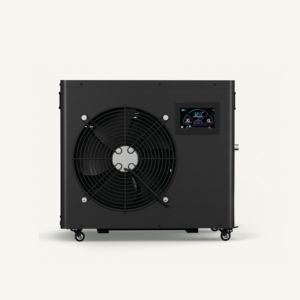
A chiller is a compressor unit that removes heat from the water and circulates it, so your tub stays at the exact temperature you set, like 8°C or 10°C, whether you get in right away or hours later. There are no bags to buy, no trips to the shop, and no guessing. Most chillers also filter the water and often use a UV steriliser, so the water stays clean, and you do not have to drain and refill it every few days. With just ice, the water stays still, warms up, and goes bad quickly.

You set the temperature once and can get in whenever you want. That is the main benefit.

Ice versus a chiller: what does it really cost?

The costs are very different. Ice is cheap at first but expensive over time. A chiller costs more up front but is cheaper in the long run.

Ice: nothing to buy up front since you already have the tub, but roughly ฿300 to ฿500 per session just to get cold, plus top-ups to keep it cold. Used daily, that is, ฿9,000 to ฿15,000 a month, indefinitely.

Chiller: There is a real upfront cost of ฿74,000, plus electricity costs. With Thailand’s current rate of about ฿3.95 per unit, keeping a single tub cold with a chiller costs about ฿400 to ฿700 a month, depending on your chosen temperature and how hot your location is.

You do not need a spreadsheet to see when the costs cross over. If you use an ice bath most days, a chiller pays for itself within a few months and keeps saving you money. Plus, you will no longer have to handle bags of ice.

So do you actually need a chiller?

It really depends on how you use your ice bath. Here is a straightforward breakdown.

You probably do not need a chiller if you plunge a couple of times a week, you do not mind a shop run, and you are happy to get cold for a few minutes rather than maintaining a specific temperature. A bag or two of ice in an inflatable ice bath, from ฿19,999, and you are sorted.

You probably do want a chiller if you use your ice bath every day, want the same temperature each time, share the bath with others at home, in a gym, or in a studio, or if you do not want to keep buying ice once the novelty fades (which is true for most people). A chiller is even more worthwhile when multiple people use the bath, since the filtration keeps the water clean rather than letting it get murky by the end of the week.

This is the main reason RönYen exists: to offer cold therapy that works in Thailand’s heat, instead of struggling with melting ice every day. For some people, a tub and a bag of ice are enough. For most who keep up the habit, a chiller is the better choice.

What size chiller do you need?

It comes down to your tub’s volume, how cold you want to go, and how exposed your spot is.

As a general guide, a 1.5HP chiller unit is good for a single-person tub in a shaded or indoor spot at typical recovery temperatures. Choose a 2.0 HP chiller unit if you have a larger tub, want very cold water, need a quick cooldown, or your bath is in full sun where it gets very hot. If the chiller is too small, it will run constantly and still struggle on the hottest days. If you choose the right size, it will keep your water at the right temperature without using too much power.

If you are unsure, let us know your tub size and where it will be placed, and we will help you choose the right chiller. There is no reason to pay for a bigger compressor than you need.

Frequently Asked Questions

Can’t I just use ice instead of a chiller?
Yes, especially if you only use an ice bath occasionally. The challenge in Thailand is the cost and convenience. It takes about 85-90kg of ice to cool a single tub once, and the heat quickly warms it back up. For daily use, a chiller is cheaper to run and much less trouble.

How cold should I set my chiller?
A range of 5-15°C is supported by research. Most people find 10 to 12°C comfortable and effective to start. You can lower it toward 5°C as you get used to it or if you want deeper recovery.

Does a chiller keep the water clean?
Most chillers do. They move the water through a filter, and many have a UV steriliser, so the water stays clear much longer than in a still tub with melting ice. You will still need to change the water sometimes, but not as often.

How much does a chiller cost to run in Thailand?
It costs about ฿400-฿700 per month to keep a single tub cold, based on Thailand’s current electricity rate of about ฿3.95 per unit. The exact cost depends on your chosen temperature and your location’s heat.

Will cold plunging hurt my gym gains?
The timing is what matters. Regular cold immersion right after weight training can slow muscle growth, so wait a few hours between lifting and your ice bath. For recovery and sleep, the benefits are well supported.

Want to figure out whether ice or a chiller is better for your setup? Send us a message with your tub details, where it is, and how often you plan to use it, and we will give you a clear answer. If this helped, share it with the friend who keeps taking your ice.

Carl runs RönYen Wellness in Chonburi, providing saunas, ice baths, and chillers throughout Thailand and shipping internationally. He has used hot and cold therapy every day for years and learned most of this through experience, often the hard way, one bag of ice at a time.

What’s the Best Wood for Saunas and Ice Baths in Thailand?

The first time I saw a sauna fall apart in Thailand, it was only three years old. The bench tops had warped like surfboards, the wall joints had opened enough to let in daylight, and termites were quietly making their way up one corner. The owner had bought it based on a European spec sheet, using beautiful Canadian cedar and solid construction, and assumed it would perform the same in Bangkok as it did in Helsinki.

It didn’t. Thailand is different from Finland. Heat, humidity, termites, monsoon mould, and strong sunlight break down wood that would last for decades in a colder place. If you choose the wrong wood, you’ll be rebuilding in five to seven years. Choose the right wood, and the tropical climate is barely a problem.

Here’s what I’ve learned after years of selling, installing, and seeing how customers’ saunas and ice baths age in Thailand. I’ll cover what lasts, what doesn’t, and the timber options we offer at RonYen for tropical conditions.

What makes wood good for a sauna in Thailand’s climate?

A sauna anywhere needs wood that can withstand three conditions: extreme heat, repeated wet-and-dry cycles, and direct skin contact. In Thailand, you have to add four more: constant humidity, monsoon season, termites that quickly eat softwoods, and months of strong sunlight that bleaches and dries anything outdoors.

The properties that matter most:

Dimensional stability: the wood needs to stay flat as it moves between hot, dry sauna conditions and Thailand’s humid air. Some types of wood are naturally more stable than others.

Low resin and sap content: heated wood releases sap. Pine or untreated fir in a sauna will drip sticky resin onto your skin and benches. Saunas need wood with naturally low sap content, or wood with sap removed.

Low thermal conductivity: this is why a 90°C bench doesn’t burn you. The wood needs to insulate against its own heat. Some types warm up slowly, while others get hot quickly.

Rot and decay resistance: repeated moisture exposure means that any wood susceptible to fungal damage will eventually fail. In Thailand’s humidity, that risk is always present, not just during certain seasons.

Termite and insect resistance: this is something most guides from colder countries don’t mention. Termites in Thailand quickly eat untreated softwood. Some woods naturally repel them, others need treatment, and some are basically termite food.

Which sauna timber options does RonYen offer?

Our saunas are available in a range of timbers selected for tropical performance. Each has its own strengths, and the right choice depends on budget, look, and where the sauna is headed.

Red Cedar
The premium classic. Naturally aromatic, low-resin, very dimensionally stable, naturally rot- and insect-resistant. It’s lightweight and doesn’t transfer heat aggressively. The smell is a big part of the experience for many people. Rich reddish-brown with striking natural grain. The benchmark sauna timber and what we recommend when the budget allows.

Rusty Cedar
Milled from high-quality knotty cedar. It has the same natural resistance to rot and insects as Red Cedar, but with a more unique look, featuring rich grain and distinctive knots. It looks warmer and more textured than clear cedar. It’s a great choice for anyone who wants a natural character in their sauna.

Japanese Hinoki
A refined timber with warm golden tones and subtle light purple streaks. Naturally rot and insect resistant. It has long been used in Japanese construction and fine furniture for its durability and distinctive scent. Sits between Red Cedar and the budget options in terms of price.

Japanese Cedar
Straight, uniform grain with a naturally pleasant fragrance. Its anti-corrosion and insect-resistant properties make it well-suited for outdoor builds. Light-to-medium dark colouring that closely resembles Canadian Red Cedar at a different price point. A solid mid-range option.

Thermo Hemlock
Hemlock that’s been heat-treated to deepen its colour to a cedar-like tone and greatly improve its performance. The heat treatment closes the moisture-absorbing cells in the wood, which is ideal when the humidity is around 70% all year. After treatment, it resists corrosion and insects. It’s the best value for this climate.

Hemlock
Untreated hemlock. Pale, neutral, low resin, light colour with few knots. Looks high-end and clean. For outdoor use, we generally recommend timber oil and protective shingles to extend service life. Best suited to indoor builds or covered outdoor positions.

Thermo Pine
Heat-treated pine is the budget thermo option. The heat treatment gives it a darker colour and makes it resistant to corrosion and insects. It has a knotty look. It’s better than untreated pine for outdoor and humid conditions.

Source: International ThermoWood Association — Properties of Thermally Modified Timber
https://thermowood.fi/thermowood-process/

What’s the best sauna wood for Thailand specifically?

For Thailand, my honest ranking based on what actually holds up:

  1. Canadian Red Cedar or Canadian Rusty Cedar are the top choices if your budget allows. They naturally resist everything the Thai climate throws at them. With their iconic smell, beautiful grain, and good ventilation, they can last for decades even in Thailand.
  2. Canadian Thermo Hemlock is the best value for this climate. Heat treatment stabilises the wood and keeps termites and fungus away. It costs less than cedar but performs almost as well in tropical conditions.
  3. Japanese Hinoki, or Japanese Cedar, is a true premium alternative to Canadian cedar, each with its own unique character. They naturally resist rot and insects. These are good options for anyone looking for something different.
  4. Sweden/Finland Thermo Pine is the budget thermo option. It works better than untreated softwood and is affordable for first-time sauna buyers.
  5. Canadian Hemlock is fine for indoor saunas or well-covered outdoor spots, but I wouldn’t use it for outdoor builds exposed to full Thai weather unless you add protection.

It’s best to avoid using untreated pine, untreated fir, or any softwood that hasn’t been kiln-dried or heat-treated for sauna interiors. These woods can leak resin, change shape, and rot, so they aren’t worth the savings.

What about teak — isn’t it the best wood for the tropics?

Teak is a common topic. People often think of it when they want wood that lasts in the tropics, and that’s understandable. Outdoor furniture, boat decks, and pool areas have used teak for centuries because it handles humidity, salt, and sun better than most wood. So it’s a fair question.

The issue with teak in a sauna is comfort. It’s a dense hardwood, much harder than cedar, hemlock, pine, or hinoki. Sitting on a teak bench at 90°C for twenty minutes is much less comfortable than sitting on a cedar or heat-treated softwood bench, which has more give and doesn’t get as hot. Teak also transfers heat more quickly than softwood, so the bench surface gets hotter where your skin touches it. That’s not what you want in a sauna.

The softwoods we use, especially cedar, are the industry standard for sauna interiors around the world; for this reason, not just in Thailand. Once you sit on a well-made cedar bench, you’ll see why teak hasn’t replaced it, even with all of teak’s other strengths.

So our view on teak is simple: it’s a great wood for outdoor decking, pool areas, garden furniture, and ice bath cladding if you want that look. But it’s not the right choice for sitting in a sauna. We don’t use it in our sauna range and wouldn’t recommend it, no matter who is building the sauna.

Why are ice baths made of different materials than saunas?

This is where most articles go wrong. Modern ice baths separate the water-holding part from the decorative exterior. The water sits in a stainless steel or composite inner liner. The wood on the outside is just cladding and never comes into contact with water.

That separation matters because it solves a problem traditional all-wood ice baths can’t. Untreated timber that sits in water, drains, refills, and sits in water again will eventually degrade. It warps. It develops mould. Wood is porous, which means bacteria establish in it over time, and you can’t sterilise it properly between uses. In Thailand’s ambient humidity, that process is accelerated significantly.

Stainless steel solves all those problems. Specifically, 304-grade or 316-grade food-safe stainless. It doesn’t absorb water, warp, or develop the biofilm that makes wooden tubs hard to keep clean, and it can be properly sanitised. The wood on the outside gives you a warm look and character, but it never comes into contact with water.


Which ice bath construction does RonYen offer?

Three main configurations in the current range:

Red Cedar exterior with stainless steel interior
The premium classic. Canadian Red Cedar staves on the outside, with a 304 or 316-grade stainless inner tub. You get the visual warmth and natural character of cedar without any of the structural problems wood would face if it were in contact with water. The cedar is naturally rot-resistant and ages well in the climate. The stainless interior is non-porous, easy to clean, and corrosion-resistant. This is what most residential customers choose.

Full stainless steel
It has a clean, industrial finish and is the easiest and most hygienic option to maintain. You can choose a polished or matte black-coated exterior. This style works well in commercial settings such as clinics, gyms, and hotels, as well as in modern homes where a minimalist look fits the design. It’s easier to clean and inspect, and it lasts longer with heavy use.

Composite wood
You get the look of wood without the maintenance. It is weather-resistant and keeps its colour and texture without the regular oiling that real cedar needs. It’s a good choice for outdoor spots in full sun or for anyone who wants the wood look but not the upkeep.

The one setup we don’t offer, and never will, is plain unlined wood touching the water. There’s a reason for that. It doesn’t work well in this climate, and the hygiene trade-off isn’t worth the rustic look.

What’s the best ice bath construction for Thailand?

For most homeowners, a Red Cedar exterior with a stainless steel interior is the best choice. You get the look of wood, cedar stands up well to Thailand’s humidity, and the stainless steel interior helps you avoid the hygiene issues that come with wood and water.

For commercial use — gyms, recovery clinics, hotels — full stainless steel makes more sense. Higher hygiene standards, harder use, more cleaning. Stainless takes that without complaint.

For outdoor spots in full sun, where cedar would dry out and fade too quickly, composite wood is the lower-maintenance option. It keeps its appearance without needing oil.

How do you care for wooden saunas and cedar ice baths in tropical climates?

Maintenance is where many owners make mistakes. A wooden sauna in Helsinki needs almost no care, but in Bangkok, it does. Here’s what really matters:

Ventilate between sessions. Leave the sauna door a bit open and prop up the ice bath cover after each use. Warm, moist air that becomes trapped allows mould to grow. Five minutes of fresh air does more than any chemical treatment.

UV protection for outdoor builds. Direct sunlight bleaches wood quickly in Thailand. Adding a roof, cover, or shade extends the wood’s lifespan. Oils and stains help, but they can’t replace keeping the harsh sun off the wood. For any outdoor wooden structure, a termite barrier or chemical treatment at the installation stage is cheap insurance. Done early, it lasts for years. Trying to retrofit one after termites are already in is far harder.

Use timber oil on cedar every six to twelve months to keep its color. If you skip this, the cedar will turn silver, which is fine if you like that look. The wood won’t break down either way; oiling is just for appearance.

Don’t use heavy chemical sealants on sauna interiors. Varnishes and polyurethanes can release fumes in the heat and become sticky. Sauna wood interiors should be left raw or finished only with food-grade sauna products.


FAQ

Q: What’s the best wood for a sauna in Thailand?
A: Canadian Red Cedar is the top choice. It naturally resists rot and insects, stays stable, and handles tropical humidity well. Canadian Thermo Hemlock is the best value, with heat treatment that closes the wood’s moisture-absorbing cells. Both are better than untreated softwoods like pine or hemlock in Thailand’s humidity.

Q: Do RonYen ice baths use solid timber?
A: No. Our ice baths use a stainless steel or composite inner liner — that’s what holds the water — with optional Red Cedar exterior cladding for the timber look. Solid all-wood ice baths are problematic in Thailand’s climate because untreated timber in contact with water absorbs moisture, develops mould, and cannot be properly sanitised between sessions.

Q: How long does a wooden sauna last in Thailand?
A: Properly chosen and maintained, fifteen to twenty-five years for the core structure. The wrong wood or poor maintenance can drop that to five to eight years. Ventilation, UV protection, and termite prevention make the biggest difference.

Q: Do I need to oil or seal sauna wood?
A: Sauna interiors should generally be left raw or treated only with food-grade sauna-specific products. Conventional varnishes and polyurethanes can off-gas at high temperatures and become tacky. Outdoor sauna exteriors can benefit from periodic UV-protective oils.

Q: What about teak — isn’t it the best wood for tropical conditions?
A: Teak is excellent for outdoor furniture, decking and marine use — extremely durable in tropical humidity. For sauna interiors specifically, though, teak is too hard and conducts heat too aggressively to be comfortable to sit on for a full session. Softwoods like cedar and thermo-treated hemlock or pine have the natural give and lower thermal conductivity that make long sauna sessions comfortable, which is why they’re the industry standard worldwide. We don’t offer teak in the sauna range for this reason.

Q: What’s the cheapest sauna wood that still holds up in Thailand?
A: Sweden/Finland Thermo Pine or Canadian Thermo Hemlock. Both are heat-treated, which gives them anti-corrosion and insect-resistant properties at a much lower price point than cedar. Untreated hemlock is cheaper still, but lasts noticeably less time in Thai outdoor conditions.

Can a Sauna Help You Lose Weight?

I lost 42kg a few years ago. It didn’t happen in a sauna; it took diet, walking, and a long period of being honest with myself about how I reached 130kg in the first place. Still, the sauna was part of the routine that helped me stay sane, and I had to figure out what it was actually doing for me compared to what I had hoped it would.

Here’s what most people want to hear: sit in the heat, sweat a lot, and watch the weight drop. That idea is half true, which can be even more frustrating than if it were completely false. Let’s break down what’s real, what’s just water loss, and how the sauna can actually help if you’re trying to lose weight.

Does a sauna burn fat?

Short version: not directly, and not in any amount worth counting on.

When you sit in a sauna, your heart rate goes up, and your body works to cool itself, so you do burn some extra calories. But the amount is small, similar to what you’d burn during a slow walk, not a real workout. You might see claims online that you can burn “300–600 calories per session,” but those numbers are usually much too high for most people. In reality, a typical 20–30 minute session burns far fewer calories, and most of what you feel is heat stress, not fat burning.

Fat loss requires a sustained calorie deficit. There’s no shortcut around that, and heat alone doesn’t create one.

So why does the scale drop after a sauna?

Water. That’s the whole answer.

In a single 20–30 minute session, you can sweat out anywhere from half a kilo to a full kilo of fluid. If you step on the scale right after, it looks like progress. But once you drink a couple of glasses of water, your weight goes back up within the hour, because all you lost was fluid your body needed and will quickly replace.

This is important for one practical reason: chasing the lower number on the scale after a sauna session is a trap. It feels like weight loss, but it isn’t. Use that lower number as a reminder to rehydrate, not as a sign of real progress.

There is one group that really benefits from this water-weight effect: athletes who need to make a certain weight for competition. Fighters and rowers have used heat to cut water weight before events for decades. But this is a short-term, sport-specific method that carries real risks of dehydration, not a weight-loss strategy for most people.

Where the sauna actually helps with weight management

Here’s the part that’s actually worth your attention. The sauna doesn’t burn fat, but it helps support the habits that do. In my experience, this indirect support is what most people overlook.

Recovery: Using the sauna regularly after exercise can ease muscle soreness and help you recover faster. When recovery is easier, you can train more consistently. Consistent training is what really changes your body composition.

Stress and sleep: Heat exposure is truly relaxing, and better stress management and deeper sleep are both strongly linked to weight management. Poor sleep can lead to a bigger appetite and worse food choices, so anything that helps you sleep better is quietly working in your favour.

Cardiovascular conditioning: There is strong evidence that regular sauna use leads to cardiovascular changes similar to those of moderate exercise. Professor Jari Laukkanen’s long-running Finnish studies are well known for linking frequent sauna use to better heart health.

Source: Laukkanen et al., Mayo Clinic Proceedings — Cardiovascular and Other Health Benefits of Sauna Bathing
https://www.mayoclinicproceedings.org/article/S0025-6196(18)30275-1/fulltext

To be honest, the sauna is a supporting tool. It makes the real work—moving more, eating better, and sleeping well—easier to stick with. That matters. The key to weight loss is being able to keep going, and most people don’t fail because they chose the wrong diet, but because they couldn’t maintain it. Anything that helps you stay consistent is valuable.

What about infrared saunas for weight loss?

Infrared saunas operate at lower temperatures, usually around 45 to 60°C, compared to over 80°C for traditional saunas. Some research suggests they can slightly increase resting energy use, but the effect is small. As with any sauna, the drop you see on the scale is still just water.

If you like infrared saunas because they are more comfortable for longer sessions, that’s a good reason to choose one. Just don’t expect it to burn more fat than a traditional sauna.

How to use a sauna sensibly if you’re losing weight

Here are a few practical tips from someone who has experienced both weight loss and regular sauna use:

Make sure to hydrate properly. You lose both fluid and electrolytes in the sauna. Drink water before and after your session, and don’t use the sauna just to feel lighter if it means risking dehydration.

Keep your sauna sessions reasonable. Fifteen to twenty minutes is enough. Staying in longer doesn’t burn more fat; it just raises your risk of dehydration.

Don’t skip meals just to see a lower number on the scale. Eating too little, combined with heat stress and dehydration, can leave you feeling dizzy and unwell. That’s not the goal.

Use the sauna as a reward and a way to recover, not as a punishment. It worked for me because I enjoyed it. If it starts to feel like just another chore on your weight-loss list, you’ll probably stop using it.

If you have heart conditions, low blood pressure, or you’re on medication that affects hydration or blood pressure, check with your doctor first.

FAQ

Q: How much weight can you lose in a sauna?
A: You can lose roughly 0.5–1kg of fluid in a 20–30 minute session, but it’s water weight and returns once you rehydrate. Actual fat loss from a single session is negligible.

Q: Is sauna weight loss permanent?
A: No. The weight lost in a sauna is fluid, and it comes back as soon as you drink water and eat normally. Permanent weight loss comes from a sustained calorie deficit, which the sauna supports indirectly but doesn’t create on its own.

Q: Do saunas boost metabolism?
A: Heat exposure raises your heart rate and causes a small temporary increase in calorie burn, and regular use produces some cardiovascular adaptations similar to light exercise. But the metabolic effect is modest and not a substitute for diet and training.

Q: Is an infrared sauna better for weight loss than a traditional sauna?
A: Not meaningfully. Infrared saunas run cooler and may slightly raise resting energy expenditure, but the scale drop is still water in both cases. Choose based on comfort and preference, not fat-burning claims.

Q: How often should I use a sauna when trying to lose weight?
A: 3–4 sessions a week of 15–20 minutes is a sensible range for most people, used as a recovery and stress-management tool alongside exercise and a sensible diet. Stay well hydrated.

Your First Ice Bath: A Beginner’s Guide to Cold Water Immersion

I’ll be honest about my first real ice bath. It wasn’t a cold shower or a chilly pool, but an actual cold plunge at about 10°C. I only lasted forty seconds before I got out. I told myself it was a smart move, but really, I just wasn’t ready.

The second session was better. The third was surprisingly manageable. By the end of the first month, I was doing three sessions a week and looking forward to them in a way that I still find faintly baffling when I think about it.

Cold-water immersion is often seen as something only triathletes or Scandinavians do, but that’s not true. Anyone can work up to it. There’s a good way to start, and there’s a way that might make you never want to try again. Here’s how to do it right.

If you’d rather watch than read first, this is a solid beginner walkthrough that covers entry, breathing and how long to stay in:

What temperature should an ice bath be for beginners?

Start with water at 15-18°C. That’s cold enough to trigger your body’s response, like vasoconstriction, norepinephrine release, and the cold shock reflex, but not so cold that it overwhelms you if you’re new to it. After a few weeks, most people get comfortable with regular sessions at 10 to 15°C.

Don’t focus on making the water as cold as possible, especially when you’re starting out. Colder isn’t always better. Doing a steady 12°C session twice a week is more helpful than forcing yourself through a tough 7°C session that makes you not want to try again.

Using a chiller-controlled ice bath helps by keeping the temperature steady throughout your session. If you use just ice, the water starts out cold but gets warmer as the ice melts, so it’s harder to know what your body is really getting used to.

You can use ice with our inflatable plunge pools or a chiller.

How long should you stay in an ice bath the first time?

One to two minutes. That’s not a partial session — that’s a complete first session.

Dr Andrew Huberman from Stanford recommends aiming for 11 minutes of cold exposure per week, spread over 2 to 4 sessions. That means about 2 to 3 minutes each time as you’re getting started. Begin with the shorter sessions.

Source: Huberman Lab — Using Deliberate Cold Exposure for Health and Performance
https://hubermanlab.com/using-deliberate-cold-exposure-for-health-and-performance/

You don’t need to stay in until your hands go numb to get the benefits. What really matters is showing up regularly, not pushing yourself to extremes.

How do you get used to cold water immersion?

This is where many people make mistakes. They try to get it over with quickly, like ripping off a bandage. But getting used to cold water is a skill you develop over a few weeks. Here’s the right way to do it.

Step 1 — Cold showers first (Week 1)

Before you get in a bath, get used to cold water in the shower. Finish your normal shower with 30–60 seconds of cold. It’s not a substitute for immersion, but it teaches your nervous system what’s coming. It also sorts out your breathing, which matters more than most people realise.

Step 2 — Controlled entry (Week 2+)

When you’re ready for the ice bath, don’t jump in. Go in slowly, starting with your feet, then sit down for over 20 to 30 seconds. If you rush, the cold shock feels stronger, and everything gets harder. The slower you enter, the easier it is for your body to adjust.

Step 3 — Control your breathing

The first 30–60 seconds will trigger an involuntary gasping response and fast, shallow breathing. This is normal, it’s the cold-shock reflex, and it’s involuntary. Your job is to bring it back under control.

Focus on slowing the exhale. Slow, nasal inhale, longer exhale. Box breathing works well once you’re in (4 counts in, 4 hold, 4 out, 4 hold). Once the breath settles, the discomfort drops significantly. Most people find that after 60–90 seconds, it becomes almost meditative. The hard part is genuinely just the entry.

One important note: the Wim Hof breathing technique involves hyperventilation, which lowers CO2 in your blood and can cause blackouts. Never use it while you’re in the water. Fine to do beforehand to calm the nervous system, not in the bath.

If you want to see what controlled breathing through that first shock actually looks like, this clip follows a complete first-timer being coached through their first ever ice bath — you can watch the gasp reflex hit and then settle as the breathing comes under control:

(Same caveat applies — the breathing method shown is Wim Hof’s own. Use it before you get in, not while you’re submerged.)

Source: Wim Hof Method — Breathing Technique
https://www.wimhofmethod.com/breathing-exercises

Step 4 — Stay still

Movement increases heat loss, which increases the cold sensation. Once you’re in, stay still. Hold the sides if you need to. Fix your eyes on something. The less you fidget, the more manageable it becomes.

Step 5 — Don’t rush to warm up afterwards

Resist the urge to jump straight into a hot shower. Let your body naturally warm up for at least 5–10 minutes first. This isn’t about suffering — there’s a legitimate physiological reason for it.

Dr Susanna Søberg’s research on brown adipose tissue (BAT) found that the post-cold-shiver period — when your body generates heat to restore core temperature — is part of what drives the metabolic benefit. Cutting it short by jumping into a hot shower means you’re skipping the part where the adaptation actually happens.

Source: Søberg et al., Cell Reports Medicine, 2021
https://www.cell.com/cell-reports-medicine/fulltext/S2666-3791(21)00266-0

What are the benefits of regular ice baths?

The research is solid in several areas. I’ll be clear about what’s well-established and what’s still being studied.

Norepinephrine and mood: This is the most consistent and immediate effect. One cold immersion session can boost norepinephrine by 200 to 300% and cause a big dopamine spike, both of which improve mood and focus for hours. Most regular users say this is the main reason they keep coming back. The mental shift after a session is clear.

Source: Shevchuk, Medical Hypotheses, 2008 — Adapted Cold Shower as a Potential Treatment for Depression
https://www.sciencedirect.com/science/article/abs/pii/S0306987707005579

Metabolic activation: Cold exposure activates brown adipose tissue, which creates heat by burning energy. Doing this regularly can increase BAT over time, which may help with metabolic health and insulin sensitivity. Research is ongoing, and while results look good, they aren’t conclusive for everyone yet.

Muscle recovery: Cold water immersion helps reduce delayed-onset muscle soreness (DOMS) by lowering inflammation and swelling after exercise. This is well proven. However, if you’re training for muscle growth, avoid cold immersion within an hour after lifting weights. Research (Roberts et al., Journal of Physiology, 2015) shows it can reduce the signals that help build muscle. Use cold after cardio, skill sessions, or on rest days.e: Bleakley et al., British Journal of Sports Medicine
https://bjsm.bmj.com/content/46/4/233

Stress resilience: Regular cold exposure helps your nervous system learn to stay calm under stress. Over time, most people notice they handle other stressful situations better, too. The skills you gain from managing the cold-shock response carry over.

Sleep: In Thailand’s heat, this one matters. Cold exposure in the late afternoon or early evening supports deeper sleep onset. Your body uses a drop in core temperature as a biological signal to sleep, and getting that signal in a 35°C ambient environment isn’t easy any other way.

Inflammation: Cold immersion reduces circulating inflammatory markers. Useful for chronic low-grade inflammation and post-exercise recovery. The effect is real, but the magnitude depends on temperature and duration.

What should you not do before an ice bath?

Don’t eat a large meal within an hour before your session. Cold immersion pulls blood away from your digestive system and can make you feel nauseous.

Don’t do intense cardio immediately before. Your core temperature will be elevated, and you’ll lose heat faster, making the cold-shock response stronger.

Don’t use Wim Hof breathing while in the water. Keep it for before the session, not during.

Don’t judge the whole experience by the toughest moments. The first 60 seconds are the hardest. If you get through the first minute, you’ll usually be able to finish your session as planned.

Is it safe to use an ice bath every day?

For most healthy adults, doing 3 to 5 sessions per week at 10 to 15°C for 2 to 5 minutes each is manageable. Doing daily sessions at very cold temperatures or for long periods can put extra stress on your immune and heart systems.

One important warning: If you’re training for strength or muscle growth, don’t do cold immersion within an hour after lifting weights. Cold can reduce muscle protein synthesis during recovery. It’s fine to use cold after cardio or on rest days.

If you have heart conditions, Raynaud’s syndrome, or cold urticaria, talk to your doctor before starting. The cold shock response can temporarily raise your blood pressure, so it’s important to be aware of this if you have any related health issues.

Example weekly routines

These routines are just starting points. Change them to fit your schedule, your goals, and how your body feels.

Beginner — Weeks 1–2

Monday: Cold shower finish — 60 seconds
Wednesday: Cold shower finish — 60 seconds
Friday: Ice bath — 2 minutes at 16–18°C

Total cold exposure: roughly 4 minutes per week. The goal is nervous system familiarisation, not performance.

Building Phase — Weeks 3–6

Tuesday: Ice bath — 3 minutes at 14°C
Thursday: Ice bath — 3 minutes at 12°C
Saturday: Ice bath — 4 minutes at 12°C

Total: roughly 10 minutes per week. Approaching the Huberman minimum effective dose of 11 minutes.

Established Routine — Month 2 onwards

Monday: Ice bath — 4 minutes at 10°C (wait at least 4 hours after any strength training)
Wednesday: Ice bath — 3 minutes at 10°C
Friday: Ice bath — 4 minutes at 10°C
Sunday: Optional — 2 minutes at 12°C

Total: 11–13 minutes per week. Consistent with the research protocols.

A note for anyone in Thailand: Because it’s so hot here, your body temperature is higher, and the cold shock can feel stronger than in cooler places. Starting at 16°C is a good idea, even if you’re active and fit. Using a chiller keeps the temperature steady during your session, which helps you track your progress better than using just ice, where the temperature can fluctuate widely.


FAQ

Q: How cold does an ice bath need to be to get benefits?
A: Meaningful physiological response starts at around 15°C. Most regular users work at 10–15°C. Colder is not automatically better — consistency and frequency matter more than chasing lower temperatures, particularly when you’re starting out.

Q: Can I use an ice bath in Thailand’s heat?
A: Yes — and the contrast effect is actually amplified. A 10°C plunge in a 33°C environment creates a significant thermal delta that intensifies both the metabolic and mood response. The main practical requirement is a chiller capable of maintaining a stable temperature regardless of outdoor conditions.

Q: Do I need to submerge my head?
A: No. Neck-depth immersion covers all major muscle groups and fully triggers the cold-shock response. Head submersion increases risk with no established benefit for most people.

Q: How long until the cold starts feeling manageable?
A: Most people notice genuine adaptation within 2–3 weeks of consistent sessions. Breath control becomes faster to establish, entry becomes less dramatic, and you’ll likely find yourself extending sessions naturally without trying.

Q: Should I do a sauna before or after the ice bath?
A: Sauna then cold — always. The heat-to-cold contrast is a well-established protocol,, and the order matters: heat relaxes blood vessels and opens them, while cold triggers a sharp vasoconstriction response. Ending on cold keeps cortisol elevated, which is good for focus but not for sleep onset. If you’re doing a contrast session in the evening, consider finishing with a short warm-up round rather than a cold one.

Q: Can I use an ice bath if I have high blood pressure?
A: Cold water entry causes a temporary spike in blood pressure. If you have hypertension, consult your doctor before starting. A gradual cold shower protocol first is a lower-risk entry point and gives you a sense of how your body responds before committing to full immersion.

How Much Does an Ice Bath Chiller Cost to Run in Thailand?

Whenever someone asks about a chiller, the first thing they want to know is the running cost. People ask this before anything else—before talking about temperature range, compatibility, or even size. The main question is always: what will this cost me each month?

That’s a fair question. A chiller is a big investment, and nobody wants a surprise on their electricity bill. I’ll share the real numbers and show my calculations, so you can decide with confidence.

In short, it costs less than most people think. If you want the details and reasons, keep reading below.

How Much Electricity Does an Ice Bath Chiller Actually Use?

A chiller operates on the same principle as a reverse-cycle air conditioner: a compressor, a refrigerant loop, and a circulating pump combine to extract heat from the water and release it into the surrounding air. The key number is the rated input power, the number of watts it draws from the wall when the compressor is running. For a 1.5HP unit, that’s typically in the range of 1,100–1,500W. For a 2.0HP unit, expect 1,500–2,000W. Your spec sheet will give you the exact figure for your model.

But those numbers don’t show the duty cycle, which is the percentage of time the compressor runs compared to when it’s idle. This is where you can really save money.

The chiller’s thermostat works in cycles. It cools the water to your chosen temperature, then turns off. It only starts again when the water warms up. If you have an insulated tub with a cover in a cool room, the compressor might hardly run during maintenance mode. But if your tub is uncovered and in direct Thai sun, the compressor will have to work much harder.

This difference can mean paying a reasonable monthly bill or ending up with a much higher one.

What Does That Work Out to Per Month in Thailand?

Thai residential electricity (MEA and PEA) is currently around ฿3.95 per kWh for 2026. Using that as a baseline:

Initial cool-down (getting the water from ambient, say 28°C, down to 12°C in a 400-litre bath) typically takes two to three hours on a 1.5HP unit. Running at full load for two hours: 1.3kW × 2h = 2.6kWh ≈ ฿10 per cool-down session.

Maintenance mode, which means keeping the temperature steady between sessions with the cover on, is where costs stay low. In a shaded spot, a well-insulated tub with a good cover might only need the compressor running 10–20% of the time. That’s much less than the cost of cooling down from scratch.

Putting it together for different use patterns:

Casual use (3–4 sessions per week, covered between):
฿300–500 per month

Regular daily use (one session per day, covered overnight):
฿500–750 per month

Heavy use (multiple sessions daily, outdoor placement):
฿800–1,500 per month

If your chiller sits outside in direct sun and is left uncovered between uses during a Bangkok summer, expect to pay at the higher end of the range. If you keep it in a shaded, ventilated area with an insulating cover, your costs will be lower. The conditions around your chiller are just as important as its rated wattage.

Is a Chiller Cheaper Than Buying Bags of Ice?

This is often the real question people want answered.

A 25kg bag of ice in Thailand costs around ฿25–35, depending on where you’re buying it. To get a 400-litre tub from ambient (around 28–30°C) down to a session-ready 12–15°C, and keep it there for the duration of your plunge, you’ll typically need 40–60kg of ice — and that gets you one session. Once that ice melts, the water warms up, and you’re back to ambient.

At ฿60–80 per session in ice:

3 sessions per week: ฿720–960 per month
Daily sessions: ฿1,800–2,400 per month

Compared to the chiller’s running cost of ฿500–750 per month for regular use, the chiller is the better choice for anyone plunging daily. The savings become even greater if you use it more often.

If you only use it occasionally, like two or three times a week, the running costs are similar, so the chiller’s upfront price matters more. But the ice method doesn’t include the hassle of getting ice delivered, timing your sessions before the ice melts, or not having exact control over the temperature. If you’re committed to regular plunges, these inconveniences can outweigh the cost difference.

There’s a calculator on our inflatable bath page that lets you plug in your session frequency and tub size to see the comparison for your specific situation.

Does Running a Chiller in Thailand Cost More Than in Cooler Climates?

Yes, running a chiller in Thailand does cost a bit more, but the difference isn’t huge.

The main issue isn’t voltage or infrastructure. Thai power is 220–240V single-phase, just like in other countries in the region. The real challenge is the ambient temperature. In Thailand, the average daily temperature is about 28–35°C, depending on the season and location. A chiller keeping water at 12°C has to work against a 16–23°C difference. In a place where the air is 15°C, the chiller only has to handle a 3°C difference, so the compressor runs less, and costs are lower.

In practical terms, where you place your chiller and whether you keep it covered make a big difference in Thailand. A covered tub in a shaded room costs much less to run than an uncovered tub on a sunny balcony.

This shouldn’t make you rethink buying a chiller. Instead, it’s a reminder to choose a good spot for your unit and to use a cover.

What Can I Do to Reduce My Chiller’s Running Costs?

There are five practical steps that make a real difference in Thailand’s climate:

Always use the cover. This is the most effective way to save energy. An uncovered bath continues to absorb heat from the air, while a covered bath with a good lid hardly does. The cover isn’t just an accessory; it’s an essential part of the system.

Position the unit with airflow. Chillers exhaust heat through the sides and back. They need at least 30cm of clear space on all sides. A unit crammed into a tight space has to work harder to reject heat, which raises both running time and long-term wear.

Set your target temperature to 12–15°C instead of 6°C. Most research on cold water immersion shows benefits around 10–15°C, not at extremely low temperatures. Going below 10°C makes the compressor work much harder and run longer. Unless you have a special reason to go colder, 12–14°C is ideal for both your body and your electricity bill.

Pre-cool during cooler hours. The compressor runs more efficiently when ambient temperatures are lower. If your setup allows it, running the initial cool-down in the early morning or at night rather than during peak afternoon heat reduces the load.

Keep the bath water clean. Dirty water has a higher thermal mass, which makes the chiller work harder. Changing the water regularly and using the filter properly isn’t just about hygiene; it also helps the chiller run more efficiently.

FAQ

Q: How much does an ice bath chiller cost to run per day in Thailand?
A: For most homes, expect to spend ฿15–30 per day, depending on how often you use the bath and how well it’s insulated. If you plunge daily with a covered, shaded bath, you’ll pay less. If you have multiple sessions in an outdoor, uncovered bath, costs will be higher.

Q: Is a chiller cheaper than buying ice if I plunge every day?
A: Yes, by a lot. Using ice every day costs ฿1,800–2,400 per month for a typical 400-litre bath. Running a chiller daily costs only ฿500–750 per month. That’s a savings of ฿1,000–1,700 per month, even before you consider the added convenience.

Q: Does putting a cover on the tub make a real difference?
A: Yes, it makes the biggest difference. An insulated cover can cut the chiller’s running time in half during maintenance mode because it helps the water keep its temperature. In Thailand’s heat, a cover isn’t optional—it’s the key to keeping your costs reasonable.

Q: Can I run a RönYen chiller on a standard Thai household socket?
A: Our 1.5HP and 2.0HP models work with a standard 220–240V single-phase supply. You don’t need an electrician or special wiring—they are plug-and-play. If you can, use a dedicated socket to avoid tripping a shared circuit.

Q: How long does it take to cool an ice bath with a chiller?
A: For a 400-litre bath starting at about 28–30°C, it usually takes two to three hours to reach 12°C with a 1.5HP unit. A 2.0HP unit is a bit faster. If the bath is covered and has only warmed up a little, the next cool-down is quicker—often just 30–60 minutes.

Why Expats in Thailand Are Installing Saunas and Ice Baths at Home

I never planned to start a sauna business when I moved to Thailand. After 25 years in the music industry, my body was worn out, and I knew I needed a change before things got worse.

Back then, I weighed 130kg, had arthritis in every joint, and struggled with eczema that three dermatologists couldn’t fix. Saunas weren’t even something I considered. But after a supervised 40-day sauna routine, I saw real changes: my arthritis eased in a couple of weeks, my eczema cleared up after a month, and I lost 42 kilograms over the next year. To be clear, research does link frequent sauna use to a lower risk of heart disease, but there’s no study showing a “sauna detox” can cause the kind of quick improvements I experienced with arthritis, eczema, or weight. This is just my story, not a medical claim.

That’s how it all began. Now I run RönYen in Thailand, and I’ve noticed more expats in places like Bangkok, Phuket, Hua Hin, Chiang Mai, and Pattaya are adding saunas and ice baths to their homes. Resorts, villas, condos, gyms, and wellness centres are following suit, upgrading their saunas and adding ice baths and onsens because customers now expect them.

Let me explain why this is happening.

What’s Driving Expats to Invest in Home Wellness Equipment?

Thailand’s wellness industry is growing fast. The Global Wellness Institute valued the global market at over US$6 trillion in 2023, and Thailand is becoming a major hub. Most of that growth has been in spas, retreats and clinics, places you go to visit.

But now, people want wellness at home. They want it to be part of their daily routine, not just something for holidays.

For expats, there’s also a practical side: finding a good sauna in Thailand isn’t easy. Many hotel and gym saunas are poorly maintained, set at the wrong temperature, or are just small infrared boxes sold as “Finnish” when they really aren’t. If you want a proper sauna experience, owning your own starts to make sense.

Is There Real Science Behind the Health Claims?

Yes, there is real science behind it, and the evidence is strong.

The most significant body of research comes from the University of Eastern Finland, led by Dr Jari Laukkanen. His group’s prospective cohort study, published in JAMA Internal Medicine in 2015, followed more than 2,300 Finnish men for over 20 years. Those who used a sauna 4-7 times per week had a 63% lower risk of sudden cardiac death compared to once-a-week users. That’s a significant difference.

Since then, the same group has linked regular sauna use to reduced risk of stroke (Neurology, 2018), lower rates of hypertension (American Journal of Hypertension, 2017), reduced risk of dementia and Alzheimer’s (Age and Ageing, 2017), and lower all-cause mortality. A review published in Mayo Clinic Proceedings concluded that sauna bathing may be associated with reduced risk of high blood pressure, cardiovascular disease, neurocognitive conditions and pulmonary issues, while also easing symptoms of arthritis and headaches.

Source: Cardiovascular and Other Health Benefits of Sauna Bathing: A Review of the Evidence, Mayo Clinic Proceedings, 2018 (pubmed.ncbi.nlm.nih.gov/30077204)

I’m not a doctor, but after years of using a sauna and ice bath almost every day, my arthritis is under control, I sleep better, and I recover from exercise more quickly. The science helps me feel confident that these benefits are real.

Why Does It Matter That a Sauna Is “Finnish”?

A lot of people misunderstand this.

In Finland, a sauna isn’t a wellness trend; it’s as common as a bathroom, with around 3.3 million saunas for 5.5 million people. The know-how is generations deep, and it shows in how a proper sauna performs.

A Finnish sauna runs at 80-100°C (176-212°F) with low humidity, which you control by pouring water over hot stones, a practice Finns call löyly. The steam, the airflow, the bench placement and the choice of timber all shape the experience.

Safety is important too. Some cheap saunas use low-quality materials and glues that can release bad fumes when heated. A well-made sauna uses timber suited for tropical weather, has good ventilation, and includes a TÜV-certified stone heater that creates real löyly, not just hot air. No matter where you buy, this is the standard you should look for.

What Types of Saunas Can Expats Buy in Thailand?

Your choice depends on your space, your budget, and whether you want an indoor or outdoor sauna.

For indoor use, most people choose a modern cabin-style sauna. These come in sizes for 2, 4, 6, or 8 people and fit well in a spare room, garage, or a custom space. They have clean lines, a glass front, and a modular design that two people can put together in a day.

For outdoor spaces, premium sauna rooms are common on rooftops and in gardens around Bangkok and Phuket. They come in sizes for 2 to over 14 people, with weatherproof roofs, full glass fronts, and options like pine, red cedar, or teak. The 8- and 10-person models are especially popular for those who enjoy entertaining guests.

Barrel saunas offer a classic Nordic look and come in sizes for 3 to 8 people, with options like porches and panoramic windows. They’re a great choice if you want a standout feature in your garden without a major construction project.

If you have less space or a smaller budget, a compact cube sauna is a good option. These start at a 1-person unit and go up to 6, staying efficient and unobtrusive while still meeting proper sauna standards.

If standard sizes don’t fit your needs, most models can be customised for timber, size, glass layout, and bench setup. Whether you need a small unit for a condo or a large 14-person sauna for a hotel or gym, there’s a solution available.

Why Add an Ice Bath?

If you already use a sauna, adding cold therapy is a natural next step. A 2025 study in Scientific Reports looked at how sauna heat and cold-water immersion affect the heart and circulation. The combination of heat and cold brings many benefits together: better circulation, faster recovery, improved sleep, and a mental toughness you really have to experience for yourself.

RönYen has a few options. All-in-one ice baths have a built-in chiller, so you don’t need to haul bags of ice—just fill it, set the temperature, and you’re ready. We also offer standalone chillers for those who already have a plunge pool or want to add cold to a custom setup.

Why Does Quality and Local Support Matter?

Many saunas and ice baths in Thailand come flat-packed from overseas factories, and after delivery, you’re often left on your own. Here are a few things that can make the difference between a good purchase and a regret:

Make sure your sauna is built for the Thai climate. Heat, humidity, and termites can be tough on timber. Using thermally modified wood and building methods suited for the tropics is important. A sauna made for Finnish winters won’t last in Bangkok without some adjustments.

Customisation matters too. If you need a sauna that’s a bit wider, want a different type of wood, or have a specific window layout in mind, being able to adjust the design to fit your space is very valuable.

Local support is important. If you need help after installation, it’s much better to have someone in Thailand who can assist and get parts, rather than dealing with an overseas customer service line in a different time zone.

How Much Does a Home Sauna Cost in Thailand?

The price really depends on what you want. A small 1-person cube costs much less than a large 14-person outdoor teak sauna with a premium heater. Instead of giving numbers that might not fit your needs, it’s best to review the full range or contact us for a quote tailored to your space.

Here’s what I can tell you: every sauna comes with a TÜV-certified stone heater and a wall-mounted touchscreen controller, and you can add WiFi app control if you want. We deliver anywhere in Thailand and offer assembly support and ongoing help after your purchase.

Is It Difficult to Install a Sauna in Thailand?

It’s easier than you might think. The saunas are modular, so two or three people can put one together without special tools or building experience. It’s like assembling high-quality flat-pack furniture, but with real timber joinery.

The main thing you need is the right electrical supply. Saunas up to 12kW use single-phase power, which most Thai homes have. Bigger units, such as those for businesses or large homes, require three-phase power, which an electrician can set up. Besides that, you’ll need a flat surface (indoors or outdoors), a power outlet, and ideally some ventilation. We provide full installation instructions and can recommend local electricians who are familiar with our products.

Ice baths are even simpler. All you need is a flat surface, a water supply, and a power outlet for the chiller, and you’re good to go.

Should You Get a Sauna If You Live in a Hot Country?

This is the question expats ask me most. “Why would I want to sit in a hot room when it’s already 35°C outside?”

That’s a fair question. The truth is, it’s a totally different experience. Thailand’s heat is humid and constant, which can be exhausting. A sauna session is controlled, intense, and short—usually 15 to 20 minutes at 80-100°C—followed by a proper cool-down. Your body reacts very differently to this than to just being hot and sweaty in Bangkok traffic.

In a sauna, your body’s heat-shock response triggers a series of helpful changes: heat-shock proteins, better heart function, a release of endorphins, and your parasympathetic nervous system takes over during the cool-down. None of this happens when you’re just sitting in a hot taxi.

If anything, living in Thailand makes ice baths even more attractive. Stepping into 5°C water when it’s 35°C outside is a real shock—the contrast is stronger, the effect is instant, and the relief feels even better.

What Should You Do Next?

If you’re an expat in Thailand considering a sauna or ice bath at home, here’s my honest advice.

First, consider your space. Will it be indoors or outdoors? How many people do you want it to fit? Are you looking for a sauna, an ice bath, or both?

Next, check out the options at ronyen.com to see the different sizes, wood types, heater options, and price ranges.

If you’re unsure what’s best for you, just get in touch. I personally answer all enquiries and am happy to discuss your options with no pressure. I’ve been in your shoes, wondering if it’s worth it. For me, it made a huge difference. You’re also welcome to visit the Rön Yen Garden in Bang Saen by appointment to see everything in person.

Frequently Asked Questions About Saunas in Thailand

How much does a home sauna cost in Thailand?

Prices vary with size, type and timber. Compact indoor saunas start at the lower end, while large outdoor premium saunas in teak sit at the higher end. Browse the range at ronyen.com to see options, or get in touch for a quote tailored to your space.

Can I install a sauna in a Thai condo or apartment?

Often, yes. Compact 1 or 2-person cube or cabin models can fit a spare room or even a large bathroom. The main requirements are a suitable electrical supply and building-management approval. We can advise on whether it’s feasible for your specific space.

Do I need a chiller for an ice bath, or can I use ice?

You can use ice, but it’s impractical for regular use: expensive, messy and inconsistent. A dedicated chiller automatically holds your water at a set temperature, from around 3°C up to ambient. For anyone planning to use an ice bath regularly, a chiller is worth it.

Are these saunas suitable for commercial use?

Yes. The larger models, in sizes up to 14-plus people with appropriately rated heaters, are well suited to gyms, spas, hotels and wellness centres. We can advise on sizing, three-phase power requirements and heaters built for high-use environments.

How long does delivery take?

Most standard products are ready within 2 to 4 weeks, with customised specifications taking a little longer. Your exact schedule is confirmed when you order. Delivery is available nationwide, with full assembly support.

What Makes a Finnish Sauna Different? (And Why It Matters When You’re Buying One)

Today, people call many things a “sauna.” Steam rooms, portable tents, and heated pods all get that label. In the end, they’re all just places where you sit and sweat.

But if you’ve tried a real Finnish sauna, you know it feels different. A regular heated box just doesn’t compare.

I used saunas for 25 years and thought I knew all about them. Only when I started noticing the details—the heat, the steam, the wood, the airflow—did I realise what I’d been missing. Once you notice the difference, you can’t go back.

This article explains what makes a Finnish sauna unique, why it matters, and how to know if you’re getting the real thing.

What Actually Defines a Finnish Sauna?

A Finnish sauna has a few key features that have stayed the same for centuries.

It uses dry heat, but you can add steam if you want. The air is usually 80-100°C (175-210°F), with low humidity around 10-20%. This makes the heat strong but still easy to breathe. Pouring water on the hot stones creates a burst of steam called löyly (pronounced “loy-lu”). That quick, humid rush is what makes a Finnish sauna different from just sitting in a hot room.

A real Finnish sauna uses a heater called a kiuas, filled with special stones that can handle sudden temperature changes without cracking. These stones store heat and release it slowly, keeping the temperature steady. When you pour water on them, they turn it into steam right away.

The inside is lined with softwoods like spruce, pine, aspen, or cedar. These woods absorb moisture, smell nice, and stay comfortable to touch even when it’s hot. Hardwoods would get too hot to sit on.

Good ventilation is important. Fresh air enters low near the heater, rises as it warms, and exits high on the opposite wall. This keeps the air fresh and prevents the sauna from feeling stuffy or hard to breathe in.

Finnish saunas also have benches at different heights. Heat rises, so sitting higher means hotter. Being able to choose your level lets you pick the heat that suits you. According to research by J. Leppäluoto, sauna sessions typically last 5 to 20 minutes and are followed by breaks at room temperature, which shows how straightforward and accessible the practice really is.

Finns have built saunas this way for over a thousand years. It’s surprising how many modern “saunas” skip these basics.

How Is a Finnish Sauna Different from Steam Rooms?

Steam rooms operate at lower temperatures (40-50°C) but with extremely high humidity, close to 100%. You can barely see across the room through the thick steam. The sensation is wet and heavy, very different from the dry heat of a Finnish sauna.

Steam rooms are usually tiled, not wood-lined, because constant moisture would damage wood. It’s a good experience on its own, but it’s not a sauna.

A Finnish sauna keeps its dry heat, with bursts of löyly when you pour water on the stones. You control the humidity. Between pours, the air stays dry enough to breathe deeply and comfortably, even at 90°C.

What about Russian banya?

Here’s where it gets interesting: banya is actually a lot like the Finnish sauna. Both are old Nordic heat-bathing traditions. Banya usually runs cooler (60-80°C) but with much higher humidity and constant steam, not just the occasional löyly. Banya also includes the venik ritual, where people are gently beaten with birch or oak branches to boost circulation and exfoliate the skin.

According to Saunologia.fi, traditional Finnish electric stoves once held 15 to 30kg of stones, but newer models now hold hundreds of kilograms, allowing far more flexibility in heater design and performance.

Both traditions value heat and see heat bathing as more than just a way to get clean. It’s social, meditative, and healthy, and it’s been practised for centuries.

To truly understand the Finnish sauna, you need to see its role in Finnish culture. Finland has about 5.5 million people and around 3.3 million saunas—almost one for every two people. A sauna isn’t a luxury; it’s as basic as a bathroom. In the past, it was the cleanest room in the house. Babies were born there, the sick were cared for there, and bodies were washed before burial. It was a sacred, equal space where everyone left their social status outside.

That deep cultural history is why Finns care so much about doing saunas the right way. The standards aren’t just fussiness—they’re knowledge passed down through generations about what really works.

What Does the Research Say About Finnish Sauna?

The health benefits aren’t just old stories. There’s solid research behind them, much of it from Finland.

A landmark study published in JAMA Internal Medicine in 2015 followed 2,315 middle-aged Finnish men for over 20 years. The findings were striking: men who used a sauna 4-7 times per week had a 63% lower risk of sudden cardiac death compared to those who used it only once weekly. They also showed significantly reduced risk of fatal coronary heart disease and all-cause mortality.

Source: Association Between Sauna Bathing and Fatal Cardiovascular and All-Cause Mortality Events, JAMA Internal Medicine, 2015 (jamanetwork.com)

A comprehensive review published in Mayo Clinic Proceedings in 2018 examined the accumulated evidence and concluded that regular Finnish sauna bathing is associated with reduced risk of cardiovascular disease, stroke, hypertension and even dementia. The researchers noted that sauna bathing produces cardiovascular effects similar to moderate exercise.

Source: Cardiovascular and Other Health Benefits of Sauna Bathing: A Review of the Evidence, Mayo Clinic Proceedings, 2018 (mayoclinicproceedings.org)

Harvard Health summarised the Finnish research, noting that frequent sauna use was associated with a 23% reduction in all-cause mortality among those attending 2-3 times weekly, with greater benefits for more frequent users.

Source: Sauna use linked to longer life, fewer fatal heart problems, Harvard Health, 2015 (health.harvard.edu)

It’s important to note that this research focused on traditional Finnish saunas—wood-lined rooms heated to 80-100°C with low humidity and the option for löyly. The researchers made it clear that their results might not apply to other types of heat therapy.

What Temperature Should a Finnish Sauna Be?

The short answer: 80-100°C (175-210°F), depending on your preference.

But temperature is only part of it. Humidity, ventilation, and good löyly are just as important.

Most Finns sit at about 80-90°C, sometimes going higher. A well-built sauna at 80°C with good löyly can feel more intense than a poorly ventilated box at 95°C.

The bench you choose also matters. In a good sauna, the temperature from floor to ceiling can differ by 30-40°C. Sitting higher means more heat, and the top bench is the hottest spot.

If you’re new, start at 70-80°C and increase slowly. Your body will adjust, and what feels too hot at first will feel fine after a few sessions.

What Is Löyly and Why Does It Matter?

Löyly is the Finnish word for the steam that rises when you pour water on hot sauna stones. But it means more than just “steam”—it describes the whole feeling of that moment.

When water hits properly heated stones (ideally 300-400°C at the surface), it instantly turns to steam. That burst briefly raises humidity, making the heat feel much more intense. Your skin tingles. You might need to duck down or cover your ears. Then it passes, and the dry heat comes back.

That cycle—dry heat, then löyly, then dry heat again—is at the heart of the Finnish sauna experience. It’s what makes real saunominen different from just sitting in a hot room.

Good löyly depends on a few things:

Stone quality and quantity. You need enough mass to store heat and release it properly. Cheap heaters with minimal stones produce weak, watery steam. Proper stones (olivine, peridotite or volcanic rock) handle thermal shock without cracking.

Stone temperature. If the stones aren’t hot enough, water sizzles and evaporates slowly rather than flashing to steam. The result is disappointing, löyly without that characteristic rush.

Pouring water is a bit of an art. Experienced users learn how much to use and where to pour it. Too much cools the stones, too little does nothing. The ladle (kiulu) and bucket are traditional tools because they allow you to control the process.

Heater design matters. The best traditional heaters have open stone compartments so water can reach deep into the stones. Some modern heaters cover the elements, which can limit löyly quality.

The first time someone showed me how to pour water properly, the difference clicked. Once you’ve felt the gap between average steam and real löyly, there’s no going back.

Can You Get an Authentic Finnish Sauna in Thailand?

Yes, but you need to know what to look for. The main challenges here are environmental. Our humidity, heat, termites, and UV exposure mean you need different materials than in Scandinavia. Timber that works well in Finland might not last long here.

What makes for a genuine Finnish sauna in Thailand:

Proper timber selection. Red cedar, thermo pine or quality spruce that’s been kiln-dried and, ideally, suited to tropical conditions. Teak works exceptionally well for outdoor saunas here. Avoid cheap, untreated softwoods that will warp, crack or attract termites.

A quality heater with adequate stone mass. This is where many Thai installations fall short. Undersized heaters with minimal stones might reach temperature, but they won’t produce proper löyly. Look for reputable brands with appropriate kW ratings for your space.

Good ventilation. Fresh air is near the heater, out high on the opposite wall. This matters even more in Thailand’s humidity, where poor airflow invites mould and makes the sauna feel stuffy.

Proper insulation and construction. The walls need to retain heat while allowing the timber to breathe. Vapour barriers, insulation quality and assembly all matter.

A good sauna isn’t just about the materials—it’s about knowing how to put them together the right way. Someone who understands saunas builds very differently from someone just putting together a hot box.

What Should I Look for When Buying a Finnish Sauna?

If you want the authentic experience, here’s the checklist:

Heater quality and size. The heater is the heart of any sauna. Choose well-known brands with safety certifications (TÜV, CE). Size it for your space, roughly 1kW per cubic metre, and a bit more for outdoor saunas, glass panels or Thailand’s climate.

Stone capacity. More stone mass means better heat retention and better löyly. Budget heaters often skimp here. Look for at least 20kg capacity for small saunas, 40kg or more for larger ones.

Timber species and treatment. Ask specifically what wood is used and whether it’s kiln-dried. For Thailand, prioritise species with natural moisture resistance or ones that can be thermally treated.

Ventilation design. If the seller can’t explain how fresh air enters and exits the sauna, that’s a red flag.

Construction quality. Tongue-and-groove joinery, proper insulation, quality hardware. Inspect samples if you can.

Warranty and support. Especially important in Thailand, where servicing options are limited. Does the seller offer ongoing support? Can they source replacement parts?

And honestly, talk to the seller about sauna culture. Someone who really knows their stuff will be happy to discuss löyly, ventilation, and how to use the sauna properly. If they only talk about price and features, they might just be selling boxes.

What RönYen Offers

This is the part of the business I care about most.

RönYen offers traditional stone-heater saunas built to handle Thailand’s climate. We have sizes from compact two-person rooms to larger models for gyms, spas, and wellness spaces. You can customise any of them—timber, size, glass panels, bench layout, and heater are all up to you.

We use timbers like red cedar, thermopine, spruce, and teak, chosen to fit whether your sauna is indoors or outdoors and your budget. We deliver nationwide with professional installation and ship internationally.

If you want to see a sauna in person before deciding, you’re welcome to visit the Rön Yen Garden in Bang Saen by appointment. I’m happy to discuss what will work for your space—no pressure, just honest advice.

Should You Buy a Finnish Sauna?

If you value tradition, the ritual of heating up, the rush of löyly, and the calm of sitting in dry heat, then a Finnish sauna is worth it.

The health research is strong. The cultural tradition runs deep. There’s real satisfaction in owning a well-built sauna that lasts for decades, instead of a cheap one that falls apart in Thailand’s climate.

For what it’s worth, I tried different heat therapies for years before I sat in a well-built sauna. I thought I knew what a sauna was, but I didn’t. The traditional experience isn’t just hotter—it feels more complete.

That’s not just marketing. It’s what happens when something has been refined over a thousand years of daily use by a whole culture. The Finns figured out what works, and the rest of us are still learning.

Frequently Asked Questions

What’s the main difference between a Finnish sauna and a steam room?

Finnish saunas use dry heat (80-100°C) with low humidity and optional steam bursts from throwing water on hot stones. Steam rooms use lower temperatures (40-50°C) and near-100 % humidity, with constant, thick steam. Finnish saunas are lined with wood; steam rooms are typically tiled to withstand moisture.

How hot should a Finnish sauna be?

Traditional Finnish saunas run between 80-100°C (175-210°F), with most users preferring 80-90°C. Temperature varies by bench level, so sitting higher means more heat. Beginners should start at around 70-80°C and gradually increase as their bodies adapt over several sessions.

What does löyly mean?

Löyly is the Finnish word for the steam created when water is thrown on hot sauna stones. It also describes the full sensory experience of that moment: the rush of humid heat, the prickling skin, the intensified sensation. Good löyly is considered essential to authentic Finnish sauna bathing.

Can I get a Finnish sauna in Thailand?

Yes. RönYen supplies traditional stone-heater saunas suited to Thailand’s climate, in sizes from home rooms through to commercial installations, and any of them can be customised to your space. Nationwide delivery and professional installation are available, with viewing by appointment in Bang Saen.

Is a Finnish sauna good for your health?

Research published in JAMA Internal Medicine found that Finnish men who used a sauna 4-7 times weekly had a 63% lower risk of sudden cardiac death compared to once-weekly users. Regular sauna bathing has been associated with reduced cardiovascular disease risk, lower blood pressure and decreased all-cause mortality.

How to Choose the Best Sauna Heater in Thailand: A Complete Buying Guide

I’ve probably thought about sauna heaters more than most people think about their jobs. Maybe that shows my dedication, or maybe it means I need a new hobby. It’s likely a bit of both.

Three years ago, I didn’t know the difference between a 6kW and a 9kW heater. Back then, I weighed 130 kilograms (287lbs), my joints ached, and my skin was in rough shape. Now I’m down to 88 kilograms (194lbs), I run a sauna business in Thailand, and I actually get excited about things like stone capacity.

If you want to buy a sauna heater in Thailand for your home, gym, or spa, here’s what I wish I’d known when I started. No unnecessary details or disguised sales talk—just the important information.

The Science That Made Me Pay Attention

Before we get into the details, I want to explain why this is about more than just sweating.

A landmark study from the University of Eastern Finland, published in Mayo Clinic Proceedings, tracked more than 2,300 men for over 20 years. The findings were remarkable. Men who used a sauna 4 to 7 times per week had a 40% lower risk of all-cause mortality compared to those who used it once a week. Cardiovascular disease risk dropped by 50% in frequent users.

Source: Laukkanen JA, Laukkanen T, Kunutsor SK. “Cardiovascular and Other Health Benefits of Sauna Bathing: A Review of the Evidence.” Mayo Clinic Proceedings, August 2018;93(8):1111-1121. (mayoclinicproceedings.org)

I’m not a doctor, and I know that correlation doesn’t mean causation. Still, after reading that study while dealing with daily joint pain, I decided to start using saunas regularly. Two weeks later, my arthritis of ten years was gone. Within a month, my eczema cleared up, too.

Maybe it was just a coincidence, but I didn’t want to risk stopping to find out.

The main idea is that a sauna heater is more than just a heating device. It’s central to something that could really improve your health, so choosing the right one is important.

Electric vs Wood-Burning: The Honest Comparison

This is the first choice you’ll need to make, and it’s not just about which one is better.

In some places, wood-burning stoves are a tradition. But in Thailand, storing firewood on a balcony would raise some eyebrows. Here’s how the options compare.

Electric heaters

This is what most people in Thailand will want. Electric heaters plug into your existing power supply (though they need a dedicated circuit, more on that later), heat up in 30 to 45 minutes, and give you precise temperature control.

Electric heaters are practical: no smoke, no chimney, no ash to clean, and no need to find firewood. You set the temperature, wait about half an hour, and you’re ready to go. Some models even have Wi-Fi, so you can start heating from your phone and have your sauna ready when you get home.

The downside is that some people feel electric heat is different. Electric heaters give dry, steady, and controllable heat. Some miss the process of building a fire, the smell of wood smoke, and the subtle changes in temperature from burning logs.

Wood-burning stoves

If you’re building an outdoor sauna at a resort in Chiang Mai or a private property in Phuket, wood-burning makes more sense. You get the traditional experience: the crackling fire, the ritual of feeding logs, the softer heat that many sauna enthusiasts prefer.

But keep in mind the commitment. You’ll need a proper chimney, a steady supply of dry firewood (which can be hard to find in Thailand), someone to tend the fire, and patience, since wood-burning saunas can take 1 to 2 hours to heat up.

For most homes in Thailand, especially in cities like Bangkok, Pattaya, or Phuket, electric heaters are the practical option. I say this not just as a seller of both types, but because I’ve seen many people buy wood-burning stoves for their townhouse and regret it soon after.

How to Choose the Right Heater Size

This is the step where many people make mistakes, and it can end up costing the most.

If your heater is too small, you’ll wait a long time for it to heat up and may never reach the right temperature. If it’s too big, you’ll waste electricity as the heater turns on and off to avoid overheating.

The calculation is straightforward. Determine your sauna room’s cubic volume (length x width x height in metres), then match it to the appropriate kilowatt rating.

Here’s the sizing guide I use:

3kW HEATER
Suitable for: 3-5 cubic metres
Room example: 1.2m x 1.2m x 2.1m
Best for: Small 1-2 person saunas, compact home installations

4.5kW HEATER
Suitable for: 4-7 cubic metres
Room example: 1.5m x 1.5m x 2.1m
Best for: 2-3 person saunas, couples, small home gyms

6kW HEATER
Suitable for: 6-10 cubic metres
Room example: 1.8m x 1.8m x 2.1m
Best for: 3-4 person saunas, family use

8kW HEATER
Suitable for: 8-14 cubic metres
Room example: 2.0m x 2.0m x 2.1m
Best for: 4-6 person saunas, larger home installations

9kW HEATER
Suitable for: 9-16 cubic metres
Room example: 2.2m x 2.2m x 2.2m
Best for: 5-6 person saunas, small commercial use

12.5kW HEATER
Suitable for: 12-20 cubic metres
Room example: 2.5m x 2.5m x 2.3m
Best for: 6-8 person saunas, commercial spas, wellness centres

15kW HEATER
Suitable for: 15-25 cubic metres
Room example: 3.0m x 3.0m x 2.3m
Best for: Large commercial installations, resort spas, hotels

The 20% rule for outdoor saunas

If your sauna is outdoors or has large glass windows or doors, add 20% to your cubic metre calculation. Glass panels look great, but they lose heat quickly. For example, treat an outdoor 8 cubic metre sauna as if it were 10 cubic metres when choosing your heater.

I found this out through experience. Our first outdoor installation at a resort used the recommended heater size for the room, but it struggled to reach the right temperature during the hot season. After upgrading to a larger heater, it worked as it should.

Understanding Controller Types

The controller is how you operate your heater. It’s like the difference between driving a manual or an automatic car—both work, but the experience is different.

On-stove controllers

These are built into the heater body itself. You’ve got two dials, one for temperature and one for timer, mounted right on the unit. Simple, reliable, nothing to go wrong.

The downside is that you have to reach into the hot sauna to make adjustments. If you want to change the temperature during your session, you’ll either have to lean into the heat or open the door, which lets the warmth out.

Our Standard Stove Heater uses this setup. It’s the most affordable option, starting at ฿30,000 for a 3kW unit. Perfect if you’re building on a budget and don’t mind the simplicity.

External controllers

These mount on the wall outside your sauna room: a digital LCD screen, precise temperature control, and longer timer options. You can adjust everything without disturbing your session.

The controller connects to the heater with a cable that goes through a small hole in the sauna wall. It’s a simple installation that any good electrician can handle, though it does require a little extra setup at first.

Our Standard Stove Heater with External Controller starts at ฿39,000. Worth the upgrade if you’re the type who fiddles with settings.

Wi-Fi controllers

This is where things get modern. The controller works the same way as the external version, but it includes a wireless adapter that connects to your home network. Download the app, and suddenly you can start your sauna from anywhere.

At first, I thought Wi-Fi control was just a gimmick. But after spending an hour in traffic and coming home to a perfectly heated sauna, I realised how useful it is. Now, I wouldn’t want to go without it.

The adapter plugs directly into the controller and connects to your Wi-Fi like any smart home device. The app guides you through setup in a few minutes. You don’t need to be technical.

We offer Wi-Fi control on several models, starting with the Standard Stove Heater with Wi-Fi at ฿42,000.

Heater Designs: Which Style Suits Your Sauna?

This is where design and function come together. Different heater styles don’t just change the look—they also affect how heat spreads and how much steam you get.

Standard rectangular heaters

The classic sauna heater design. A rectangular box (typically around 41 x 27 x 52cm) that fits neatly into a corner. The stone tray sits on top, holding 18-22kg of stones.

This is the standard choice for most saunas. It’s compact, efficient, and doesn’t stand out. If you want a heater that works well without drawing attention, this is a good option.

Cylinder (tower) heaters

Standing 80cm tall and 38cm in diameter, cylinder heaters make a visual statement. But the real difference is stone capacity. These hold 50 to 80kg of stones, compared to 18 to 22kg in a rectangular unit.

Stone mass matters because more stones mean more thermal mass. The heater can store more energy, so the heat stays steady during your session. When you pour water over the stones (löyly), you get more steam because the stones don’t cool down as quickly.

Our Silver Cylinder Wi-Fi Stove Heater starts at ฿42,000. If you’re serious about steam quality and want something that looks impressive, this is worth considering.

Nest (basket) heaters

The nest design is an open basket frame that surrounds the heating elements with stones on all sides. Picture a wire cage filled with volcanic rocks, with the heating elements threading through the middle.

These heaters hold about 75kg of stones and spread heat in all directions. The open design also lets you see the stones, which look impressive when heated to 100°C.

Our Silver Nest Stove Heater with Wi-Fi and Black Nest Stove Heater with Wi-Fi both start at ฿47,000. The black finish is particularly striking in modern sauna interiors with dark timber.

Prism heaters

If budget isn’t your primary concern and you want something that looks like it belongs in a luxury spa, the premium tower design is the right choice.

Our Black Prism heater stands 80.5cm tall, with clean geometric lines and a matte-black finish. Heavier-gauge construction (20.5kg versus 10 to 13kg for standard models) means it’s built for demanding use. The enclosed stone chamber gives a minimalist, almost architectural look.

It’s our most expensive heater, starting at ฿60,000 for the 3kW model. But for high-end residential installations or boutique commercial spaces, it’s hard to beat.

Energy Consumption: What Will This Cost to Run?

People often ask about running costs, and it’s a fair question. Electricity in Thailand isn’t cheap, and no one wants an unexpected bill.

Here’s the reality. Sauna heaters use significant power while they’re heating up, then much less once they reach temperature. A 6kW heater doesn’t use 6kW continuously. It cycles on and off to maintain temperature, typically averaging 40-60% of its rated power once hot.

Let’s do some maths for a typical home user:

Heater: 6kW
Heating time: 45 minutes at full power = 4.5 kWh
Session time: 1 hour at around 50% duty cycle = 3 kWh
Total per session: approximately 7.5 kWh

At typical Thai electricity rates (around ฿4-5 per kWh), that’s ฿30-40 per session.

If you use your sauna four times a month, expect to pay about ฿500-650 per month. It’s not a small amount, but it’s comparable to the cost of our air conditioner for a few extra hours each day.

A 9kW heater in an appropriately sized room might reach the target temperature in 30 minutes rather than 45, partially offsetting the higher wattage.

Safety Features to Look For

It’s important to discuss safety, since many people overlook it until there’s a problem.

Every heater we sell is TÜV Safety Certified. TÜV is a German testing organisation with some of the world’s strictest safety standards. If a heater has TÜV certification, it’s been tested for electrical safety, fire risk and durability.

Beyond certification, here’s what to look for.

Overheat protection

The heater should automatically shut off if it exceeds safe operating temperature. This can happen if stones are improperly placed, if they block airflow, or if the ventilation in your sauna room is inadequate.

Timer limits

Most heaters have a maximum timer of 4 to 8 hours. This prevents situations where someone sets the sauna running and then forgets about it for a day.

Element protection

The heating elements should be positioned so they can’t come into direct contact with anything that might fall into the heater. Quality heaters have guards or stone arrangements that protect the elements.

Dedicated circuit requirement

This isn’t a feature of the heater, but any good supplier will tell you that your sauna heater must be installed on its own electrical circuit with the right MCB (miniature circuit breaker). This is essential. Using a 6kW heater on a shared circuit can cause problems.

Installation: What to Expect

I need to be clear about this. We don’t install standalone heaters. We provide detailed guidance, but a licensed electrician must perform the actual electrical work.

We’re not trying to be unhelpful. It’s about making sure the job is done right. Installing a sauna heater involves:

  • A dedicated electrical circuit (typically 30-40A for residential heaters, up to 60A for large commercial units)
  • An appropriate MCB/circuit breaker
  • Heat-resistant wiring rated for sauna conditions
  • Correct clearances from walls and ceiling
  • Proper ventilation in the sauna room

A qualified electrician can take care of all these steps. In most parts of Thailand, installation costs range between ฿3,000 and ฿8,000, depending on your current electrical setup and how complex the installation is.

For external and Wi-Fi controllers, a small hole is also required in the sauna wall for the cable connection. This is straightforward and your electrician can do it during setup.

The Commercial Consideration

If you’re outfitting a spa, wellness centre, gym or hotel, the calculation changes.

Commercial use means more sessions per day, higher customer expectations and less tolerance for downtime. You need heaters built for heavy-duty cycles and backed by warranties that cover commercial use.

Our Nest heaters (both Silver and Black) are available up to 15kW and are designed for larger commercial installations. The robust construction handles the demands of all-day operation.

A few things to consider for commercial installations:

  • Three-phase power may be required for heaters above 9kW. Your electrician needs to verify this before you purchase.
  • Larger stone capacity (75kg in the Nest heaters) means better recovery between sessions. When one guest finishes and the next is waiting, you want the heater to bounce back quickly.
  • Wi-Fi control lets staff monitor sauna temperatures from a central location rather than constantly checking rooms.
  • Consider buying backup heating elements. In a commercial setting, downtime costs money. Having spare parts on hand means repairs can be done the same day rather than waiting for them to ship.

Where to Buy Sauna Heaters in Thailand

To be transparent, I sell sauna heaters, and this is the RönYen blog. Still, I want to give you honest advice.

If you’d like to see a heater in person before committing, you’re welcome to view what I’ve got at the Rön Yen Garden in Bang Saen, by appointment only. There’s something to be said for actually looking at a product before spending ฿30,000-60,000 on it. You can see the build quality, feel the weight, and ask questions face-to-face.

We deliver throughout Thailand: Bangkok, Phuket, Chiang Mai, Pattaya, Hua Hin, Koh Samui, everywhere. Standard delivery is 3 to 6 weeks from order confirmation. Heaters and stones ship in separate boxes (2-4 boxes, depending on the model).

Delivery is free to the ground floor or building loading dock. If your building has stairs or no elevator, please let us know so we can arrange the best way to handle your order.

What About Warranty and Support?

All our heaters include a 1-year manufacturer’s warranty covering defects in materials and workmanship.

What’s not covered: damage from improper installation, misuse (like pouring buckets of water directly into the heating element, yes, this happens), or normal wear on heating elements after years of use.

What happens if something goes wrong? Contact us. We stock replacement parts and can usually arrange repairs within Thailand. If the issue is a manufacturing defect within the warranty period, we replace the faulty component at no cost.

For commercial customers, we recommend discussing extended warranty options. High-use environments wear through components faster, and a longer warranty provides peace of mind.

Maintenance: Keeping Your Heater Healthy

Sauna heaters require very little maintenance, but they do need some care.

Stones: Check your stones every few months. Over time, they can crack from repeated heating and cooling cycles. Cracked stones should be replaced, because broken pieces can fall through the stone tray and interfere with the heating elements. Replacement stones are inexpensive and easy to swap.

Elements: Heating elements don’t last forever. In a home sauna used 4 to 5 times per week, expect elements to last 5 to 10 years before needing replacement. Commercial use accelerates this. Replacement elements are available for all our heaters.

Controller: External and Wi-Fi controllers are electronic devices that should be kept dry. If you notice moisture condensation on the controller display, improve the ventilation around the controller.

Stone arrangement: Don’t pack stones too tightly. Air needs to circulate through the stone pile for efficient heating. If your heater is taking longer than usual to reach temperature, check that the stones aren’t blocking airflow.

A Note on Renting Sauna Heaters

Sometimes people ask if we rent out heaters for events. We don’t offer this service, and I don’t know of anyone in Thailand who does.

The reason is practical: sauna heaters need to be permanently installed with their own electrical circuits. You can’t just plug them in like a coffee maker. Portable sauna options for events are usually infrared panels (which work but feel different) or mobile sauna trailers, which are rare in Thailand.

If you’re planning a wellness event, it’s usually better to work with a venue that already has sauna facilities or to rent portable ice baths that don’t need electrical installation.

What I Actually Recommend

After three years in this business and spending many hours in saunas, here’s what I really think.

For most home users building a small-to-medium sauna (2 to 4 people), the Standard Stove Heater with External Controller offers the best balance of features and value. Wi-Fi is nice but not essential. The external controller makes a real difference to the experience.

If you’re investing in a premium home sauna and want the complete package, the Silver Cylinder with Wi-Fi or the Black Nest with Wi-Fi delivers both superior steam quality and the convenience of app control.

For commercial installations, the Nest heaters in 9kW to 15kW are built for the job. The extra stone capacity and robust construction justify the higher price in a business context.

If you’re on a budget, the Standard Stove Heater with on-stove controller gives you all the basics at the lowest price. You won’t get Wi-Fi or digital displays, but you will get reliable heat and good steam.

The Question I Get Asked Most

“Carl, is this really worth it?”

I think about my own journey. The years of chronic pain, the skin problems, the weight that seemed impossible to shift. I think about sitting in a sauna today, 42 kilograms lighter, with joints that don’t wake me up at night.

A sauna heater is just a tool. How you use it is your choice. If you only use it once, it may not be worth it. But if you make it part of your routine several times a week, research suggests it could really benefit your health.

The Finnish study found that frequent sauna users had a 40% lower risk of dying from any cause. If a pill did that, it would make headlines.

I’m not promising miracles. I’m just sharing what the research says and what I’ve experienced. The decision is yours.

If you want to discuss which heater is best for your space, feel free to contact me. Even if you buy elsewhere after reading this, you’ll know you’re making an informed choice.

Frequently Asked Questions

What size sauna heater do I need?

Calculate your room’s cubic volume (length x width x height in metres). A 3kW heater suits 3-5m³, 6kW suits 6-10m³, and 9kW suits 9-16m³. Add 20% to your calculation for outdoor saunas or rooms with large glass panels, as they lose heat more quickly.

How much does it cost to run a sauna heater in Thailand?

A typical 6kW heater costs approximately ฿30-40 per session and uses about 7.5 kWh total (heating plus temperature maintenance). Using it four times weekly adds roughly ฿500-650 to your monthly electricity bill.

Should I get an electric or wood-burning sauna heater?

For most Thai homes, electricity is more practical. No chimney required, no firewood to source, and a 30 to 45-minute heat-up time. Wood-burning suits outdoor installations at resorts or rural properties where you want the traditional experience and have access to dry firewood.

What’s the difference between on-stove and Wi-Fi controllers?

On-stove controllers require you to reach into the hot sauna to adjust temperature and timer settings. External controllers mount outside the sauna for easier access. Wi-Fi controllers add smartphone app control, letting you start heating remotely, which is useful when you’re stuck in traffic on the way home.

How long do sauna heater elements last?

In a home sauna used 4 to 5 times per week, expect the heating elements to last 5 to 10 years before needing replacement. Commercial use accelerates wear significantly. Quality heaters have replacement elements readily available.

How to Pour Water on Sauna Rocks Without Destroying Your Heater

A few months ago, a customer called me in a panic. His sauna heater had stopped working, even though it was less than a year old. When I asked about his routine, he explained that he used a 1.5-litre water bottle to pour water directly onto the rocks, using a lot each time. He often aimed for the spaces between the rocks to make sure the water got deep inside.

I asked him to send me some photos of the heater. What I saw looked like it had been underwater for years. The heating elements were rusty, bent, and in one place, completely broken.

There was no way to fix it. He needed a new heater, and the problem could have been avoided.

Pouring water on hot sauna rocks, known as löyly in Finland, is one of the best parts of a traditional sauna. The steam hits your skin, the room feels much hotter, and the hissing sound makes it feel authentic. But there’s a right way to do it. If you keep doing it wrong, you’ll end up with problems.

Why Does Water Damage Sauna Heaters?

Electric sauna heaters have heating elements, usually stainless steel coils or tubes, sitting beneath or between the rocks. These elements run extremely hot. When cold water hits them directly, you get rapid thermal shock: the metal expands and contracts suddenly, and over time, that causes cracking, warping, and failure.

The rocks play an important role. They absorb and store heat, and they can handle sudden temperature changes much better than metal. If you pour water onto the rocks instead of the heating elements, the rocks turn the water into steam and protect the elements.

The issue is that most heaters don’t have clear instructions. Many people think you can just pour water anywhere on the hot parts and it will work. That might be fine at first, but it eventually causes problems.

How Do I Properly Pour Water on Sauna Rocks?

Here’s how to avoid becoming the person who calls me in a panic.

Use a ladle, not a water bottle.

I cannot stress this enough after that phone call.

There’s a reason people use a traditional Finnish ladle. It lets you control how much water you use and where you pour it. Using a water bottle means you have less control. A bucket pours too much at once. Even a coffee mug isn’t a good idea.

We include a wooden bucket and ladle with every sauna we sell. It’s not just a bonus; it’s because we know what can go wrong when people use the wrong tools.

Aim for the top rocks only.

The rocks on top are the hottest and farthest from the heating elements. Pour water only on the top layer so it turns to steam and rises. Don’t try to pour water deep into the pile where the elements are.

Small pours. Patience.

Pour about 100 to 200 millilitres of water each time. This gives you enough steam without letting water collect and drip through the rocks.

It’s better to pour small amounts several times instead of one large splash. Wait 30 seconds to a minute between pours so the rocks can recover. I learned this from experience and from others’ advice.

Warm water, not cold.

I was surprised to learn that cold water causes more sudden temperature changes, which can damage both the rocks and the heating elements. Warm water makes gentler steam and is easier on your sauna.

Some people believe cold water creates better löyly. Maybe that’s true, but cold water also wears out your heater and rocks faster. I haven’t noticed any difference in steam, so I keep my bucket inside the sauna to keep the water warm.

Wait for the sauna to reach the desired temperature.

I found out the hard way that patience matters. When I first started, I poured water as soon as the thermometer reached 80°C. The steam was weak, puddles formed under the heater, and I realised I was making mistakes.

The rocks need time to heat all the way through, not just on the surface. If you pour water too soon, it seeps into the cooler parts and doesn’t turn to steam properly. This leads to weak steam and water dripping where it shouldn’t.

Let your sauna heat up for at least 30 to 45 minutes before pouring water. I now wait at least 40 minutes, and the steam is much better.

How Do I Know If I’m Damaging My Sauna Heater?

If you’ve owned your sauna for a while and haven’t been paying much attention to technique, here are the warning signs.

Less steam than before. Same amount of water, weaker result? Your rocks might be degrading, or your elements are struggling.

Metallic or burning smell when you pour. This usually means water is reaching the elements directly. Not good.

Visible rust or white mineral deposits on the elements. Take a look periodically. If you see corrosion where water shouldn’t be reaching, you’ve got a technique problem.

Longer heat-up times. If your sauna is taking longer to reach temperature, the elements might be losing efficiency from repeated thermal stress.

Rapidly cracking rocks. Some cracking over time is normal. Rapid degradation suggests too much water, water that’s too cold, or both.

What Type of Rocks Should I Use in My Sauna?

The type of rocks you use in your heater is more important than many people think.

Proper sauna rocks are dense, non-porous volcanic rocks like peridotite, olivine, or vulcanite. They’re chosen specifically because they handle extreme heat and repeated thermal shock without cracking or, more importantly, exploding.

Never use rocks from your garden, the beach, or a riverbed. These can trap moisture, which turns to steam and can make the rocks explode. I’ve heard of pieces of rock ending up in sauna walls. It’s not worth the risk.

If your rocks are breaking apart or not making good steam, it’s time to replace them. Most manufacturers recommend replacing them every 1 to 2 years if you use your sauna regularly.

Do Different Sauna Heaters Have Different Water Rules?

Everything above applies to traditional electric sauna heaters with exposed elements and rocks.

Wood-burning heaters are less likely to be damaged by water since they don’t have electric elements. You can use more water, but still pour it on the rocks, not the metal. However, we don’t usually recommend wood-burning heaters in Thailand because good firewood is hard to find.

Infrared saunas don’t have rocks, so you shouldn’t pour water in them. Doing so can damage the panels. If you want löyly, choose a different type of sauna.

Combi heaters, which combine sauna and steam, usually have built-in systems to make steam automatically. If you have one, follow the manufacturer’s instructions instead of pouring water yourself.

What’s the Most Important Thing to Remember About Löyly?

Pouring water on sauna rocks isn’t complicated, but it’s important to do it carefully. Use a ladle, pour only on the top rocks, use small amounts of warm water, and wait for the sauna to heat up. If you follow these basics, your heater will last much longer.

If you ignore the proper technique and keep pouring water on the elements, you’ll end up paying for repairs you could have avoided.

That customer I mentioned at the start? He’s got a new heater now, a proper wooden ladle, and clear instructions. Six months on, everything’s running perfectly. Sometimes the simplest fixes make the biggest difference.

If you have any questions, even if you didn’t buy from us, please reach out. I’ve learned a lot from my own sauna mistakes, and I’m happy to help you avoid them. You can contact us at ronyen.com or email [email protected].

FAQs

Q: How much water should I pour on sauna rocks?
A: About 100-200 ml per pour, using a ladle. Multiple small pours beat one big splash, and you should wait 30-60 seconds between rounds to let the stones recover.

Q: Should I use hot or cold water in the sauna?
A: Warm water is better. Cold water causes greater thermal shock in the rocks and any element it accidentally contacts, which can shorten their lifespan. Keep your bucket inside the sauna so the water is already warm when you use it.

Q: How long should I wait before pouring water on sauna rocks?
A: Wait at least 30-45 minutes after turning on your heater. The rocks need time to absorb heat throughout, not just on the surface. Pour too early, and you’ll get weak steam and water dripping where it shouldn’t.

Q: Can I use any rocks in my sauna heater?
A: No. Use only approved sauna rocks such as peridotite, olivine, or vulcanite. Garden rocks or river stones can form moisture pockets that turn to steam inside the rock, causing it to explode. Stick with stones sold specifically for sauna use.

Q: How often should I replace sauna rocks?
A: Every one to two years with regular use, or whenever you notice significant cracking, crumbling, or reduced steam quality. Remove cracked rocks promptly, since broken pieces can fall through and interfere with the heating elements.

Common questions

Everything you want to know about saunas & heaters

Outdoor and indoor cabins, barrels, cylinders, cube and modern designs, plus sauna-and-shower combos — from a compact one-person unit up to fourteen-person commercial rooms. Every model is made to order and customisable to your space. Browse saunas.

Red Cedar and Finnish Thermo Pine both handle heat and humidity beautifully — cedar for its aroma and natural rot resistance, thermo pine for its stability in wet conditions. Japanese Hinoki is our premium pick. Canadian Hemlock is excellent value for indoor cabins. We’ll match the timber to your budget, look and location.

Outdoor saunas are fully weather-sealed for gardens, rooftops and pool decks. Indoor models are built for bathrooms, gyms and spare rooms. Both use the same indoor-rated electric stone heaters — the difference is the exterior cladding and weatherproofing.

It depends on the internal volume of the cabin. As a guide: 4.5kW for 3–6 m³, 6kW for 5–8 m³, 9kW for 8–11 m³, 12kW for 11–15 m³, 15kW for 13–18 m³ and 18kW for 15–20 m³. Above 20 m³ takes two heaters. Up to and including 9kW runs on single phase; above that is three phase only, which in practice means anything from a six-person cabin upwards. We confirm the exact requirement in your quote so your electrician knows precisely what to install.

See all questions

Both are food-grade and corrosion-resistant. 316 adds extra protection for coastal air and chlorinated water, so it’s the safer choice near the sea or beside a pool. 304 is excellent value everywhere else. We’ll recommend the right grade for your site. See ice baths.

Ice works to get started, but it melts fast in Thailand and gets expensive. A chiller holds a precise temperature day after day with no effort — it’s the easiest way to make cold therapy a daily habit rather than an occasional event.

Our chillers run from 0°C to 42°C, so the same unit chills in the hot season and heats in the cool one. Most people plunge between 3°C and 10°C. Beginners usually start around 12–15°C and work down over a few weeks.

Our chillers include filtration and ozone sanitation that keep the water fresh for weeks between changes: run the ozone for 30–60 minutes after each session with the lid on, and the hydrogen peroxide in the cleaning kit keeps the water clean in between (about 160 ml on a fresh 320 L fill, then ~50 ml a week, checked with a test strip). Both are safe on stainless, acrylic and PVC baths. We walk you through it at handover — it’s far less work than a pool.

See all questions

Yes. Our brochures are on the site as downloads and we can email them to you. Because every sauna is made to order, the catalogue shows configurations and starting prices rather than a fixed range. Download the brochures.

The room dimensions, whether it is indoor or outdoor, how many people, and roughly where you are. If you have a floor plan, send that. From those four things we can quote accurately.

Yes, three ways. Come to the wellness garden and showroom in Ban Suan, Chonburi, ten minutes from Central Chonburi — there is a working sauna and ice baths you can use, by appointment. We hold finished samples of all four timbers. Or we will bring the samples to you: we travel anywhere in Thailand for a fee, and that fee comes off the price of your order when you buy. Book a consultation.

Yes. RonYen Wellness Co., Ltd is VAT registered and can issue full tax invoices. Ask us for the registration document if your accounts department needs it for approval.

See all questions

Yes. We deliver to Koh Samui, Koh Phangan, Koh Tao, Koh Kood and Phuket regularly. Island delivery carries a supplement over mainland freight, quoted per job, and adds a few days. Tell us the island and we will price it with the quote rather than after.

We service Thailand and Laos. We are not set up for shipping further afield at the moment.

Mainland delivery is included in the price. Islands and remote provinces carry a supplement, quoted with your order.

Yes — we deliver right across Thailand by freight. Wherever you are, we’ll get it to you. Delivery details.

See all questions

Occasionally, depending on the unit and where it is. Send us photographs of the heater, the control gear and the cabin and we will tell you honestly whether it is worth us coming or whether a local electrician can sort it for less.

Heater elements, stones, control panels and thermostats for the heaters we supply, held in Thailand. If you have another brand, tell us the model and we will say whether we can help.

Not currently.

Yes, for saunas in commercial operation. A room running twelve hours a day carries four to six times the load of a home installation, and scheduled servicing is what keeps it performing and keeps the warranty intact. Commercial servicing.

See all questions

Yes — every sauna arrives in a sealed timber crate with the wall sections already built, and most assemble in a day with two or three people and the supplied instructions. No specialist tools needed. Prefer it done for you? Our team can handle the full install. Installation service.

Delivery to the spot, full assembly, levelling, fitting the heater, and a handover walkthrough so it’s ready to use the same day. It’s the easy option if you’d rather not build it yourself.

A firm, level base — a concrete pad, deck or paved area — plus a power point within reach for the heater. We send a simple prep checklist before delivery so everything’s ready when your sauna arrives.

The final hard-wire connection of the heater should be made by a licensed electrician — that part isn’t included, for safety and compliance. We supply the full heater specification and can recommend trusted local contractors.

See all questions

Reserve online in a couple of minutes — pick a plan, a date and a time slot, and choose to pay online or on arrival. You’ll get a confirmation by email and text.

The Garden runs on advance bookings so every session has the space to itself — so book ahead if you can. That said, if you're passing and spot us, scan the sign at the gate or give us a call, and if there's room in the current session we'll happily wave you in.

Saunas, ice baths, a swimming pool and shaded lounge areas — everything you need for the full hot-and-cold circuit, in a quiet private garden. A towel, flip-flops, a locker and your first drink come free with every visit. Explore the garden.

It’s in Chonburi, easily reached from Bangkok and Pattaya. We’re in a private gated community — when you arrive, look for the RonYen sign at the gate and we’ll open it for you. We text a reminder before your session so we’re ready and waiting.

See all questions

Still deciding? Talk to a specialist.

Get a straight answer on what suits your space, budget and the Thai climate — free and with no pressure.

Book a free consultation

Latest Help & Advice

View all
Commercial Saunas for Gyms, Hotels and Resorts in Thailand All Articles

Commercial Saunas for Gyms, Hotels and Resorts in Thailand

The sauna in a private garden is used four or five times a week by the same two…

27 Aug 2026 Read more
What kind of ice bath should be used in Thailand? All Articles

What kind of ice bath should be used in Thailand?

For several years, I’ve been taking cold water baths, and the first thing that no one ever tells…

15 Aug 2026 Read more
What is the way of designing a sauna so that it will fit into your space? All Articles

What is the way of designing a sauna so that it will fit into your space?

The majority of the enquiries come exactly as described. A person messages us to say that they would…

8 Aug 2026 Read more

Talk to us before
you buy.

A sauna or ice bath is a long-term addition to your home or commercial space. Tell us about your project, your goals and your timeline — we’ll give you a straight answer, including what the right options are.

Free consultation. Phone call, video call, or visit our showroom in Ban Suan, Chonburi — Rön Yen Shop & Wellness Garden — by appointment. Tell us your space and budget, and we’ll talk through the options with no pressure to buy.

Ban Suan, Chonburi — 10 minutes from Central Chonburi

Secret Link