

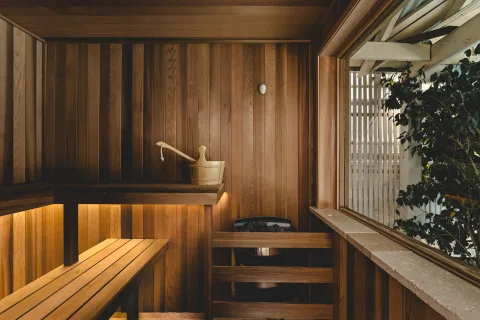
Can a Sauna Help You Lose Weight?

I lost 42kg a few years ago. It didn’t happen in a sauna; it took diet, walking, and a long period of being honest with myself about how I reached 130kg in the first place. Still, the sauna was part of the routine that helped me stay sane, and I had to figure out what it was actually doing for me compared to what I had hoped it would.

Here’s what most people want to hear: sit in the heat, sweat a lot, and watch the weight drop. That idea is half true, which can be even more frustrating than if it were completely false. Let’s break down what’s real, what’s just water loss, and how the sauna can actually help if you’re trying to lose weight.

Does a sauna burn fat?

Short version: not directly, and not in any amount worth counting on.

When you sit in a sauna, your heart rate goes up, and your body works to cool itself, so you do burn some extra calories. But the amount is small, similar to what you’d burn during a slow walk, not a real workout. You might see claims online that you can burn “300–600 calories per session,” but those numbers are usually much too high for most people. In reality, a typical 20–30 minute session burns far fewer calories, and most of what you feel is heat stress, not fat burning.

Fat loss requires a sustained calorie deficit. There’s no shortcut around that, and heat alone doesn’t create one.

So why does the scale drop after a sauna?

Water. That’s the whole answer.

In a single 20–30 minute session, you can sweat out anywhere from half a kilo to a full kilo of fluid. If you step on the scale right after, it looks like progress. But once you drink a couple of glasses of water, your weight goes back up within the hour, because all you lost was fluid your body needed and will quickly replace.

This is important for one practical reason: chasing the lower number on the scale after a sauna session is a trap. It feels like weight loss, but it isn’t. Use that lower number as a reminder to rehydrate, not as a sign of real progress.

There is one group that really benefits from this water-weight effect: athletes who need to make a certain weight for competition. Fighters and rowers have used heat to cut water weight before events for decades. But this is a short-term, sport-specific method that carries real risks of dehydration, not a weight-loss strategy for most people.

Where the sauna actually helps with weight management

Here’s the part that’s actually worth your attention. The sauna doesn’t burn fat, but it helps support the habits that do. In my experience, this indirect support is what most people overlook.

Recovery: Using the sauna regularly after exercise can ease muscle soreness and help you recover faster. When recovery is easier, you can train more consistently. Consistent training is what really changes your body composition.

Stress and sleep: Heat exposure is truly relaxing, and better stress management and deeper sleep are both strongly linked to weight management. Poor sleep can lead to a bigger appetite and worse food choices, so anything that helps you sleep better is quietly working in your favour.

Cardiovascular conditioning: There is strong evidence that regular sauna use leads to cardiovascular changes similar to those of moderate exercise. Professor Jari Laukkanen’s long-running Finnish studies are well known for linking frequent sauna use to better heart health.

Source: Laukkanen et al., Mayo Clinic Proceedings — Cardiovascular and Other Health Benefits of Sauna Bathing
https://www.mayoclinicproceedings.org/article/S0025-6196(18)30275-1/fulltext

To be honest, the sauna is a supporting tool. It makes the real work—moving more, eating better, and sleeping well—easier to stick with. That matters. The key to weight loss is being able to keep going, and most people don’t fail because they chose the wrong diet, but because they couldn’t maintain it. Anything that helps you stay consistent is valuable.

What about infrared saunas for weight loss?

Infrared saunas operate at lower temperatures, usually around 45 to 60°C, compared to over 80°C for traditional saunas. Some research suggests they can slightly increase resting energy use, but the effect is small. As with any sauna, the drop you see on the scale is still just water.

If you like infrared saunas because they are more comfortable for longer sessions, that’s a good reason to choose one. Just don’t expect it to burn more fat than a traditional sauna.

How to use a sauna sensibly if you’re losing weight

Here are a few practical tips from someone who has experienced both weight loss and regular sauna use:

Make sure to hydrate properly. You lose both fluid and electrolytes in the sauna. Drink water before and after your session, and don’t use the sauna just to feel lighter if it means risking dehydration.

Keep your sauna sessions reasonable. Fifteen to twenty minutes is enough. Staying in longer doesn’t burn more fat; it just raises your risk of dehydration.

Don’t skip meals just to see a lower number on the scale. Eating too little, combined with heat stress and dehydration, can leave you feeling dizzy and unwell. That’s not the goal.

Use the sauna as a reward and a way to recover, not as a punishment. It worked for me because I enjoyed it. If it starts to feel like just another chore on your weight-loss list, you’ll probably stop using it.

If you have heart conditions, low blood pressure, or you’re on medication that affects hydration or blood pressure, check with your doctor first.

FAQ

Q: How much weight can you lose in a sauna?
A: You can lose roughly 0.5–1kg of fluid in a 20–30 minute session, but it’s water weight and returns once you rehydrate. Actual fat loss from a single session is negligible.

Q: Is sauna weight loss permanent?
A: No. The weight lost in a sauna is fluid, and it comes back as soon as you drink water and eat normally. Permanent weight loss comes from a sustained calorie deficit, which the sauna supports indirectly but doesn’t create on its own.

Q: Do saunas boost metabolism?
A: Heat exposure raises your heart rate and causes a small temporary increase in calorie burn, and regular use produces some cardiovascular adaptations similar to light exercise. But the metabolic effect is modest and not a substitute for diet and training.

Q: Is an infrared sauna better for weight loss than a traditional sauna?
A: Not meaningfully. Infrared saunas run cooler and may slightly raise resting energy expenditure, but the scale drop is still water in both cases. Choose based on comfort and preference, not fat-burning claims.

Q: How often should I use a sauna when trying to lose weight?
A: 3–4 sessions a week of 15–20 minutes is a sensible range for most people, used as a recovery and stress-management tool alongside exercise and a sensible diet. Stay well hydrated.
Why Expats in Thailand Are Installing Saunas and Ice Baths at Home

I never planned to start a sauna business when I moved to Thailand. After 25 years in the music industry, my body was worn out, and I knew I needed a change before things got worse.

Back then, I weighed 130kg, had arthritis in every joint, and struggled with eczema that three dermatologists couldn’t fix. Saunas weren’t even something I considered. But after a supervised 40-day sauna routine, I saw real changes: my arthritis eased in a couple of weeks, my eczema cleared up after a month, and I lost 42 kilograms over the next year. To be clear, research does link frequent sauna use to a lower risk of heart disease, but there’s no study showing a “sauna detox” can cause the kind of quick improvements I experienced with arthritis, eczema, or weight. This is just my story, not a medical claim.

That’s how it all began. Now I run RönYen in Thailand, and I’ve noticed more expats in places like Bangkok, Phuket, Hua Hin, Chiang Mai, and Pattaya are adding saunas and ice baths to their homes. Resorts, villas, condos, gyms, and wellness centres are following suit, upgrading their saunas and adding ice baths and onsens because customers now expect them.

Let me explain why this is happening.

What’s Driving Expats to Invest in Home Wellness Equipment?

Thailand’s wellness industry is growing fast. The Global Wellness Institute valued the global market at over US$6 trillion in 2023, and Thailand is becoming a major hub. Most of that growth has been in spas, retreats and clinics, places you go to visit.

But now, people want wellness at home. They want it to be part of their daily routine, not just something for holidays.

For expats, there’s also a practical side: finding a good sauna in Thailand isn’t easy. Many hotel and gym saunas are poorly maintained, set at the wrong temperature, or are just small infrared boxes sold as “Finnish” when they really aren’t. If you want a proper sauna experience, owning your own starts to make sense.

Is There Real Science Behind the Health Claims?

Yes, there is real science behind it, and the evidence is strong.

The most significant body of research comes from the University of Eastern Finland, led by Dr Jari Laukkanen. His group’s prospective cohort study, published in JAMA Internal Medicine in 2015, followed more than 2,300 Finnish men for over 20 years. Those who used a sauna 4-7 times per week had a 63% lower risk of sudden cardiac death compared to once-a-week users. That’s a significant difference.

Since then, the same group has linked regular sauna use to reduced risk of stroke (Neurology, 2018), lower rates of hypertension (American Journal of Hypertension, 2017), reduced risk of dementia and Alzheimer’s (Age and Ageing, 2017), and lower all-cause mortality. A review published in Mayo Clinic Proceedings concluded that sauna bathing may be associated with reduced risk of high blood pressure, cardiovascular disease, neurocognitive conditions and pulmonary issues, while also easing symptoms of arthritis and headaches.

Source: Cardiovascular and Other Health Benefits of Sauna Bathing: A Review of the Evidence, Mayo Clinic Proceedings, 2018 (pubmed.ncbi.nlm.nih.gov/30077204)

I’m not a doctor, but after years of using a sauna and ice bath almost every day, my arthritis is under control, I sleep better, and I recover from exercise more quickly. The science helps me feel confident that these benefits are real.

Why Does It Matter That a Sauna Is “Finnish”?

A lot of people misunderstand this.

In Finland, a sauna isn’t a wellness trend; it’s as common as a bathroom, with around 3.3 million saunas for 5.5 million people. The know-how is generations deep, and it shows in how a proper sauna performs.

A Finnish sauna runs at 80-100°C (176-212°F) with low humidity, which you control by pouring water over hot stones, a practice Finns call löyly. The steam, the airflow, the bench placement and the choice of timber all shape the experience.

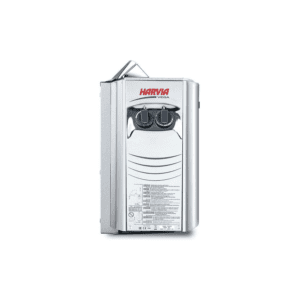
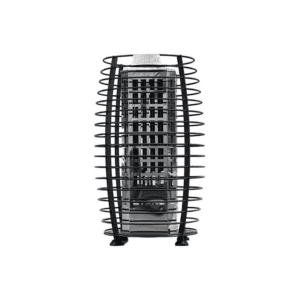
Safety is important too. Some cheap saunas use low-quality materials and glues that can release bad fumes when heated. A well-made sauna uses timber suited for tropical weather, has good ventilation, and includes a TÜV-certified stone heater that creates real löyly, not just hot air. No matter where you buy, this is the standard you should look for.

What Types of Saunas Can Expats Buy in Thailand?

Your choice depends on your space, your budget, and whether you want an indoor or outdoor sauna.

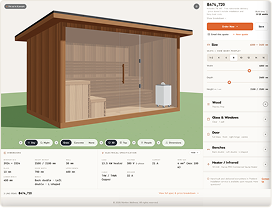
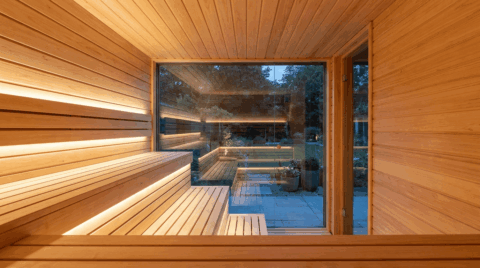
For indoor use, most people choose a modern cabin-style sauna. These come in sizes for 2, 4, 6, or 8 people and fit well in a spare room, garage, or a custom space. They have clean lines, a glass front, and a modular design that two people can put together in a day.

For outdoor spaces, premium sauna rooms are common on rooftops and in gardens around Bangkok and Phuket. They come in sizes for 2 to over 14 people, with weatherproof roofs, full glass fronts, and options like pine, red cedar, or teak. The 8- and 10-person models are especially popular for those who enjoy entertaining guests.

Barrel saunas offer a classic Nordic look and come in sizes for 3 to 8 people, with options like porches and panoramic windows. They’re a great choice if you want a standout feature in your garden without a major construction project.

If you have less space or a smaller budget, a compact cube sauna is a good option. These start at a 1-person unit and go up to 6, staying efficient and unobtrusive while still meeting proper sauna standards.

If standard sizes don’t fit your needs, most models can be customised for timber, size, glass layout, and bench setup. Whether you need a small unit for a condo or a large 14-person sauna for a hotel or gym, there’s a solution available.

Why Add an Ice Bath?

If you already use a sauna, adding cold therapy is a natural next step. A 2025 study in Scientific Reports looked at how sauna heat and cold-water immersion affect the heart and circulation. The combination of heat and cold brings many benefits together: better circulation, faster recovery, improved sleep, and a mental toughness you really have to experience for yourself.

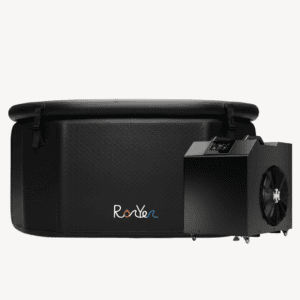
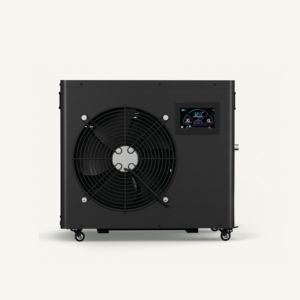
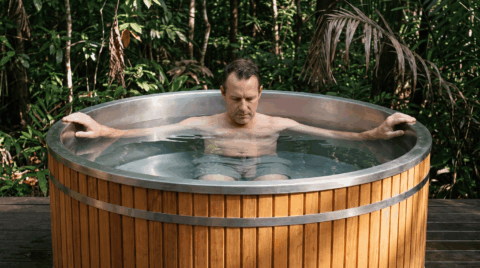
RönYen has a few options. All-in-one ice baths have a built-in chiller, so you don’t need to haul bags of ice—just fill it, set the temperature, and you’re ready. We also offer standalone chillers for those who already have a plunge pool or want to add cold to a custom setup.

Why Does Quality and Local Support Matter?

Many saunas and ice baths in Thailand come flat-packed from overseas factories, and after delivery, you’re often left on your own. Here are a few things that can make the difference between a good purchase and a regret:

Make sure your sauna is built for the Thai climate. Heat, humidity, and termites can be tough on timber. Using thermally modified wood and building methods suited for the tropics is important. A sauna made for Finnish winters won’t last in Bangkok without some adjustments.

Customisation matters too. If you need a sauna that’s a bit wider, want a different type of wood, or have a specific window layout in mind, being able to adjust the design to fit your space is very valuable.

Local support is important. If you need help after installation, it’s much better to have someone in Thailand who can assist and get parts, rather than dealing with an overseas customer service line in a different time zone.

How Much Does a Home Sauna Cost in Thailand?

The price really depends on what you want. A small 1-person cube costs much less than a large 14-person outdoor teak sauna with a premium heater. Instead of giving numbers that might not fit your needs, it’s best to review the full range or contact us for a quote tailored to your space.

Here’s what I can tell you: every sauna comes with a TÜV-certified stone heater and a wall-mounted touchscreen controller, and you can add WiFi app control if you want. We deliver anywhere in Thailand and offer assembly support and ongoing help after your purchase.

Is It Difficult to Install a Sauna in Thailand?

It’s easier than you might think. The saunas are modular, so two or three people can put one together without special tools or building experience. It’s like assembling high-quality flat-pack furniture, but with real timber joinery.

The main thing you need is the right electrical supply. Saunas up to 12kW use single-phase power, which most Thai homes have. Bigger units, such as those for businesses or large homes, require three-phase power, which an electrician can set up. Besides that, you’ll need a flat surface (indoors or outdoors), a power outlet, and ideally some ventilation. We provide full installation instructions and can recommend local electricians who are familiar with our products.

Ice baths are even simpler. All you need is a flat surface, a water supply, and a power outlet for the chiller, and you’re good to go.

Should You Get a Sauna If You Live in a Hot Country?

This is the question expats ask me most. “Why would I want to sit in a hot room when it’s already 35°C outside?”

That’s a fair question. The truth is, it’s a totally different experience. Thailand’s heat is humid and constant, which can be exhausting. A sauna session is controlled, intense, and short—usually 15 to 20 minutes at 80-100°C—followed by a proper cool-down. Your body reacts very differently to this than to just being hot and sweaty in Bangkok traffic.

In a sauna, your body’s heat-shock response triggers a series of helpful changes: heat-shock proteins, better heart function, a release of endorphins, and your parasympathetic nervous system takes over during the cool-down. None of this happens when you’re just sitting in a hot taxi.

If anything, living in Thailand makes ice baths even more attractive. Stepping into 5°C water when it’s 35°C outside is a real shock—the contrast is stronger, the effect is instant, and the relief feels even better.

What Should You Do Next?

If you’re an expat in Thailand considering a sauna or ice bath at home, here’s my honest advice.

First, consider your space. Will it be indoors or outdoors? How many people do you want it to fit? Are you looking for a sauna, an ice bath, or both?

Next, check out the options at ronyen.com to see the different sizes, wood types, heater options, and price ranges.

If you’re unsure what’s best for you, just get in touch. I personally answer all enquiries and am happy to discuss your options with no pressure. I’ve been in your shoes, wondering if it’s worth it. For me, it made a huge difference. You’re also welcome to visit the Rön Yen Garden in Bang Saen by appointment to see everything in person.

Frequently Asked Questions About Saunas in Thailand

How much does a home sauna cost in Thailand?

Prices vary with size, type and timber. Compact indoor saunas start at the lower end, while large outdoor premium saunas in teak sit at the higher end. Browse the range at ronyen.com to see options, or get in touch for a quote tailored to your space.

Can I install a sauna in a Thai condo or apartment?

Often, yes. Compact 1 or 2-person cube or cabin models can fit a spare room or even a large bathroom. The main requirements are a suitable electrical supply and building-management approval. We can advise on whether it’s feasible for your specific space.

Do I need a chiller for an ice bath, or can I use ice?

You can use ice, but it’s impractical for regular use: expensive, messy and inconsistent. A dedicated chiller automatically holds your water at a set temperature, from around 3°C up to ambient. For anyone planning to use an ice bath regularly, a chiller is worth it.

Are these saunas suitable for commercial use?

Yes. The larger models, in sizes up to 14-plus people with appropriately rated heaters, are well suited to gyms, spas, hotels and wellness centres. We can advise on sizing, three-phase power requirements and heaters built for high-use environments.

How long does delivery take?

Most standard products are ready within 2 to 4 weeks, with customised specifications taking a little longer. Your exact schedule is confirmed when you order. Delivery is available nationwide, with full assembly support.

Common questions

Everything you want to know about saunas & heaters

Outdoor and indoor cabins, barrels, cylinders, cube and modern designs, plus sauna-and-shower combos — from a compact one-person unit up to fourteen-person commercial rooms. Every model is made to order and customisable to your space. Browse saunas.

Red Cedar and Finnish Thermo Pine both handle heat and humidity beautifully — cedar for its aroma and natural rot resistance, thermo pine for its stability in wet conditions. Japanese Hinoki is our premium pick. Canadian Hemlock is excellent value for indoor cabins. We’ll match the timber to your budget, look and location.

Outdoor saunas are fully weather-sealed for gardens, rooftops and pool decks. Indoor models are built for bathrooms, gyms and spare rooms. Both use the same indoor-rated electric stone heaters — the difference is the exterior cladding and weatherproofing.

It depends on the internal volume of the cabin. As a guide: 4.5kW for 3–6 m³, 6kW for 5–8 m³, 9kW for 8–11 m³, 12kW for 11–15 m³, 15kW for 13–18 m³ and 18kW for 15–20 m³. Above 20 m³ takes two heaters. Up to and including 9kW runs on single phase; above that is three phase only, which in practice means anything from a six-person cabin upwards. We confirm the exact requirement in your quote so your electrician knows precisely what to install.

See all questions

Both are food-grade and corrosion-resistant. 316 adds extra protection for coastal air and chlorinated water, so it’s the safer choice near the sea or beside a pool. 304 is excellent value everywhere else. We’ll recommend the right grade for your site. See ice baths.

Ice works to get started, but it melts fast in Thailand and gets expensive. A chiller holds a precise temperature day after day with no effort — it’s the easiest way to make cold therapy a daily habit rather than an occasional event.

Our chillers run from 0°C to 42°C, so the same unit chills in the hot season and heats in the cool one. Most people plunge between 3°C and 10°C. Beginners usually start around 12–15°C and work down over a few weeks.

Our chillers include filtration and ozone sanitation that keep the water fresh for weeks between changes: run the ozone for 30–60 minutes after each session with the lid on, and the hydrogen peroxide in the cleaning kit keeps the water clean in between (about 160 ml on a fresh 320 L fill, then ~50 ml a week, checked with a test strip). Both are safe on stainless, acrylic and PVC baths. We walk you through it at handover — it’s far less work than a pool.

See all questions

Yes. Our brochures are on the site as downloads and we can email them to you. Because every sauna is made to order, the catalogue shows configurations and starting prices rather than a fixed range. Download the brochures.

The room dimensions, whether it is indoor or outdoor, how many people, and roughly where you are. If you have a floor plan, send that. From those four things we can quote accurately.

Yes, three ways. Come to the wellness garden and showroom in Ban Suan, Chonburi, ten minutes from Central Chonburi — there is a working sauna and ice baths you can use, by appointment. We hold finished samples of all four timbers. Or we will bring the samples to you: we travel anywhere in Thailand for a fee, and that fee comes off the price of your order when you buy. Book a consultation.

Yes. RonYen Wellness Co., Ltd is VAT registered and can issue full tax invoices. Ask us for the registration document if your accounts department needs it for approval.

See all questions

Yes. We deliver to Koh Samui, Koh Phangan, Koh Tao, Koh Kood and Phuket regularly. Island delivery carries a supplement over mainland freight, quoted per job, and adds a few days. Tell us the island and we will price it with the quote rather than after.

We service Thailand and Laos. We are not set up for shipping further afield at the moment.

Mainland delivery is included in the price. Islands and remote provinces carry a supplement, quoted with your order.

Yes — we deliver right across Thailand by freight. Wherever you are, we’ll get it to you. Delivery details.

See all questions

Occasionally, depending on the unit and where it is. Send us photographs of the heater, the control gear and the cabin and we will tell you honestly whether it is worth us coming or whether a local electrician can sort it for less.

Heater elements, stones, control panels and thermostats for the heaters we supply, held in Thailand. If you have another brand, tell us the model and we will say whether we can help.

Not currently.

Yes, for saunas in commercial operation. A room running twelve hours a day carries four to six times the load of a home installation, and scheduled servicing is what keeps it performing and keeps the warranty intact. Commercial servicing.

See all questions

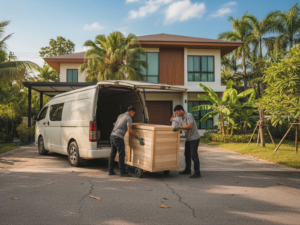
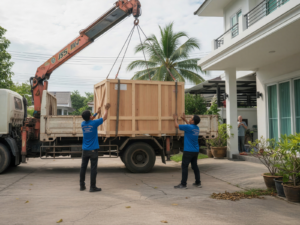
Yes — every sauna arrives in a sealed timber crate with the wall sections already built, and most assemble in a day with two or three people and the supplied instructions. No specialist tools needed. Prefer it done for you? Our team can handle the full install. Installation service.

Delivery to the spot, full assembly, levelling, fitting the heater, and a handover walkthrough so it’s ready to use the same day. It’s the easy option if you’d rather not build it yourself.

A firm, level base — a concrete pad, deck or paved area — plus a power point within reach for the heater. We send a simple prep checklist before delivery so everything’s ready when your sauna arrives.

The final hard-wire connection of the heater should be made by a licensed electrician — that part isn’t included, for safety and compliance. We supply the full heater specification and can recommend trusted local contractors.

See all questions

Reserve online in a couple of minutes — pick a plan, a date and a time slot, and choose to pay online or on arrival. You’ll get a confirmation by email and text.

The Garden runs on advance bookings so every session has the space to itself — so book ahead if you can. That said, if you're passing and spot us, scan the sign at the gate or give us a call, and if there's room in the current session we'll happily wave you in.

Saunas, ice baths, a swimming pool and shaded lounge areas — everything you need for the full hot-and-cold circuit, in a quiet private garden. A towel, flip-flops, a locker and your first drink come free with every visit. Explore the garden.

It’s in Chonburi, easily reached from Bangkok and Pattaya. We’re in a private gated community — when you arrive, look for the RonYen sign at the gate and we’ll open it for you. We text a reminder before your session so we’re ready and waiting.

See all questions

Still deciding? Talk to a specialist.

Get a straight answer on what suits your space, budget and the Thai climate — free and with no pressure.

Book a free consultation

Latest Help & Advice

View all
Commercial Saunas for Gyms, Hotels and Resorts in Thailand All Articles

Commercial Saunas for Gyms, Hotels and Resorts in Thailand

The sauna in a private garden is used four or five times a week by the same two…

27 Aug 2026 Read more
What kind of ice bath should be used in Thailand? All Articles

What kind of ice bath should be used in Thailand?

For several years, I’ve been taking cold water baths, and the first thing that no one ever tells…

15 Aug 2026 Read more
What is the way of designing a sauna so that it will fit into your space? All Articles

What is the way of designing a sauna so that it will fit into your space?

The majority of the enquiries come exactly as described. A person messages us to say that they would…

8 Aug 2026 Read more

Talk to us before
you buy.

A sauna or ice bath is a long-term addition to your home or commercial space. Tell us about your project, your goals and your timeline — we’ll give you a straight answer, including what the right options are.

Free consultation. Phone call, video call, or visit our showroom in Ban Suan, Chonburi — Rön Yen Shop & Wellness Garden — by appointment. Tell us your space and budget, and we’ll talk through the options with no pressure to buy.

Ban Suan, Chonburi — 10 minutes from Central Chonburi

Secret Link