
All Articles · 7 min read

How Much Does an Ice Bath Chiller Cost to Run in Thailand?

How Much Does an Ice Bath Chiller Cost to Run in Thailand?

Whenever someone asks about a chiller, the first thing they want to know is the running cost. People ask this before anything else—before talking about temperature range, compatibility, or even size. The main question is always: what will this cost me each month?

That’s a fair question. A chiller is a big investment, and nobody wants a surprise on their electricity bill. I’ll share the real numbers and show my calculations, so you can decide with confidence.

In short, it costs less than most people think. If you want the details and reasons, keep reading below.

How Much Electricity Does an Ice Bath Chiller Actually Use?

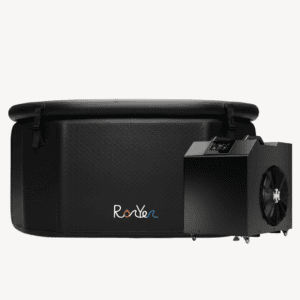
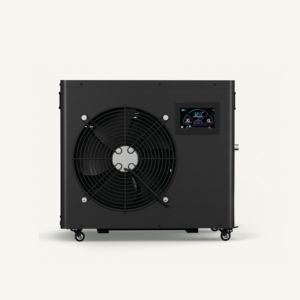
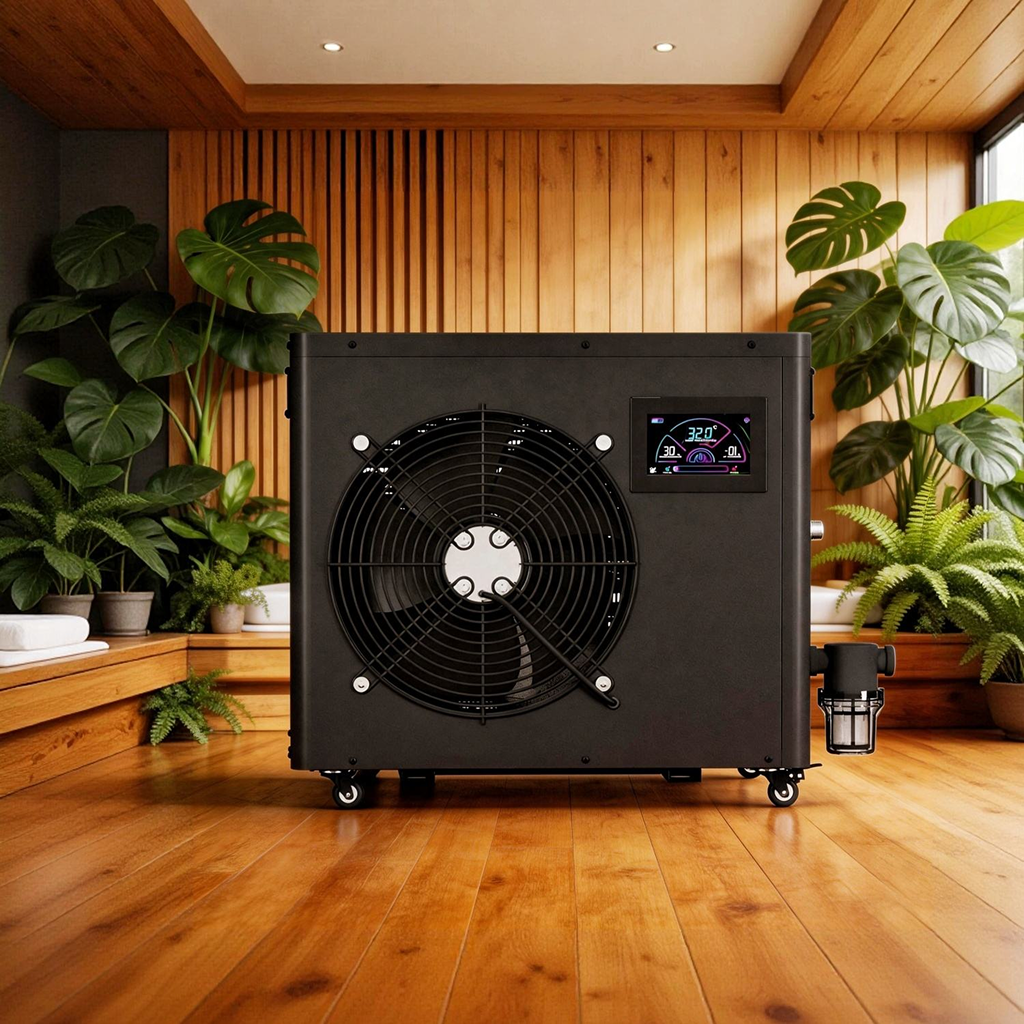
A chiller operates on the same principle as a reverse-cycle air conditioner: a compressor, a refrigerant loop, and a circulating pump combine to extract heat from the water and release it into the surrounding air. The key number is the rated input power, the number of watts it draws from the wall when the compressor is running. For a 1.5HP unit, that’s typically in the range of 1,100–1,500W. For a 2.0HP unit, expect 1,500–2,000W. Your spec sheet will give you the exact figure for your model.

But those numbers don’t show the duty cycle, which is the percentage of time the compressor runs compared to when it’s idle. This is where you can really save money.

The chiller’s thermostat works in cycles. It cools the water to your chosen temperature, then turns off. It only starts again when the water warms up. If you have an insulated tub with a cover in a cool room, the compressor might hardly run during maintenance mode. But if your tub is uncovered and in direct Thai sun, the compressor will have to work much harder.

This difference can mean paying a reasonable monthly bill or ending up with a much higher one.

What Does That Work Out to Per Month in Thailand?

Thai residential electricity (MEA and PEA) is currently around ฿3.95 per kWh for 2026. Using that as a baseline:

Initial cool-down (getting the water from ambient, say 28°C, down to 12°C in a 400-litre bath) typically takes two to three hours on a 1.5HP unit. Running at full load for two hours: 1.3kW × 2h = 2.6kWh ≈ ฿10 per cool-down session.

Maintenance mode, which means keeping the temperature steady between sessions with the cover on, is where costs stay low. In a shaded spot, a well-insulated tub with a good cover might only need the compressor running 10–20% of the time. That’s much less than the cost of cooling down from scratch.

Putting it together for different use patterns:

Casual use (3–4 sessions per week, covered between):
฿300–500 per month

Regular daily use (one session per day, covered overnight):
฿500–750 per month

Heavy use (multiple sessions daily, outdoor placement):
฿800–1,500 per month

If your chiller sits outside in direct sun and is left uncovered between uses during a Bangkok summer, expect to pay at the higher end of the range. If you keep it in a shaded, ventilated area with an insulating cover, your costs will be lower. The conditions around your chiller are just as important as its rated wattage.

Is a Chiller Cheaper Than Buying Bags of Ice?

This is often the real question people want answered.

A 25kg bag of ice in Thailand costs around ฿25–35, depending on where you’re buying it. To get a 400-litre tub from ambient (around 28–30°C) down to a session-ready 12–15°C, and keep it there for the duration of your plunge, you’ll typically need 40–60kg of ice — and that gets you one session. Once that ice melts, the water warms up, and you’re back to ambient.

At ฿60–80 per session in ice:

3 sessions per week: ฿720–960 per month
Daily sessions: ฿1,800–2,400 per month

Compared to the chiller’s running cost of ฿500–750 per month for regular use, the chiller is the better choice for anyone plunging daily. The savings become even greater if you use it more often.

If you only use it occasionally, like two or three times a week, the running costs are similar, so the chiller’s upfront price matters more. But the ice method doesn’t include the hassle of getting ice delivered, timing your sessions before the ice melts, or not having exact control over the temperature. If you’re committed to regular plunges, these inconveniences can outweigh the cost difference.

There’s a calculator on our inflatable bath page that lets you plug in your session frequency and tub size to see the comparison for your specific situation.

Does Running a Chiller in Thailand Cost More Than in Cooler Climates?

Yes, running a chiller in Thailand does cost a bit more, but the difference isn’t huge.

The main issue isn’t voltage or infrastructure. Thai power is 220–240V single-phase, just like in other countries in the region. The real challenge is the ambient temperature. In Thailand, the average daily temperature is about 28–35°C, depending on the season and location. A chiller keeping water at 12°C has to work against a 16–23°C difference. In a place where the air is 15°C, the chiller only has to handle a 3°C difference, so the compressor runs less, and costs are lower.

In practical terms, where you place your chiller and whether you keep it covered make a big difference in Thailand. A covered tub in a shaded room costs much less to run than an uncovered tub on a sunny balcony.

This shouldn’t make you rethink buying a chiller. Instead, it’s a reminder to choose a good spot for your unit and to use a cover.

What Can I Do to Reduce My Chiller’s Running Costs?

There are five practical steps that make a real difference in Thailand’s climate:

Always use the cover. This is the most effective way to save energy. An uncovered bath continues to absorb heat from the air, while a covered bath with a good lid hardly does. The cover isn’t just an accessory; it’s an essential part of the system.

Position the unit with airflow. Chillers exhaust heat through the sides and back. They need at least 30cm of clear space on all sides. A unit crammed into a tight space has to work harder to reject heat, which raises both running time and long-term wear.

Set your target temperature to 12–15°C instead of 6°C. Most research on cold water immersion shows benefits around 10–15°C, not at extremely low temperatures. Going below 10°C makes the compressor work much harder and run longer. Unless you have a special reason to go colder, 12–14°C is ideal for both your body and your electricity bill.

Pre-cool during cooler hours. The compressor runs more efficiently when ambient temperatures are lower. If your setup allows it, running the initial cool-down in the early morning or at night rather than during peak afternoon heat reduces the load.

Keep the bath water clean. Dirty water has a higher thermal mass, which makes the chiller work harder. Changing the water regularly and using the filter properly isn’t just about hygiene; it also helps the chiller run more efficiently.

FAQ

Q: How much does an ice bath chiller cost to run per day in Thailand?
A: For most homes, expect to spend ฿15–30 per day, depending on how often you use the bath and how well it’s insulated. If you plunge daily with a covered, shaded bath, you’ll pay less. If you have multiple sessions in an outdoor, uncovered bath, costs will be higher.

Q: Is a chiller cheaper than buying ice if I plunge every day?
A: Yes, by a lot. Using ice every day costs ฿1,800–2,400 per month for a typical 400-litre bath. Running a chiller daily costs only ฿500–750 per month. That’s a savings of ฿1,000–1,700 per month, even before you consider the added convenience.

Q: Does putting a cover on the tub make a real difference?
A: Yes, it makes the biggest difference. An insulated cover can cut the chiller’s running time in half during maintenance mode because it helps the water keep its temperature. In Thailand’s heat, a cover isn’t optional—it’s the key to keeping your costs reasonable.

Q: Can I run a RönYen chiller on a standard Thai household socket?
A: Our 1.5HP and 2.0HP models work with a standard 220–240V single-phase supply. You don’t need an electrician or special wiring—they are plug-and-play. If you can, use a dedicated socket to avoid tripping a shared circuit.

Q: How long does it take to cool an ice bath with a chiller?
A: For a 400-litre bath starting at about 28–30°C, it usually takes two to three hours to reach 12°C with a 1.5HP unit. A 2.0HP unit is a bit faster. If the bath is covered and has only warmed up a little, the next cool-down is quicker—often just 30–60 minutes.
Thinking about your own setup?

Talk to us before you buy.

Free consultation by phone, video or office visit. Quick written quote, no pressure to commit.

Common questions

Everything you want to know about saunas & heaters

Outdoor and indoor cabins, barrels, cylinders, cube and modern designs, plus sauna-and-shower combos — from a compact one-person unit up to fourteen-person commercial rooms. Every model is made to order and customisable to your space. Browse saunas.

Red Cedar and Finnish Thermo Pine both handle heat and humidity beautifully — cedar for its aroma and natural rot resistance, thermo pine for its stability in wet conditions. Japanese Hinoki is our premium pick. Canadian Hemlock is excellent value for indoor cabins. We’ll match the timber to your budget, look and location.

Outdoor saunas are fully weather-sealed for gardens, rooftops and pool decks. Indoor models are built for bathrooms, gyms and spare rooms. Both use the same indoor-rated electric stone heaters — the difference is the exterior cladding and weatherproofing.

It depends on the internal volume of the cabin. As a guide: 4.5kW for 3–6 m³, 6kW for 5–8 m³, 9kW for 8–11 m³, 12kW for 11–15 m³, 15kW for 13–18 m³ and 18kW for 15–20 m³. Above 20 m³ takes two heaters. Up to and including 9kW runs on single phase; above that is three phase only, which in practice means anything from a six-person cabin upwards. We confirm the exact requirement in your quote so your electrician knows precisely what to install.

See all questions

Both are food-grade and corrosion-resistant. 316 adds extra protection for coastal air and chlorinated water, so it’s the safer choice near the sea or beside a pool. 304 is excellent value everywhere else. We’ll recommend the right grade for your site. See ice baths.

Ice works to get started, but it melts fast in Thailand and gets expensive. A chiller holds a precise temperature day after day with no effort — it’s the easiest way to make cold therapy a daily habit rather than an occasional event.

Our chillers run from 0°C to 42°C, so the same unit chills in the hot season and heats in the cool one. Most people plunge between 3°C and 10°C. Beginners usually start around 12–15°C and work down over a few weeks.

Our chillers include filtration and ozone sanitation that keep the water fresh for weeks between changes: run the ozone for 30–60 minutes after each session with the lid on, and the hydrogen peroxide in the cleaning kit keeps the water clean in between (about 160 ml on a fresh 320 L fill, then ~50 ml a week, checked with a test strip). Both are safe on stainless, acrylic and PVC baths. We walk you through it at handover — it’s far less work than a pool.

See all questions

Yes. Our brochures are on the site as downloads and we can email them to you. Because every sauna is made to order, the catalogue shows configurations and starting prices rather than a fixed range. Download the brochures.

The room dimensions, whether it is indoor or outdoor, how many people, and roughly where you are. If you have a floor plan, send that. From those four things we can quote accurately.

Yes, three ways. Come to the wellness garden and showroom in Ban Suan, Chonburi, ten minutes from Central Chonburi — there is a working sauna and ice baths you can use, by appointment. We hold finished samples of all four timbers. Or we will bring the samples to you: we travel anywhere in Thailand for a fee, and that fee comes off the price of your order when you buy. Book a consultation.

Yes. RonYen Wellness Co., Ltd is VAT registered and can issue full tax invoices. Ask us for the registration document if your accounts department needs it for approval.

See all questions

Yes. We deliver to Koh Samui, Koh Phangan, Koh Tao, Koh Kood and Phuket regularly. Island delivery carries a supplement over mainland freight, quoted per job, and adds a few days. Tell us the island and we will price it with the quote rather than after.

We service Thailand and Laos. We are not set up for shipping further afield at the moment.

Mainland delivery is included in the price. Islands and remote provinces carry a supplement, quoted with your order.

Yes — we deliver right across Thailand by freight. Wherever you are, we’ll get it to you. Delivery details.

See all questions

Occasionally, depending on the unit and where it is. Send us photographs of the heater, the control gear and the cabin and we will tell you honestly whether it is worth us coming or whether a local electrician can sort it for less.

Heater elements, stones, control panels and thermostats for the heaters we supply, held in Thailand. If you have another brand, tell us the model and we will say whether we can help.

Not currently.

Yes, for saunas in commercial operation. A room running twelve hours a day carries four to six times the load of a home installation, and scheduled servicing is what keeps it performing and keeps the warranty intact. Commercial servicing.

See all questions

Yes — every sauna arrives in a sealed timber crate with the wall sections already built, and most assemble in a day with two or three people and the supplied instructions. No specialist tools needed. Prefer it done for you? Our team can handle the full install. Installation service.

Delivery to the spot, full assembly, levelling, fitting the heater, and a handover walkthrough so it’s ready to use the same day. It’s the easy option if you’d rather not build it yourself.

A firm, level base — a concrete pad, deck or paved area — plus a power point within reach for the heater. We send a simple prep checklist before delivery so everything’s ready when your sauna arrives.

The final hard-wire connection of the heater should be made by a licensed electrician — that part isn’t included, for safety and compliance. We supply the full heater specification and can recommend trusted local contractors.

See all questions

Reserve online in a couple of minutes — pick a plan, a date and a time slot, and choose to pay online or on arrival. You’ll get a confirmation by email and text.

The Garden runs on advance bookings so every session has the space to itself — so book ahead if you can. That said, if you're passing and spot us, scan the sign at the gate or give us a call, and if there's room in the current session we'll happily wave you in.

Saunas, ice baths, a swimming pool and shaded lounge areas — everything you need for the full hot-and-cold circuit, in a quiet private garden. A towel, flip-flops, a locker and your first drink come free with every visit. Explore the garden.

It’s in Chonburi, easily reached from Bangkok and Pattaya. We’re in a private gated community — when you arrive, look for the RonYen sign at the gate and we’ll open it for you. We text a reminder before your session so we’re ready and waiting.

See all questions

Still deciding? Talk to a specialist.

Get a straight answer on what suits your space, budget and the Thai climate — free and with no pressure.

Book a free consultation

Latest Help & Advice

View all
Commercial Saunas for Gyms, Hotels and Resorts in Thailand All Articles

Commercial Saunas for Gyms, Hotels and Resorts in Thailand

The sauna in a private garden is used four or five times a week by the same two…

27 Aug 2026 Read more
What kind of ice bath should be used in Thailand? All Articles

What kind of ice bath should be used in Thailand?

For several years, I’ve been taking cold water baths, and the first thing that no one ever tells…

15 Aug 2026 Read more
What is the way of designing a sauna so that it will fit into your space? All Articles

What is the way of designing a sauna so that it will fit into your space?

The majority of the enquiries come exactly as described. A person messages us to say that they would…

8 Aug 2026 Read more

Talk to us before
you buy.

A sauna or ice bath is a long-term addition to your home or commercial space. Tell us about your project, your goals and your timeline — we’ll give you a straight answer, including what the right options are.

Free consultation. Phone call, video call, or visit our showroom in Ban Suan, Chonburi — Rön Yen Shop & Wellness Garden — by appointment. Tell us your space and budget, and we’ll talk through the options with no pressure to buy.

Ban Suan, Chonburi — 10 minutes from Central Chonburi

Secret Link